There are neighbourhoods that are visited as if they were museums. One enters, walks slowly, looks at the façades, takes photographs, searches for the perfect angle, stops in front of an old door, and feels as though one has found something true. Something that seems to resist the passage of time. Something that allows us, even if only for a few minutes, to touch a city that almost no longer exists.
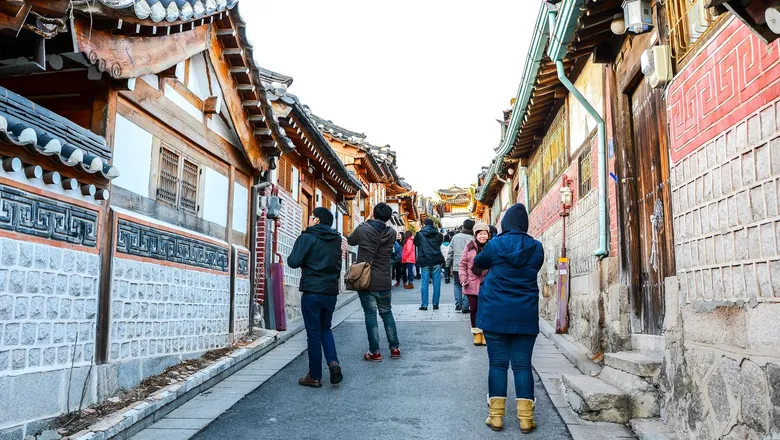
This is what many visitors experience when they arrive at Bukchon Hanok Village, in Seoul. Between the palaces of Gyeongbokgung and Changdeokgung, in the historic heart of the South Korean capital, Bukchon preserves one of the best-known concentrations of hanok, the traditional Korean houses built with wood, inner courtyards, and tiled roofs. For those arriving from outside, the neighbourhood seems like a window onto traditional Korea: narrow streets, curved rooftops, low walls, wooden doors, gentle slopes, and views of the modern city rising in the background.
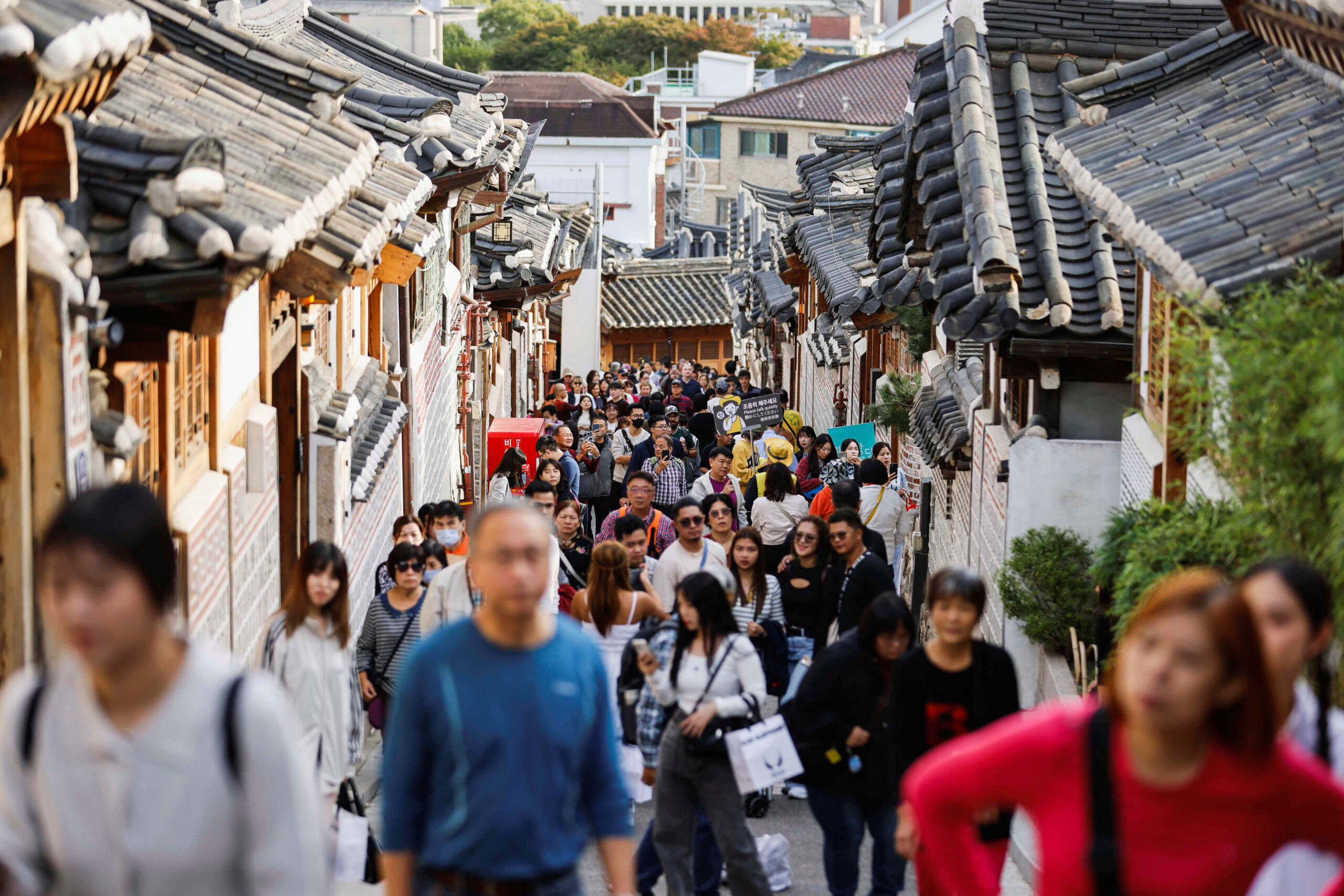
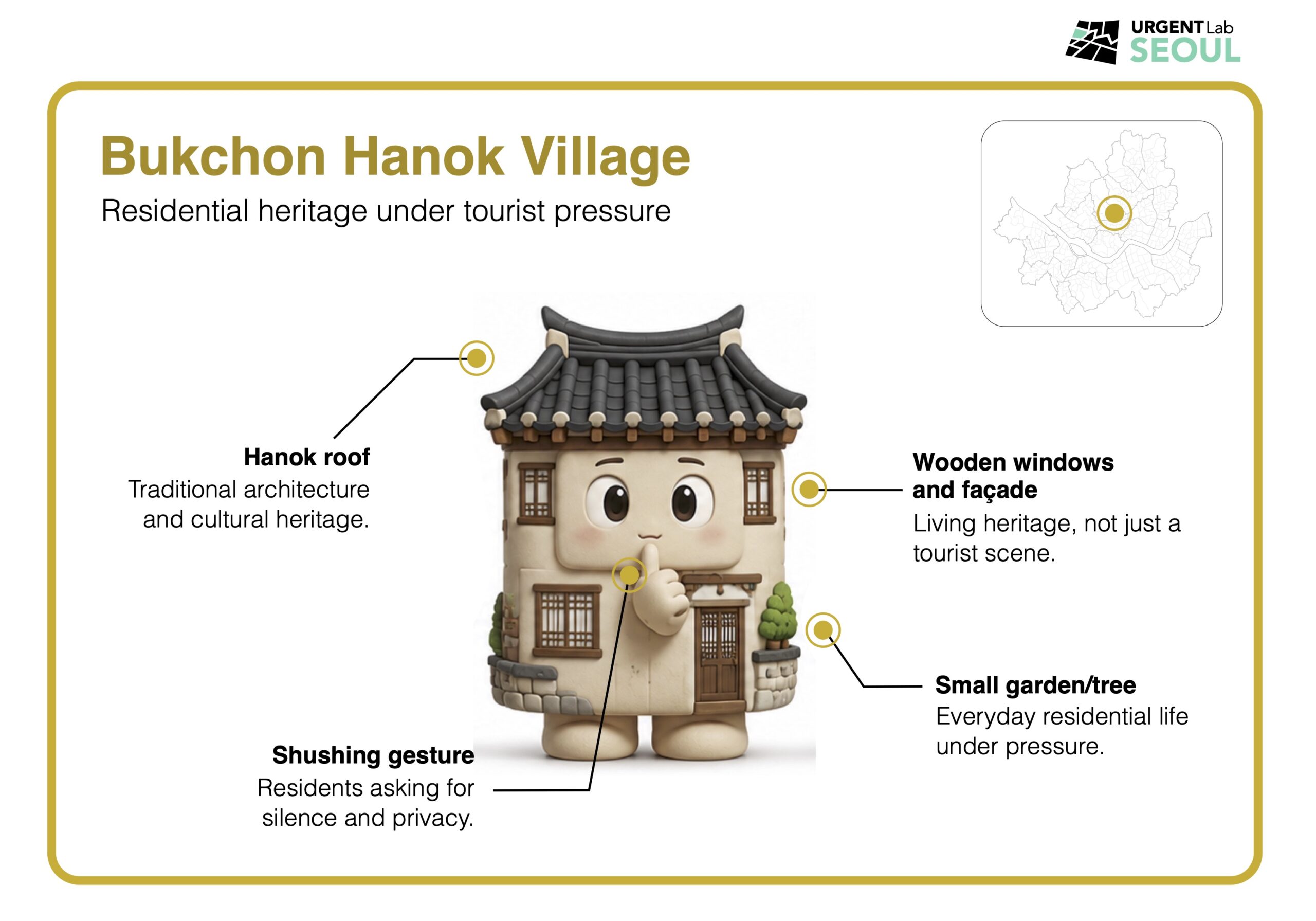
The image is powerful. That is precisely why the case is so interesting. Because Bukchon is not just a beautiful place, nor just another tourist destination. It is a residential neighbourhood that has gradually been transformed into a heritage stage. And that is where the problem begins: when an inhabited neighbourhood becomes an experience for visitors, everyday life is subjected to a pressure that is difficult to bear.
For much of the twentieth century, Bukchon was a residential neighbourhood with historical value, but not a mass tourist destination. Its hanok formed part of Seoul’s urban life, although many houses were ageing, being renovated, or replaced by more modern buildings. As happened in many Asian cities undergoing rapid modernization, traditional heritage risked disappearing under real-estate pressure, densification, and the desire to build an increasingly vertical, efficient, and competitive city.

From the 2000s onwards, public authorities promoted policies aimed at conserving and restoring the hanok landscape. The intention made sense: to protect a unique architectural heritage, prevent its disappearance, and strengthen Seoul’s historical identity. In a metropolis dominated by towers, avenues, infrastructure, and large residential complexes, Bukchon offered a very valuable image: that of a city capable of looking towards the future without completely erasing its past.
But urban conservation is almost never neutral. Protecting a place can also make it more visible. Making it more visible can make it more desirable. And making it more desirable can turn it into an object of consumption. That is what happened in Bukchon. The neighbourhood was preserved, yes, but it was also promoted. It was integrated into cultural routes, tourist guides, blogs, social media, television programmes, and international narratives about “traditional Seoul”. The hanok ceased to be simply a form of housing and became a cultural brand.
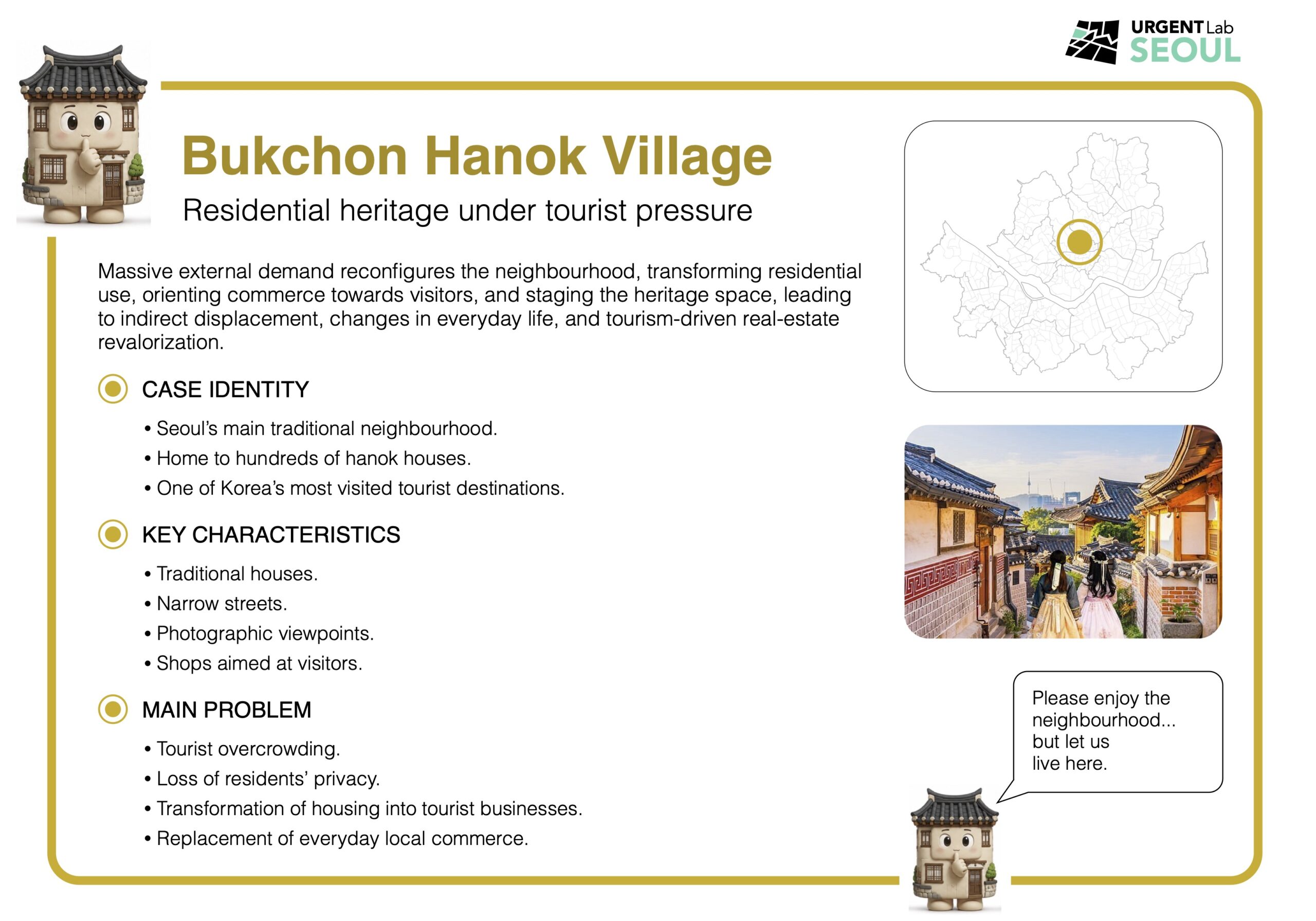
Bukchon then began to receive more and more visitors. Domestic and international tourists came to walk through its streets, take photographs, rent hanbok, drink tea in traditional houses, sleep in heritage accommodation, or simply experience the feeling of being in an “authentic” Korea. The neighbourhood became an almost compulsory stop for anyone wanting to discover historic Seoul.
Up to this point, it might seem like a positive story. An old neighbourhood is preserved, attracts visitors, generates economic activity, and becomes a cultural symbol of the city. But the important question is different: what happens when the place being visited is not a museum, but a neighbourhood where people live?
In Bukchon, the answer began to appear in the form of noise, loss of privacy, overcrowded streets, rubbish, guided groups, suitcases, constant photographs, and the transformation of local commerce. Residents no longer simply inhabited a neighbourhood. They began to live inside a stage. Their façades, windows, doors, and alleyways became part of the tourist experience. What was charm for the visitor could become everyday intrusion for the neighbour.

This is one of the keys to tourism gentrification. There is not always a major eviction or an immediate demolition. Sometimes displacement arrives in another way: the neighbourhood becomes uncomfortable, expensive, noisy, observed. Everyday life fills with interference. Sleeping, resting, leaving the house, talking to a neighbour, or shopping in a local store becomes more difficult. People do not leave only because rents rise. They also leave because the neighbourhood stops functioning as a neighbourhood.
In Bukchon, traditional housing gradually became an economic resource. Some hanok were converted into guesthouses, boutique accommodation, hanok stays, cafés, galleries, or cultural spaces aimed at visitors. The house ceased to be only a domestic space and became an experience. Sleeping in a hanok, drinking tea in a hanok, or taking a photograph in front of a hanok began to acquire market value.
This change is fundamental. When a heritage dwelling can generate more profit as temporary accommodation than as permanent residence, the logic of the neighbourhood changes. The owner has incentives to orient it towards tourism. Commerce adapts to the visitor. Prices rise. Everyday shops lose ground to cafés, souvenirs, hanbok rentals, staged workshops, and businesses designed for quick consumption. The neighbourhood still has inhabitants, but it is increasingly organized around those who arrive and leave.
That is why Bukchon is such a clear case of tourism gentrification. The main driver of transformation is not the arrival of new middle-class residents, as in classic gentrification. Nor is it a major demolition and reconstruction operation, as in other redevelopment processes. Here, the central actor is the floating population: tourists, visitors, temporary users, consumers of heritage. People who do not live there, but who reorganize the value of the place.
The paradox is obvious. Bukchon is interesting because it seems alive, because it is not a completely artificial backdrop, because it preserves the texture of a residential neighbourhood. But tourist pressure threatens precisely the life that makes the place attractive. If residents leave, if everyday shops disappear, if houses are transformed into accommodation, and if streets become simple photographic routes, what remains of the authenticity that was supposed to be shown?
This dilemma is not exclusive to Seoul. We have seen it in Venice, Barcelona, Lisbon, Paris, and many historic cities where heritage becomes a tourist engine and, at the same time, a force of expulsion. But Bukchon has a particularly interesting specificity: it is not a European historic centre, but a hanok neighbourhood in a global Asian city, connected to Korea’s cultural expansion, the Korean Wave, urban tourism, and Seoul’s branding policies.
Korean culture has become a global phenomenon. Music, cinema, series, gastronomy, fashion, cosmetics, and tourism are part of the same wave of international attraction. In that context, Bukchon functions as a perfect piece: it offers a recognizable image of tradition in the middle of a hypermodern city. It is a place where the visitor can feel that they are touching Korean history without leaving the global metropolis.
But that symbolic power has costs. Because heritage, when it becomes a product, tends to be simplified. The neighbourhood is packaged as an experience: “come, walk around, dress in hanbok, take photos, sleep in a traditional house, consume authenticity”. Everyday life, much more complex, is left out of the frame. The resident appears as part of the atmosphere, but rarely as a subject with rights, schedules, tiredness, needs, and memory.
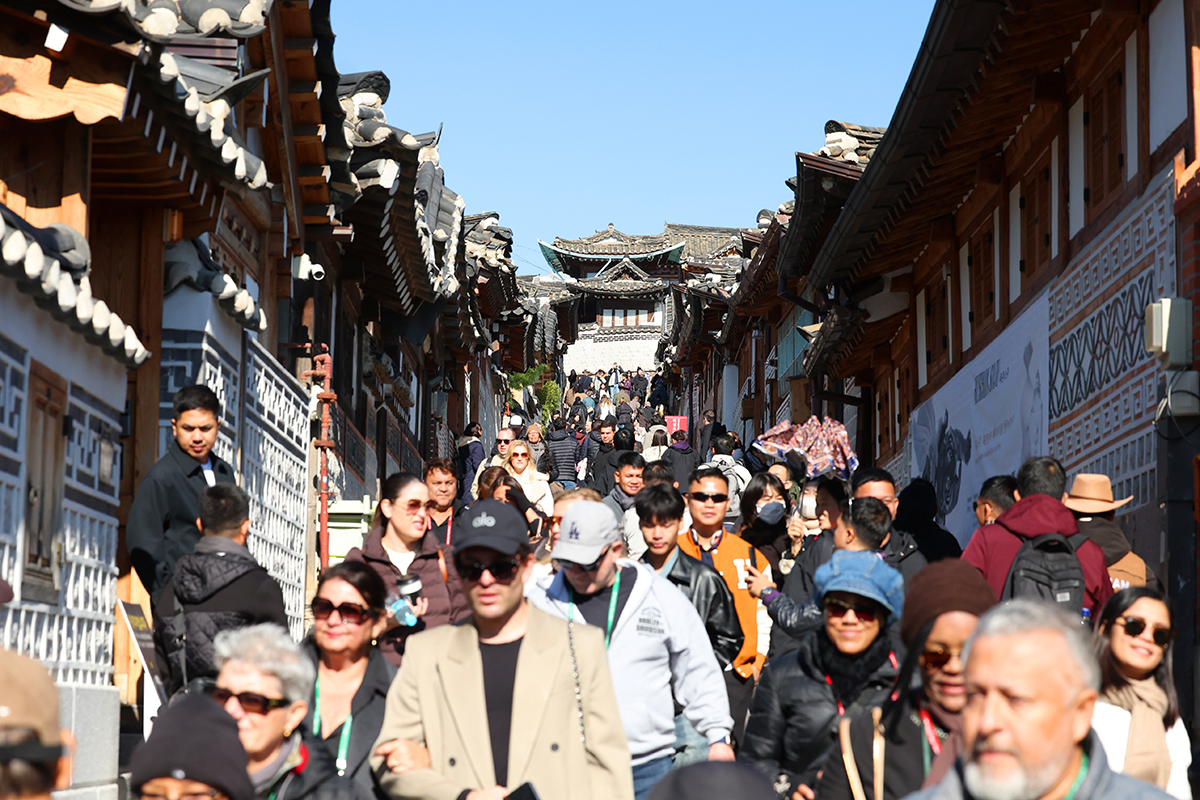
Local authorities have tried to respond to this pressure with measures to control overtourism: time restrictions, flow management, limits on buses, fines, or campaigns asking for silence and respect. These measures matter because they recognize that the problem exists. When a residential neighbourhood needs to regulate the presence of visitors in order to guarantee its residents’ rest, it is clear that touristification has reached a worrying level.
However, these solutions also reveal a contradiction. The same public authority that now tries to limit the effects of tourism previously helped turn the neighbourhood into a heritage brand. First, the place is conserved and promoted; then an attempt is made to contain the pressure generated by that promotion. This is not simply about blaming the administration, nor about denying the need to preserve heritage. The issue is more complex: how can a historic neighbourhood be protected without turning it into a tourist commodity? How can visitors be attracted without expelling neighbourhood life? How can buildings be preserved without emptying them of their social content?
Bukchon teaches us that conserving façades is not enough. A neighbourhood is not only its architecture. It is also the people who live there, the shops that sustain daily life, the rhythms of everyday routines, neighbourly relations, silences, care, and habits. If all that disappears, a beautiful landscape may remain, but it is no longer the same neighbourhood.
Tourism gentrification has precisely that capacity: it does not always physically destroy a place, but it can change its function until it becomes unrecognizable. The rooftops are still there. The streets are still there. The doors are still there. But the logic of use has changed. Where there was residence, temporary accommodation appears. Where there was everyday commerce, tourist consumption appears. Where there was intimacy, exposure appears. Where there was ordinary life, an experience organized for others appears.
That is why Bukchon should not be read only as a case of “too many tourists”. Overtourism is the visible part of the problem, but beneath it lies a deeper transformation: the neighbourhood has been revalorized through tourism. Its heritage has become an economic asset. Its image has been integrated into Seoul’s global brand. Its housing has acquired new possibilities of profitability. Its public space has been reorganized as a scenic route.
And this is where the deeper urban question appears: for whom is the city preserved? If heritage is protected so that it can continue to be inhabited, conservation can strengthen urban life. But if it is protected in order to be consumed, photographed, and monetized, it may end up expelling precisely what it claimed to defend. Bukchon summarizes this tension with almost painful clarity: the neighbourhood is revalorized because it preserves a traditional life, but that revalorization threatens to make that life unviable.
There is no easy solution. Completely closing the neighbourhood to tourism does not seem desirable or realistic. Leaving it at the mercy of the tourist market does not either. The challenge lies in finding forms of protection that are not limited to tiles and façades, but also include rents, residential uses, everyday commerce, neighbourhood rest, limits on tourist conversion, and real participation by those who live there.
Bukchon remains one of the most fascinating places in Seoul. But precisely for that reason, it should be looked at carefully. Not only as a postcard, but as a warning. Its beauty attracts us, but its conflict teaches us. It shows that urban heritage can be a bridge between past and future, but also a tool of exclusionary revalorization. It reminds us that a city is not preserved only by keeping buildings standing, but by ensuring that it remains possible to live in them.
Bukchon’s lesson is easy to formulate and difficult to apply: a historic neighbourhood cannot survive if it becomes only a stage. It may need visitors, perhaps, but above all it needs neighbours. Because when the city begins to live more for those who photograph it than for those who inhabit it, heritage ceases to be shared memory and begins to become scenery.