VENTURA
  • Cultura
    • Videojuegos
    • Arte
    • Cine
    • Series
    • Literatura
    • Música
  • Divulgación
    • Geografía
    • Historia
    • Geopolítica
    • Seguridad
    • Desarrollo y Medio Ambiente
    • Ciencia y Tecnología
    • Economía
    • Religión y Teología
  • Educación
    • Historia
      • Historia (Secundaria)
        • Actividades y proyectos
        • Prehistoria
        • Historia Antigua
        • Antigua Grecia
        • Antigua Roma
        • Edad Media
        • Edad Moderna
        • UD 1 – Antiguo Régimen e Ilustración
        • UD2 – Liberalismo y nacionalismo
        • UD3 – Revolución Industrial
        • UD4 – España: S.XIX
        • UD5 – Imperialismo y 1ª GM
        • UD6 – Periodo de entreguerras
        • UD7 – Revolución rusa
        • UD8 – 2ª Guerra Mundial
        • UD9 – España: primer tercio S.XX
        • UD10 – Guerra Fría
        • UD11 – España: desde 1939
        • UD12 – El Tercer Mundo
        • UD13 – Un mundo en transformación
      • Historia (Bachillerato)
        • Edad Moderna
        • Edad Contemporánea
        • Liberalismo
        • La Restauración
        • Segunda República y Guerra Civil
        • Historia y Cultura de Aragón
    • Geografía
      • Geografía (Secundaria)
        • Actividades y proyectos
        • UD1 – La Geografía, una ciencia total
        • UD2 – Organización del territorio
        • UD3 – Geoeconomía y Geopolítica
        • UD4 – Sector primario
        • UD5 – Sector secundario
        • UD6 – Sector terciario
        • UD7 – Geografía de la población
        • UD8 – Geografía urbana
        • UD9 – Desarrollo y medioambiente
      • Geografía (Bachillerato)
        • Geografía de la Población
        • Geografía Urbana
        • Geografía Rural
        • Geografía Económica
        • Desarrollo y medioambiente
        • > Acceso a la Universidad
          • > > > Materiales para la EvAU 2024
          • > > > Materiales para la PAU 2025
      • Geografía (Universidad)
        • Geografía de la Población
        • Geografía de Hispanoamérica
        • Seminario para docentes
    • Bilingüe
      • History
      • Geography
    • Filosofía
      • 0. Listado de filósofos
      • 1. Los presocráticos y el arché
      • 2. Todo Platón
      • 3. Todo Aristóteles
      • 4. Todo Santo Tomás de Aquino
      • + El concepto de ‘sustancia’
      • + Filosofía en ‘Matrix’
    • Literatura
      • Ilustración y Romanticismo
      • Realismo
      • Generación del 27
      • El teatro
      • Literatura en el siglo XX
    • Historia del Arte
      • Pintura
      • Escultura
      • Arquitectura
    • Ciudadanía y Valores Éticos
    • Inglés
  • Reflexión
    • Reflexión sobre la Realidad
    • Reflexión sobre la Sociedad
  • AUTOR
  • BLOG
  • IDVA
  • RECURSOS
  • BMVA
  • LIBROS
  • VEN
  • MÁS
VENTURA
  • Divulgación
  • Cultura
  • Educación
  • Reflexión
  • Economic Geography & Geopolitics

Lesson 303 – Offshoring: from the Core to the Periphery

  • 20 mayo, 2016
  • 6.7K views
  • VENTURA Educación

Geographers like to talk about Core-Periphery Theory to explain how the world works. This division distinguishes between the developed countries (also grouped under names like «Western World», «Economic Triad» or just «the North») and not-fully-developed countries (those are the vast majority of the nations, known as «developing countries», «Third World», «the South» or «emerging countries»).

It all started with colonialism, back in 16th and 19th centuries. The Core has had the economic and political power for centuries, and the Periphery remained forgotten -and exploited by the Core- until recent decades.

  • The Core: formed by the western countries, the Core is characterized by a very high Human Development Index, good infrastructures and services (health, education, transport, administration…), a high life expectancy, democratic systems, development of the Tertiary Sector, a decreasing and old population and economies based on knowledge.
  • The Periphery: formed by the developing and emerging countries, the Periphery is characterized by a low or medium (or sometimes high) Human Development Index, bad infrastructures and services, a lower life expectancy than in the Core, political systems that are not always democratic, a weak Tertiary Sector (Primary and Secondary Sectors are more developed in the Periphery), a fast-growing population, that is also very young, and economies based on low-skilled jobs.

Thanks to globalisation the Periphery has managed to grow and get a bigger share of the world’s power, measured in the share of the world’s anual GDP generated by each region (Core and Periphery). During the 20th century Periphery just generated a 25% of the world’s GDP (gross domestic product), whereas in 2010 that percentage rose up to 45%. The 2008 financial crisis helped decreasing the economic differences between the Core and the Periphery, as the most affected countries by it were those in the Core. 20+ years of offshoring and a large population have also boosted the Periphery’s economy, although we still find extremely poor nations in the margins of the world, far from the Core.
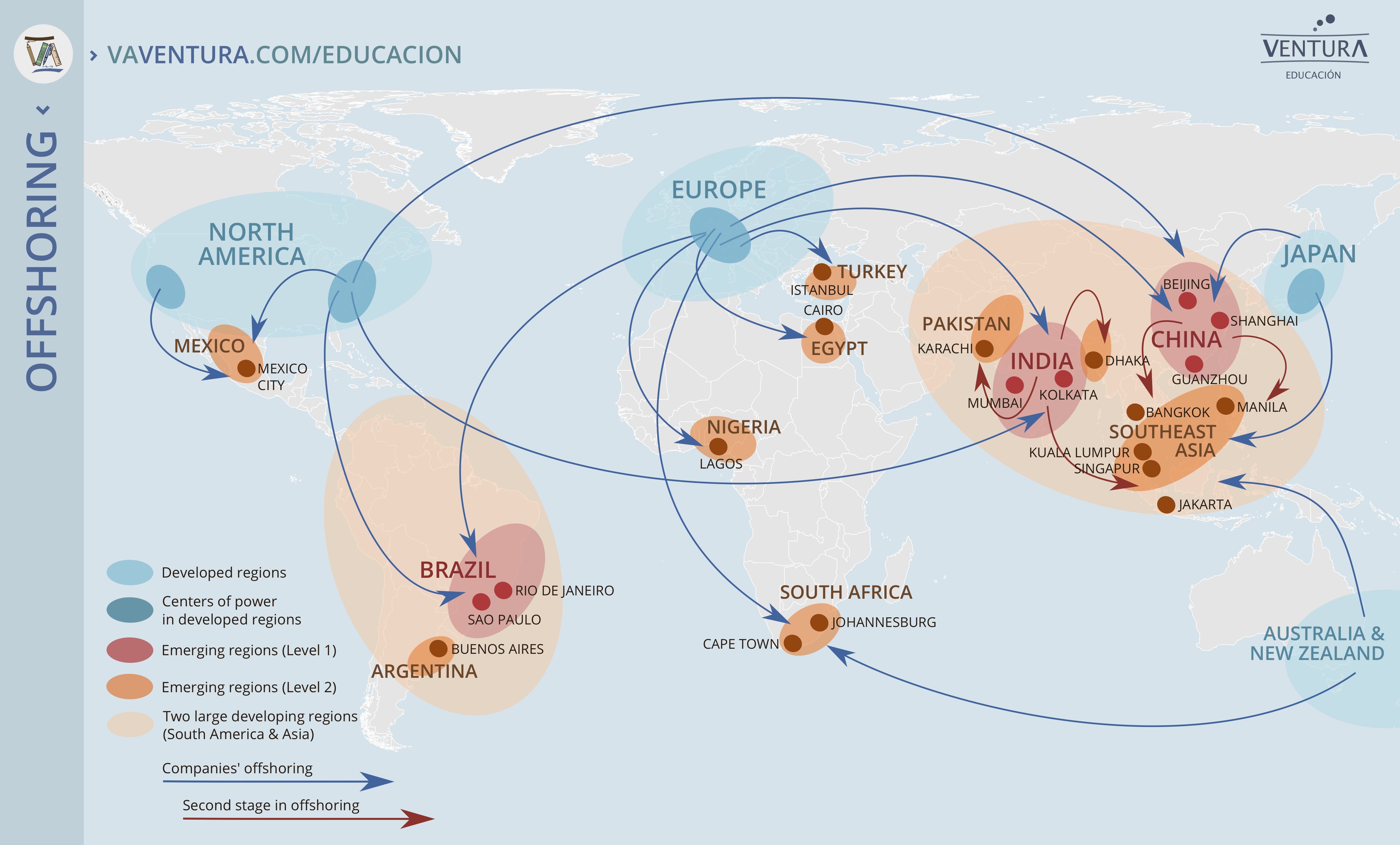
Offshoring can be perfectly seen in the textile industry, the sector that manufactures clothes and other textile products. In the Periphery, people that work in this industry suffer inadequate and insufficient working conditions: long-hour work shifts, poor infrastructures, no labour rights (no unemployment benefits, no right to strike…), bad safety measures, low salaries, use of child labor… Also, the health of the workers is compromised by the toxic products and dyes used in the production process.

Textile industry is usually related to laboral accidents. The investment in improving the working facilities is almost zero, and so workers are crowded in old factories and buildings, with bad infrastructures and bad ventilation systems. In 2013, a textil factory in Dhaka, Bangladesh, collapsed killing more than 900 workers.

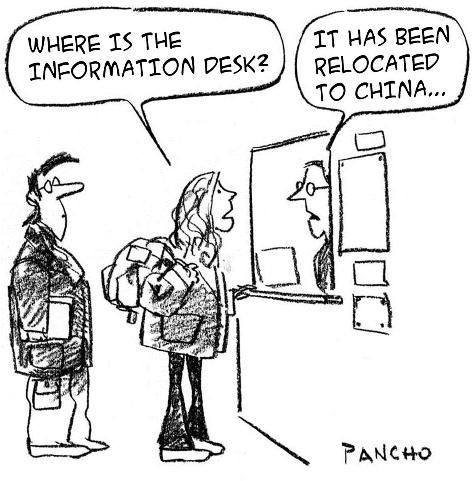
Governments -both in the Periphery and those from the Core- allow this to happen because it benefits -almost- everyone: the company that relocates its production is happy because it reduces costs, the government of the country that receives the factory is happy because it creates jobs, the government of the country where the company comes from is also happy, because its economy moves towards the Tertiary and Quaternary sectors (instead of the Secondary sector). Low-skilled jobs are not wanted in the Core. It is not so clear that the workers in the Periphery are as happy as their governments and businessmen. Also, workers in the Core denounce the lack of jobs in the Secondary sector, as they all have relocated to the Periphery.
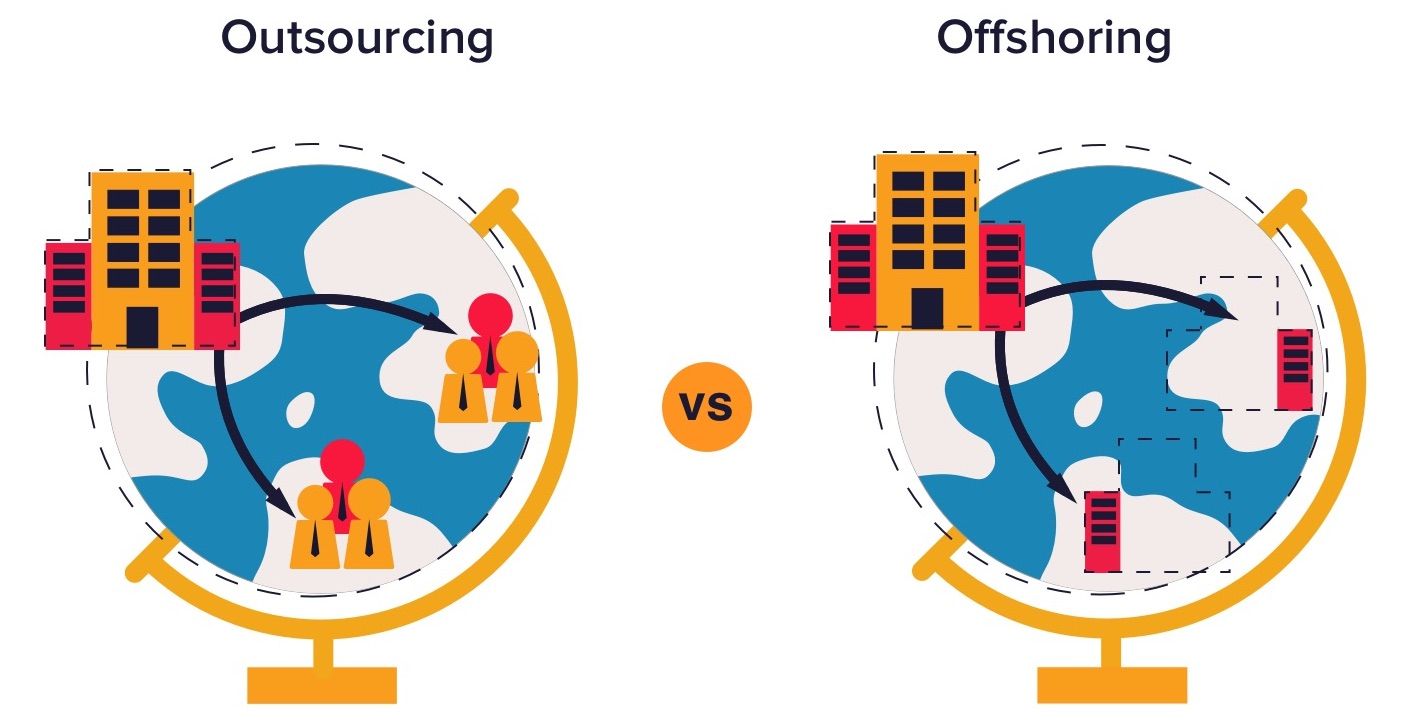
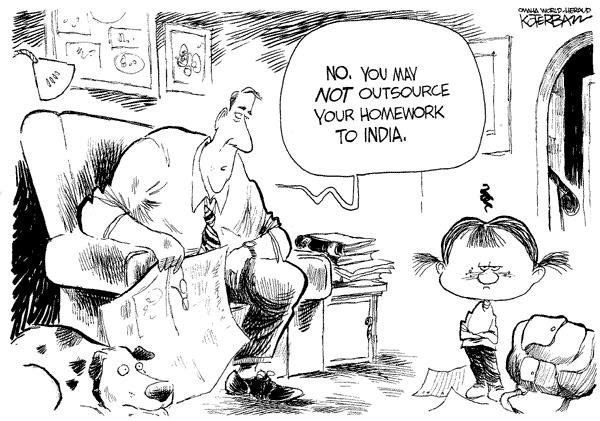
  • Outsourcing means to contract out a part of your business to an external supplier, so they can handle that business activity for you.
  • Offshoring is to relocate part of your business to another country to take advantage of lower costs and better resources.
LEARN MORE!

➡️ La deslocalización empresarial

➡️ Las multinacionales

➡️ Centro, Periferia y centralidad
Possible exam questions

Possible question 1

In a world map, point out the Core and the Periphery. Explain two characteristics of each region.

Possible question 2

What is offshoring? Why would a company want to adopt this business strategy?

Possible question 3

How are the working conditions in Periphery's nations? Mention one industry in which those conditions can be seen clearly.

Possible question 4

In a world map, draw the main arrows to explain from where to where does the process of offshoring take place. Locate and mention three cities in the Core and three cities in the Periphery.
VENTURA Educación

VENTURA Educación es un proyecto de VENTURA para crear materiales y apuntes de Historia, Literatura, Geografía, Inglés, Filosofía e Historia del Arte. Estudiantes y profesores pueden plantear dudas y pedir contenidos escribiendo a venturaeduca@gmail.com

Ver Publicación
  • Cine

Ciudades de película: las mejores películas por ciudad

  • Juan Pérez Ventura
  • 3 octubre, 2024
Ver Publicación
  • Teorías de la gentrificación

Gentrificación: propuesta de tipología y ejemplos de cada tipo

  • Juan Pérez Ventura
  • 16 junio, 2025
Ver Publicación
  • París

Estadios llenos, casas vacías: París 2024 y la gentrificación

  • Juan Pérez Ventura
  • 11 septiembre, 2024
Ver Publicación
  • Arte

Las fachadas de Salamanca

  • Juan Pérez Ventura
  • 16 mayo, 2024
Ver Publicación
  • Música

La Gran Migración del Blues

  • Juan Pérez Ventura
  • 23 noviembre, 2023
Ver Publicación
  • Religión

El debate central en el cristianismo: Jesús, ¿Hijo de Dios o Dios?

  • Juan Pérez Ventura
  • 1 agosto, 2024
Ver Publicación
  • Economía

El siglo de China: presencia en la economía global

  • Juan Pérez Ventura
  • 18 diciembre, 2024
Ver Publicación
  • Arte
  • Literatura
  • Religión

Bajando al Infierno (I): las legiones de Astaroth

  • Juan Pérez Ventura
  • 26 septiembre, 2024
Social Accounts
Facebook Likes
Twitter Followers
Instagram Followers
LinkedIn Followers
  • El transporte marítimoEl transporte marítimo
    El transporte marítimo es el principal modo de realizar el comercio internacional. A diferencia del transporte aéreo, el transporte por carretera o el transporte ferroviario, el transporte marítimo permite enviar…
  • Las fachadas de SalamancaLas fachadas de Salamanca
    El visitante que pasee por las calles empedradas de Salamanca corre el riesgo de quedarse horas parado, de pie, contemplando las espectaculares fachadas que protagonizan la riqueza arquitectónica de la…
  • El Ponto: descubriendo una región históricaEl Ponto: descubriendo una región histórica
    Capítulo 1. Los orígenes del Ponto En las brumas del tiempo, cuando los dioses aún caminaban entre los hombres y las montañas del norte de Anatolia se alzaban como gigantes…
  • Goya: contexto y obraGoya: contexto y obra
    1. Goya y su contexto La figura de Francisco de Goya (1746–1828) está profundamente entrelazada con uno de los periodos más convulsos de la historia de España y de Europa.…
  • Los Mejores Pintores de la HistoriaLos Mejores Pintores de la Historia
    He de reconocer que me encanta el arte, y especialmente cuando se plasma sobre lienzos. Es una manera más de comprender cómo funciona el mundo, y de tratar de conocer cómo…
  • Los Palacios renacentistas de Zaragoza: un viaje al siglo XVILos Palacios renacentistas de Zaragoza: un viaje al siglo XVI
    En la Zaragoza del siglo XVI, los grandes palacios urbanos no buscaban impresionar desde la calle. Sus fachadas de ladrillo, sobrias y discretas, apenas dejaban intuir la riqueza que ocultaban…
  • El ajedrez global: el juego de la geopolíticaEl ajedrez global: el juego de la geopolítica
    Para comprender cómo funciona el mundo es muy útil imaginar un tablero de ajedrez. Elementos como los bandos, las fichas, el avance, la eliminación de piezas enemigas y la estrategia…
VENTURA
  • AUTOR
  • BLOG
  • IDVA
  • RECURSOS
  • BMVA
  • LIBROS
  • VEN
  • MÁS
venturacontenidos@gmail.com

Ingresa las palabras de la búsqueda y presiona Enter.