On 7 November 2016, a court in Lagos issued an order preventing the state government from demolishing several waterfront communities. The residents had gone to court because they feared losing their homes, and the judge’s decision offered them temporary protection. Two days later, bulldozers arrived at Otodo Gbame. Police officers and armed men were involved in an operation that left thousands of people fleeing from their homes, some towards the waters of the Lagos Lagoon.
A court had ordered the demolitions to stop. The demolitions went ahead anyway. This was the beginning of one of the most widely documented forced eviction cases in contemporary Lagos. Between November 2016 and April 2017, Otodo Gbame was repeatedly attacked, partially rebuilt by its residents and eventually destroyed. Thousands of people lost their homes, businesses and access to the lagoon on which their livelihoods depended. The story raises an uncomfortable question: what happens when a community wins legal protection but cannot prevent its own destruction?
A fishing village surrounded by a growing city
Otodo Gbame was located on the Lagos Lagoon, in the Lekki area, one of the most dynamic fronts of residential and commercial development in Nigeria’s largest city. The settlement was predominantly inhabited by Egun, also known as Ogu, a community with deep historical connections to fishing and coastal life around Lagos and neighbouring areas of West Africa. According to research by Gideon Olaniyi Omoniyi, the community covered approximately 56 acres and accommodated around 30,000 residents before the main evictions. These figures are estimates derived from community-based documentation, not a complete official census.
Part of Otodo Gbame stood on land; other sections extended over the water, with houses supported by wooden stilts. Canoes connected different parts of the settlement and linked residents to fishing grounds, markets and neighbouring communities. Fishing was an important economic activity, but people also traded, operated small businesses and provided local services.
There were five private primary schools and a health clinic. The settlement lacked adequate public infrastructure, including sanitation, water supply and electricity, but it was not an empty or socially disorganised space. Residents had developed their own arrangements for housing, education, commerce and everyday mobility.
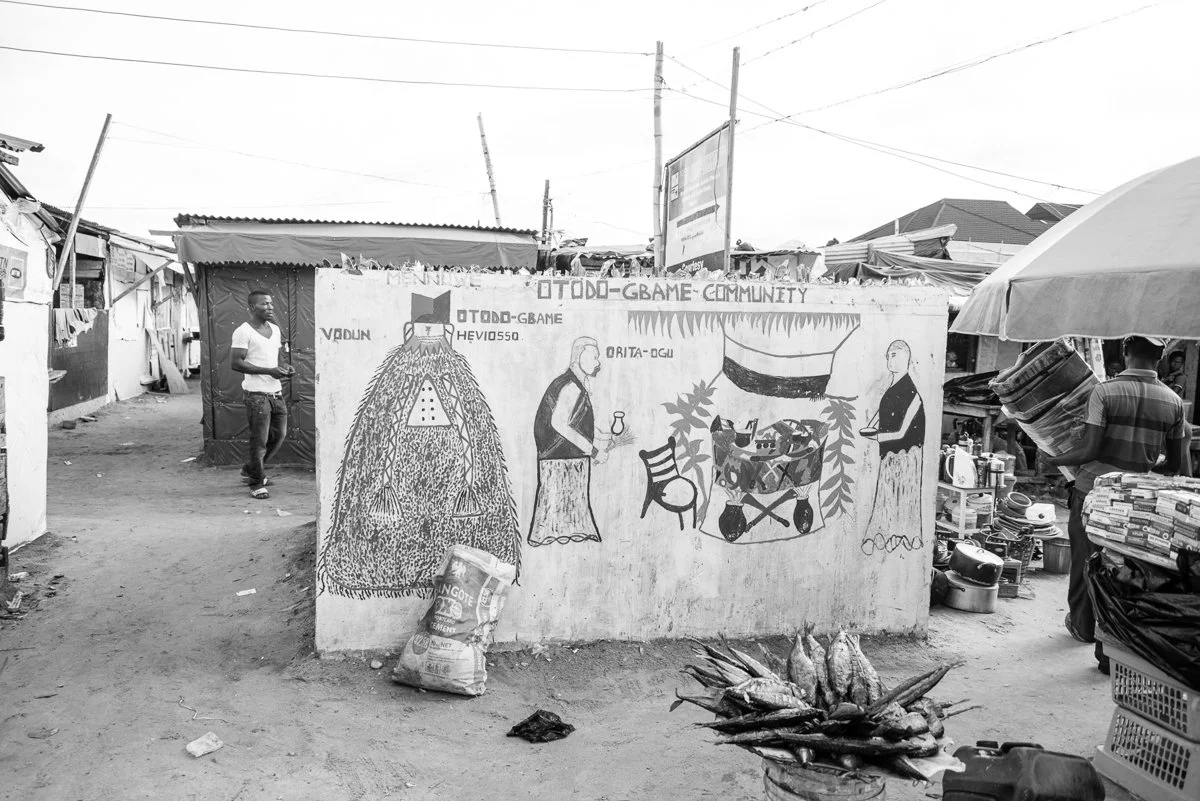
There was another important characteristic: Otodo Gbame occupied land that had become increasingly attractive to real-estate investors. As Lekki expanded, residential estates, roads and commercial developments transformed the surrounding landscape. The community was increasingly surrounded by wealthier neighbourhoods, despite retaining its own forms of housing and economic activity. This geographical contrast became central to the conflict.
Residents claimed historical occupation and customary rights over the land, while members of the Elegushi family advanced competing property claims. Nigerian land law, traditional authority and government institutions intersected in ways that made the question of ownership considerably more complicated than a simple dispute between legal owners and illegal occupants.
In fact, the conflict had already reached the courts before the main demolitions. In November 2015, residents initiated legal proceedings following land reclamation activities near their settlement. By 2016, however, the struggle over land was becoming a struggle over whether the community would be allowed to continue existing.
Seven days to leave the waterfront
On 9 October 2016, Lagos State Governor Akinwunmi Ambode announced that informal settlements along the city’s waterfronts and creeks would be demolished within seven days. The authorities justified the measure through concerns about insecurity, criminal activity and the use of irregular waterfront structures as possible hiding places. Otodo Gbame was among the communities threatened by the announcement.
Residents organised themselves alongside other waterfront settlements, submitted petitions, protested and turned to the courts. Their effort resulted in a High Court injunction issued on 7 November 2016, restraining the Lagos State Government from carrying out the threatened demolitions. But on 9 November, following a confrontation involving youths from Otodo Gbame and neighbouring Ikate, fires broke out and a much larger demolition operation followed.
The precise responsibility for the initial fires was disputed. The state government referred to a communal clash, while residents alleged that security personnel also participated in setting homes alight. What is extensively documented is that police, armed men and demolition equipment took part in the destruction that followed.
According to Amnesty International’s investigation, the operation between 9 and 11 November involved bulldozers, gunfire, burning structures and residents escaping towards the lagoon. More than 25,000 people left the settlement during this first phase, while a later community enumeration identified approximately 4,700 people who remained.
Amnesty documented testimony indicating that nine people drowned during the evictions and that 15 people from Otodo Gbame remained unaccounted for. Its wider investigation recorded 11 deaths and 17 disappearances across Otodo Gbame and Ilubirin combined, figures that should not be confused with the numbers attributable exclusively to Otodo Gbame. Thousands of families lost possessions, homes and sources of income. Some residents slept in canoes or outdoors, while others sought refuge with relatives and friends.
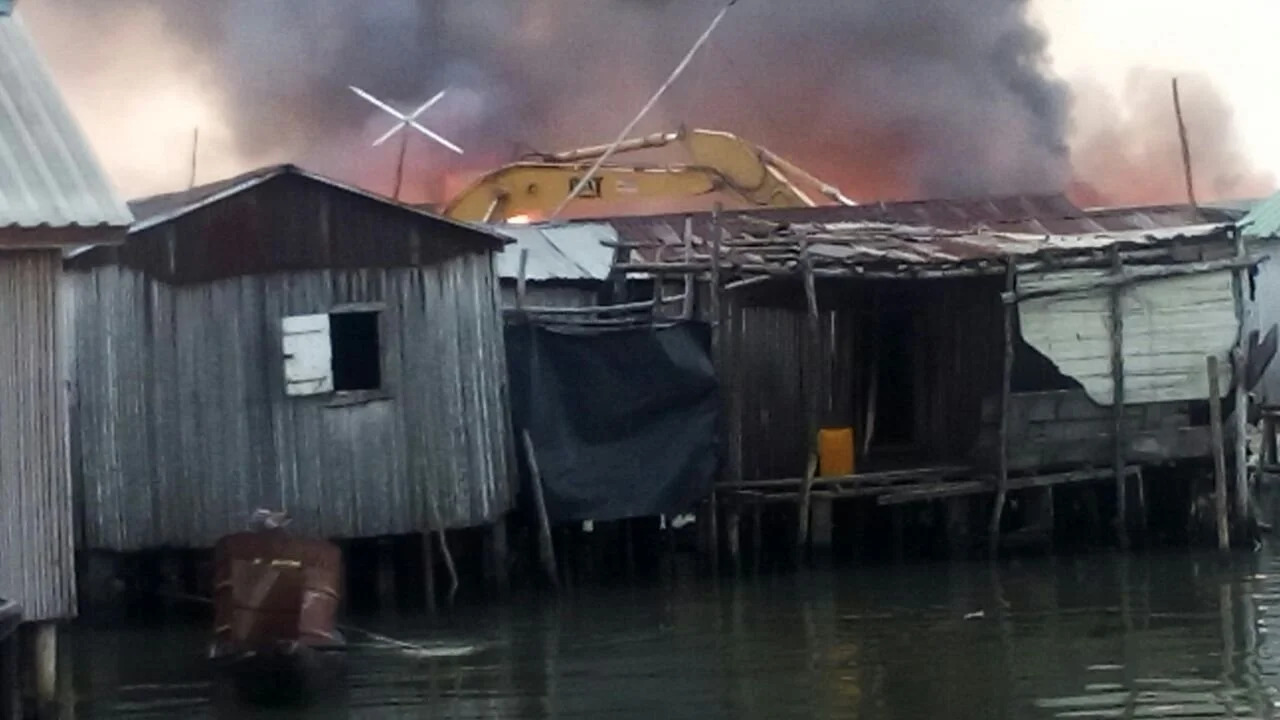
The destruction was especially serious because, for many residents, the lagoon was not simply the place where their homes stood. It was also where they worked.
A fisherman who lost his boat might lose his income. A family whose home was demolished might also lose the place where fish was stored, smoked or sold. Children who lost their school buildings could find their education interrupted. This was more than a housing crisis. It was the disruption of an entire local economy.
The residents who refused to disappear
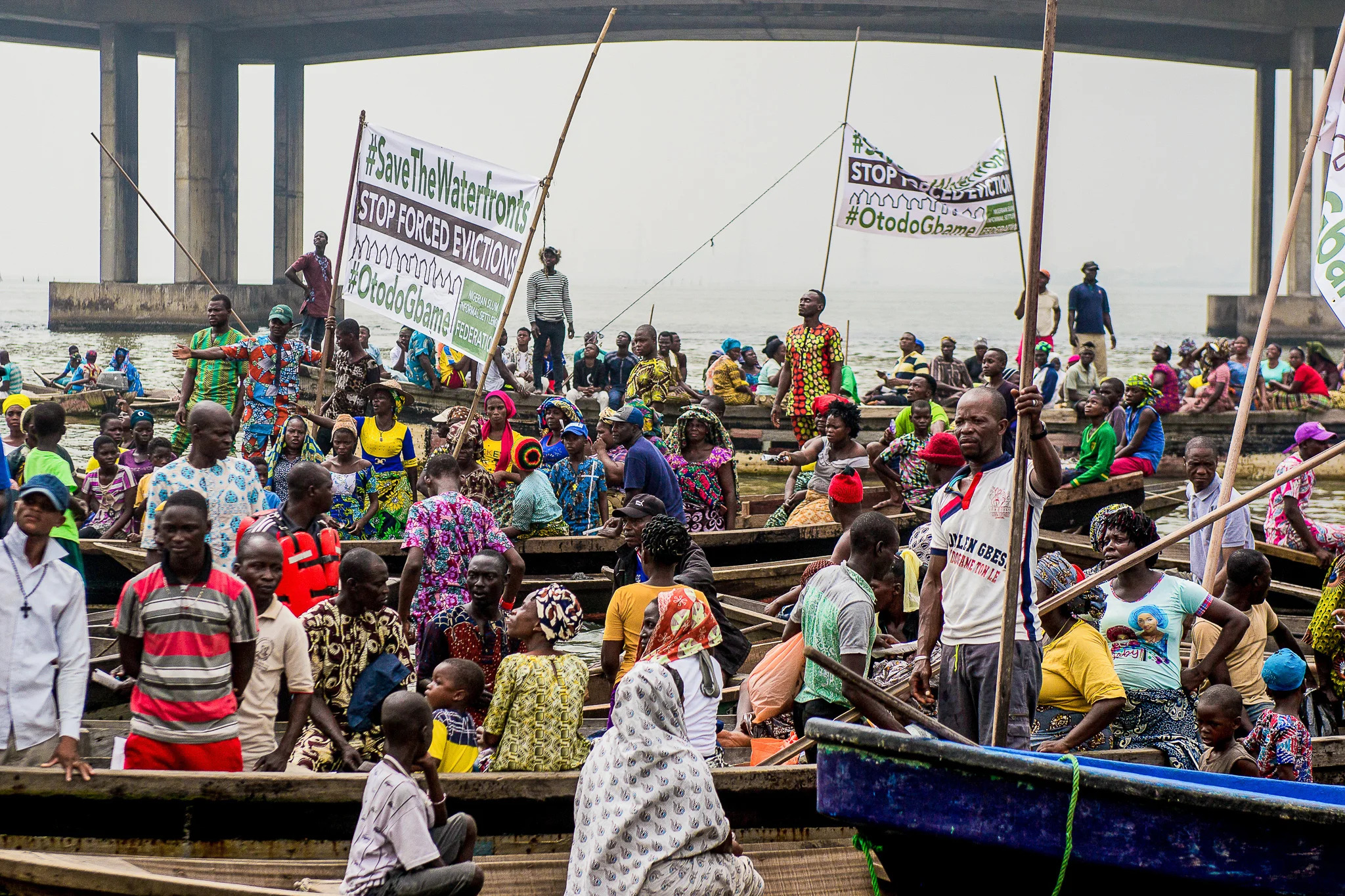
The first demolitions did not bring an end to Otodo Gbame. Thousands of residents remained or returned to the settlement. With support from the Nigerian Slum/Informal Settlement Federation and Justice & Empowerment Initiatives (JEI), they began rebuilding houses, wooden walkways and temporary facilities. Makeshift schools were established so that children could continue their education, while residents organised assistance and continued attending court hearings.
The JEI archive of the Otodo Gbame resistance documents this remarkable period, during which approximately 5,000 residents attempted to reconstruct their community despite the threat of further demolition. Their resistance took different forms. Some pursued legal proceedings; others joined public demonstrations. Women helped organise human barriers intended to protect the remaining settlement, while community members maintained networks of mutual support and solidarity.
The conflict was not simply between people who wanted to remain and authorities who wanted them to leave. It also concerned whose claims could be recognised within the city’s legal and political institutions. In January 2017, the High Court ruled that demolishing homes without adequate notice or alternative accommodation could amount to cruel, inhuman or degrading treatment, and ordered mediation between the parties.
Yet the following months brought renewed violence. On 17 March 2017, demolition equipment returned to Otodo Gbame, accompanied by police and other security personnel. Further operations followed on 21 March, while residents resisted additional attempts later that month. Amnesty International documented tear gas, assaults, arrests and allegations involving live ammunition. On 29 March, the state government withdrew from the court-ordered mediation. The remaining residents continued to defend their homes. But the final operation was approaching.
The final eviction: 9 April 2017
Early on 9 April 2017, security forces and demolition teams returned to Otodo Gbame. According to Amnesty International’s contemporary account, police officers, Taskforce personnel and armed men participated in an operation involving bulldozers, fire, tear gas and gunfire. The remaining residents were forced towards the lagoon. Many fled in canoes, carrying whatever belongings they could rescue. During the operation, Daniel Aya was shot and killed. Another resident, Monday Idowu, was wounded. By the end of the day, the settlement had effectively ceased to function as a residential community. Those who had resisted for months could no longer return to the place where they had lived.
The people dispersed across Lagos, including other waterfront communities. Some went to areas such as Ikorodu, Ajah, Apapa, Badagry and Makoko, where they attempted to rebuild their lives. But beginning again was not easy. Families had lost boats, tools, possessions, commercial relationships and their established access to fishing grounds. Others had been separated from relatives and neighbours. The authorities had removed a settlement from the waterfront. They had not removed the need of its inhabitants for housing, employment and a place in the city.
A victory in court, but no homes to return to
On 21 June 2017, the Lagos State High Court delivered a landmark judgment. The court ruled in favour of residents from Otodo Gbame and other waterfront communities, finding that forced evictions without adequate safeguards and alternative accommodation were unconstitutional. It restrained further evictions under such conditions and ordered consultation with the affected communities concerning resettlement. The decision was reported by Channels Television and celebrated by displaced residents and supporting organisations.
But the judgment arrived more than two months after the final destruction of Otodo Gbame. This created an extraordinary contradiction. The residents had obtained legal recognition of their rights, yet the physical settlement to which those rights had originally referred no longer existed. The state government subsequently appealed the judgment. Meanwhile, displaced households continued to demand its implementation.
Five years later, in 2022, Amnesty International Nigeria was still calling for consultation and resettlement in accordance with the High Court’s decision. The documentary sources reviewed for this article do not establish that comprehensive resettlement and restitution had been implemented by 2026. The existence of a favourable court ruling had not been sufficient to prevent the destruction of the community. Nor did it automatically provide displaced residents with a new place to live.
Imagining a New Otodo Gbame
Despite these setbacks, the community’s struggle did not end in 2017. In 2018, former residents began working with JEI and other organisations to develop a participatory vision for a New Otodo Gbame. Instead of accepting resettlement as a decision to be made entirely by public authorities, they wanted to help define what a new community should look like. The proposals addressed housing, fishing livelihoods, access to water, communal facilities and the possibility of preserving social networks.
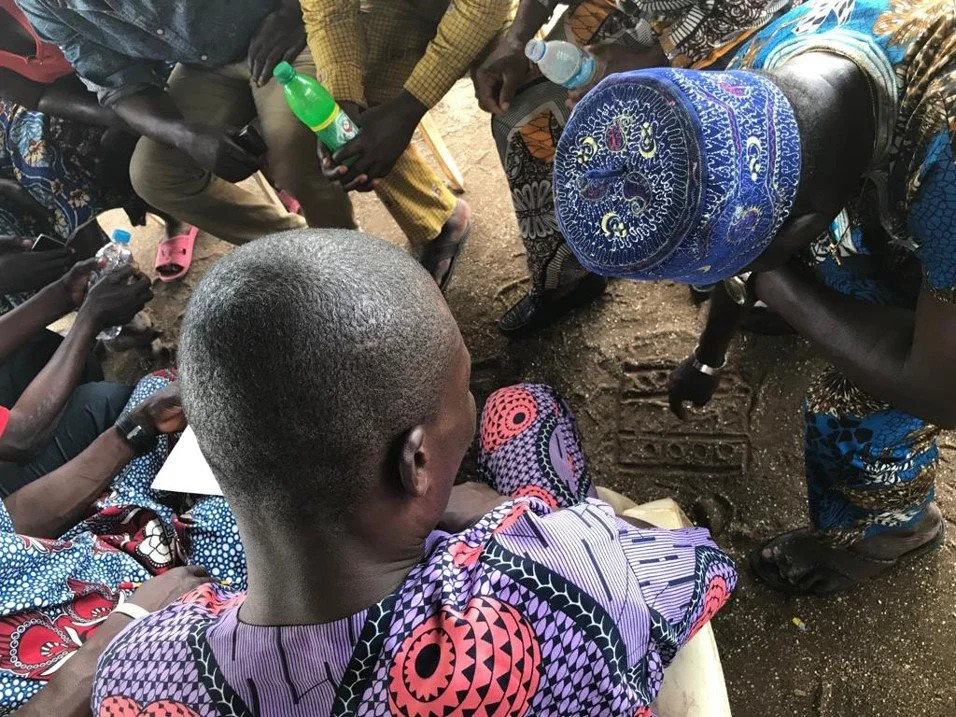
The initiative offers an important alternative to the way forced evictions are usually discussed. Residents were not asking exclusively for new houses. They wanted the possibility of restoring a community and the livelihoods that had sustained it. Their demands also help us understand a fundamental distinction in urban geography.
A house is a physical structure. A neighbourhood is a network of relationships, activities, memories and opportunities that develops around those structures over time. When an eviction destroys a house, the damage can be measured in materials and construction costs. When it destroys a neighbourhood, the losses are much harder to calculate. Otodo Gbame occupied land that had become increasingly valuable as Lagos expanded along its waterfront. Its residents had their own history, their own economy and their own claims to remain. Those claims were contested through political institutions, traditional authorities and the courts, but they were ultimately overcome by the physical destruction of the settlement.
The story of Otodo Gbame illustrates something that is easy to overlook when looking at maps of expanding cities: urban development is not only about what is constructed, but also about what is removed, who is displaced and whether those people are given any meaningful opportunity to remain part of the urban future being created. For the residents of Otodo Gbame, that question did not end when the bulldozers stopped. It continued in the courts, in their new places of residence and in their attempts to imagine a New Otodo Gbame.