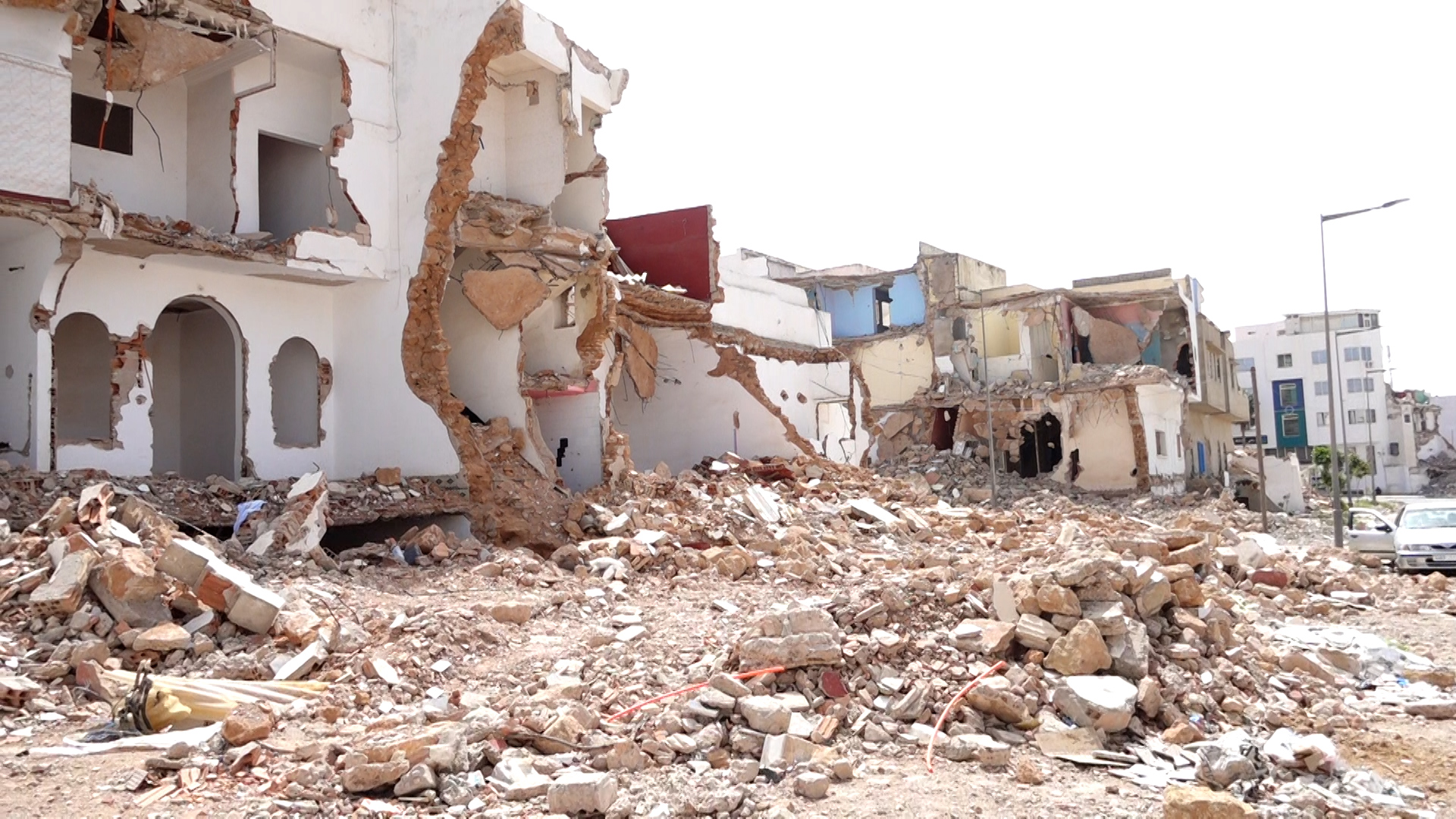
In March 2025, photographs taken in Rabat showed something unusual: houses that were still recognisable as homes, but whose walls had already been torn apart. Rooms that once formed part of private family life were suddenly exposed to the street. A doorway remained standing beside a pile of bricks. Part of a staircase led nowhere.
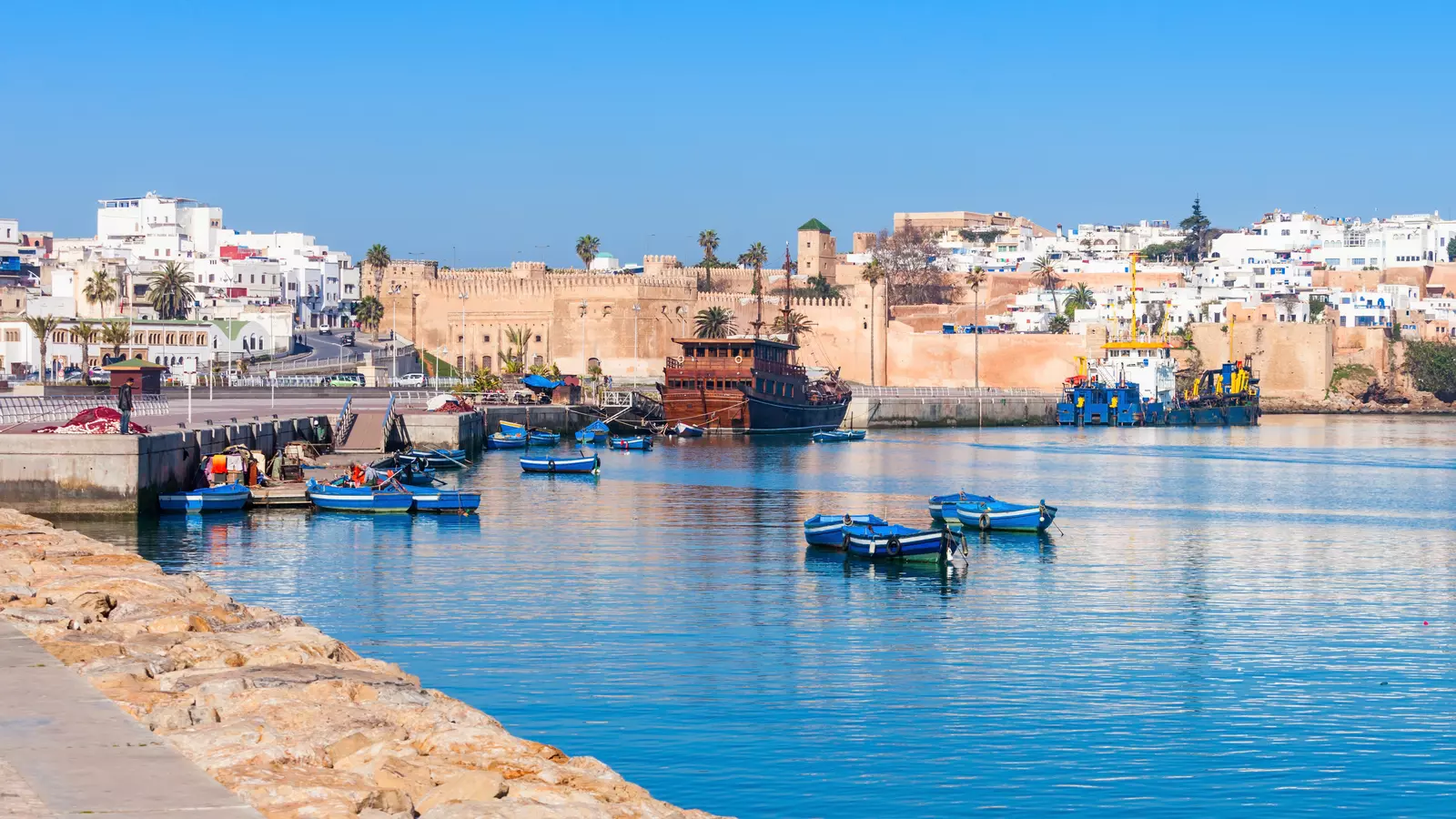
These images came from L’Océan, one of Rabat’s oldest neighbourhoods outside the historic medina, overlooking the Atlantic Ocean. For generations, people had lived in its streets, established businesses, rented apartments and gradually transformed their properties. Now, a large redevelopment programme was changing the neighbourhood’s physical appearance. The authorities presented the operation as part of a broader effort to modernise Morocco’s capital, improve its infrastructure and make its Atlantic frontage more attractive. But behind the demolished buildings was another story, considerably more complicated than a simple urban renovation project.
Some owners accepted compensation for their properties. Others questioned the prices offered and the procedures being followed. Some tenants obtained alternative accommodation, while others remained uncertain about their future. The question was not only what Rabat would look like after redevelopment. It was also who would be able to continue living there.
An old neighbourhood beside the Atlantic
L’Océan occupies a particularly interesting position in Rabat. It is part of the consolidated city, close to the historic centre and overlooking the Atlantic coastline. Its streets contain a mixture of residential buildings, small businesses and properties constructed or modified during different periods of the city’s expansion.
This is not an entirely informal settlement, nor is it an empty coastal area awaiting development. Its housing includes registered properties, buildings acquired through other recognised legal arrangements, rented apartments and long-established forms of occupation. These differences may seem like technical details, but they become extremely important when a redevelopment programme requires people to leave.
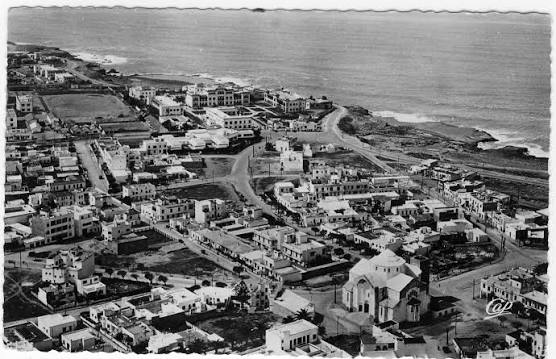
Consider three households living in the same building. One owns the property and holds a registered title. Another occupies a property acquired through a traditional notarised deed. A third has rented its home for decades. All three families may have lived in the same street for most of their lives. All three may use the same shops, schools and services. But their legal position is different, and so is their ability to negotiate compensation.
The current transformation also has a wider geographical context. Rabat has experienced major state-led redevelopment projects since the beginning of the twenty-first century. The Bouregreg Valley is perhaps the best-known example: a large-scale initiative intended to reorganise the urban landscape, introduce new investment and transform the relationship between the capital and its waterfront.
As Koenraad Bogaert explained in a 2012 study published in Urban Studies, projects of this kind involve much more than constructing new buildings. They also change how urban land is governed and how public institutions organise the development process. L’Océan belongs to this broader history of urban transformation, although its particular sequence of acquisitions and demolitions is much more recent.
The beginning of the demolitions
According to a September 2025 investigation by Le360, the first redevelopment works began in June 2024, when older residential buildings and deteriorated properties started being cleared. The institutional preparations had begun earlier. In February 2024, the Direction des Domaines de l’État, the government body responsible for state property, and the Wilaya of Rabat-Salé-Kénitra reportedly concluded an agreement concerning the acquisition of properties in L’Océan.
Meanwhile, the city was preparing a new urban development plan. After public consultation and municipal consideration in late 2024, the plan was published in Morocco’s Bulletin officiel on 24 February 2025. It envisaged improvements to roads and public infrastructure, the rehabilitation of existing urban areas and new opportunities for economic activity. For L’Océan, the programme included the requalification of part of the Atlantic frontage and the possibility of introducing new commercial, hospitality and other urban functions.
The transformation was already visible on the ground. By March 2025, demolitions were taking place in Sania Gharbia, an area directly affected by the redevelopment of L’Océan. Some buildings were partially dismantled, while others had already disappeared. But the legal nature of these operations soon became the subject of public controversy: were the residents selling their properties voluntarily? Were they being expropriated? And did they have a genuine opportunity to refuse?
A voluntary sale, or no real choice?
On 14 March 2025, Rabat’s mayor, Fatiha El Moudni, held a press conference to explain the redevelopment programme. According to SNRT News, she defended the legality of the city’s planning procedures and argued that the transformation was necessary to modernise Rabat, improve mobility and prepare the capital for future development.
The mayor also distinguished between different types of property operations. Some expropriations were associated with public infrastructure and road improvements. But the acquisitions taking place in Sania Gharbia, she explained, were being carried out through negotiated transactions with the Direction des Domaines de l’État. In French, these agreements are known as ventes de gré à gré: purchases negotiated directly between the parties, rather than imposed through a formal expropriation procedure.

The distinction was important. Not every owner had been subjected to the same legal procedure, and some residents accepted the proposed settlements. In September 2025, Le360 interviewed a resident who supported the redevelopment programme, describing the compensation process as consensual. For some owners of deteriorated properties, selling could represent an opportunity to obtain money or access better housing. Other residents and local representatives disagreed with the official interpretation.
In March 2025, the Democratic Left Federation (FGD) publicly denounced what it considered insufficient transparency, disputed compensation arrangements and pressure on property owners. As Yabiladi reported, opposition councillor Omar El Hyani argued that residents had been instructed to leave without receiving clear explanations of the legal basis for the operation. He also questioned whether negotiated sales could be considered genuinely voluntary when owners faced the prospect of demolition and future compulsory acquisition.
These were allegations made by opposition representatives and affected residents, not judicially established findings about every transaction. Nevertheless, they raise a fundamental question about the meaning of consent. Imagine that you own an apartment in a building marked for redevelopment. The authorities offer to purchase your property. You may accept the proposed price, reject it or attempt to negotiate better conditions.
But what happens if you also know that the planning authorities intend to transform the area and have legal powers to initiate expropriation? The negotiation does not necessarily take place between parties with equal influence over the future of the neighbourhood. This imbalance became even more relevant in 2026.
From negotiated purchases to formal expropriation
In April 2026, Médias24 published a detailed investigation reconstructing the redevelopment process. The investigation identified an important change. While the earlier operations had largely been presented through negotiated property acquisitions, ministerial decrees published from March 2026 formally invoked public utility to expropriate specific properties.
This did not mean that every previous sale had been an expropriation, or that all properties in L’Océan were now subject to identical measures. It meant that the institutional instruments used to transform the neighbourhood had evolved.
First came negotiations and acquisitions. Alongside them came demolitions and relocation arrangements. Then, for certain properties, formal public-utility expropriation procedures became part of the process. The difference matters because expropriation is a legal power that allows public authorities, under specific conditions, to acquire private property for a declared public purpose.
In Morocco, that power is governed principally by Law 7-81, while urban planning procedures are regulated through legislation including Law 12-90. But the existence of legal procedures does not answer every question concerning their implementation. The affected properties, the compensation offered, the opportunities to challenge decisions and the intended future uses of the land all remain relevant.
In L’Océan, residents and elected representatives continued questioning several of these issues. In March 2025, councillor Farouk Mahdaoui submitted a complaint to the Médiateur du Royaume, Morocco’s national ombudsman. The complaint, reported by H24info, raised concerns about alleged irregularities and the treatment of affected residents. By April 2026, the controversy had also reached the municipal council, where representatives disagreed over the legality, transparency and consequences of the programme.
How much is a home worth?
Compensation became one of the most sensitive elements of the redevelopment. In March 2025, Le360 reported figures of approximately 13,000 Moroccan dirhams per square metre for registered properties and 10,000 dirhams for properties supported by traditional notarised deeds. Other reporting in May 2026 referred to around 11,000 dirhams per square metre for certain unregistered properties. The figures varied by source, date and legal situation and should not be interpreted as a universal compensation scheme.
But even when an owner receives the agreed amount, another question remains.: can that money purchase an equivalent home in Rabat? If the compensation is sufficient to buy a comparable property nearby, the household may be able to preserve much of its daily life. If it is only sufficient to purchase a smaller dwelling on the metropolitan periphery, the consequences may be very different. In the second case, the family may retain a roof over its head while losing its previous proximity to employment, schools, relatives and familiar services.
For tenants, the situation can be even more complicated, because a tenant may have lived in the same home for thirty years without owning a square metre of the property. The landlord receives compensation for the building, but the tenant’s rights and relocation arrangements follow a different logic.
There were positive outcomes for some households. In September 2025, Le360 documented cases in which tenants obtained access to affordable housing in Tamesna. Other reporting described alternative housing arrangements in Témara, particularly for vulnerable residents. However, these programmes did not automatically cover every tenant, business operator or occupant.
The distinction is significant. A registered owner, a tenant and a small shopkeeper may lose access to the same street, but they do not necessarily receive equivalent forms of compensation or assistance. The problem is therefore not simply the amount paid for a property, it is whether the redevelopment allows residents to preserve something of the life they had built around that property.
The uncertainty continues
The redevelopment of L’Océan did not end in 2025. In August 2026, Le360 reported that demolitions and property acquisitions were continuing. Sources close to the operation described further acquisitions and a development strategy intended to reorganise the western part of the neighbourhood. Yet the identity of future investors and the precise uses of many cleared plots remained unclear to some elected representatives.
Then, on 25 October 2026, Le360 reported renewed concerns about property inventories, resident censuses and the prospect of further demolitions, drawing on reporting from Al Akhbar. Residents questioned what the administrative surveys meant for their homes, whether compensation and rehousing would be available and which areas might eventually be affected. Authorities, for their part, stressed that carrying out a census did not automatically mean issuing a demolition order. This is an important distinction: preliminary surveys, negotiated acquisitions and formal expropriations are different procedures. But it also shows how uncertainty over a neighbourhood’s future can affect everyday life long before a building is demolished.
Residents may postpone repairs, reconsider investments, look for alternative accommodation or wonder whether they should accept an offer to sell. And because the redevelopment remains geographically uneven, uncertainty is not distributed equally across the neighbourhood.
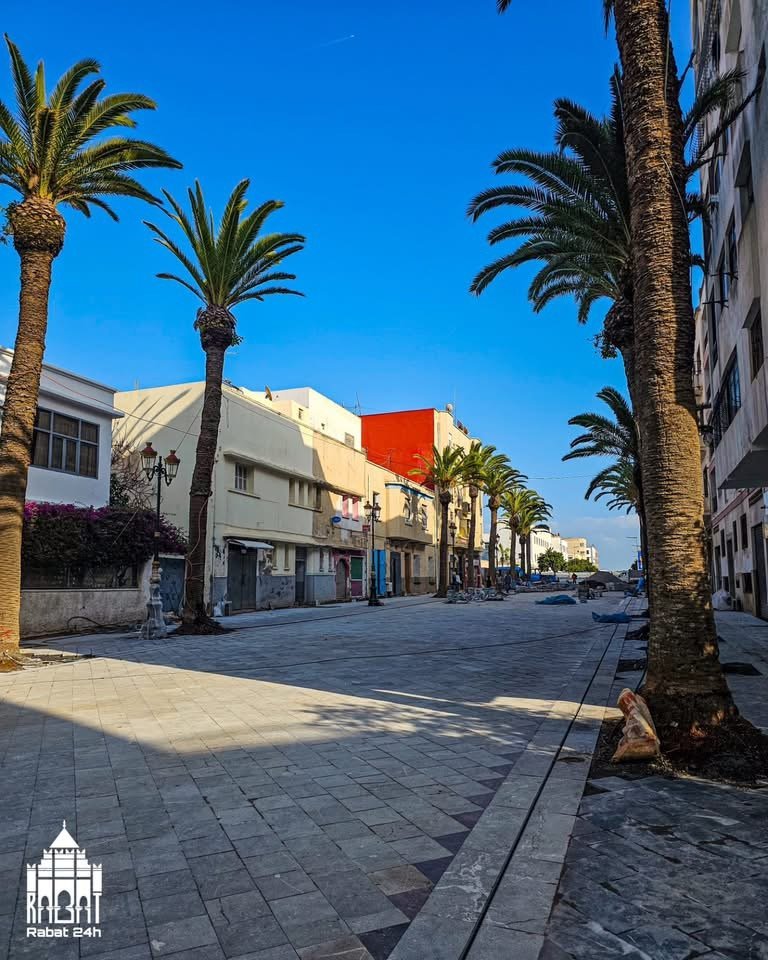
There is also a geographical distinction that must be preserved. L’Océan, Sania Gharbia and the nearby Corniche Nord development are related but not identical areas. The investigation by Médias24 specifically warned against assuming that all demolished properties belonged to the same redevelopment perimeter or had the same intended future use.
The new urban plan certainly encourages higher-value uses along parts of the Atlantic frontage, including commercial and hospitality development. But that does not demonstrate that every demolished house will be replaced by a luxury apartment or hotel… nor can every demolition be attributed directly to the 2030 FIFA World Cup. Major international events form part of the political and economic context of Rabat’s modernisation, but the transformation of the city has a longer history and involves multiple planning objectives.