The industrial revolution was accompanied by considerable population growth. Until the 18th century, the European population grew slowly, due to the existence of a very high mortality, a consequence of epidemics and famines caused by poor harvests. However, from the second half of the 18th century, the population began to grow at an unprecedented rate and Europe grew from 190 million inhabitants in 1799 to more than 400 million in 1890.
The causes of population growth were twofold: the decline in mortality and the increase in fertility. The decrease in mortality was due to medical advances (vaccines), improved hygiene (latrines) and food (agricultural revolution). Although these advances prolonged the average age of adults, infant mortality remained very high: of all children born, only half of them lived beyond the age of fifteen.
Living in the industrial city
The increase in population made it necessary to move to the cities, which were growing with the waves of immigrants from rural areas, attracted by work in the industries. This process is called rural exodus.
- The growth of cities was not accompanied by urban planning, hence the lack of basic services: running water, sewerage, etc. The lack of hygiene was absolute.
- The workers lived crammed into small, squalid houses. His main hobby consisted of going to the tavern, while the women attended to housework. The improvement in their salaries allowed them to attend shows such as football (in 1863 the Football Association was created in the United Kingdom) or boxing (in 1865 the official rules of this sport were established).
- The bourgeoisie lived in elegant neighborhoods that were progressively improving their sewerage, drinking water, lighting and paving services. The great and wide boulevards for the promenade emerged. The bourgeoisie had an intense social life and went to cafes, the theater, the opera, the casinos or the cabarets.
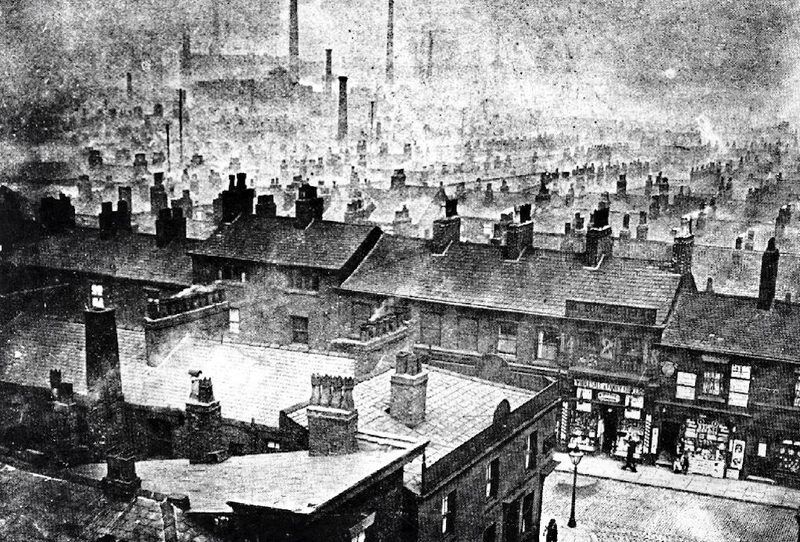 “It was a city of colored bricks, or rather of bricks that would have been colored, if the smoke and ashes had allowed it; but as it was, it was a city of unnatural red and black, like the painted face of a savage. It was a city of machines and tall smokestacks, from which endless serpents of smoke came out without rest, slipping through the atmosphere without ever fully uncoiling. They had a dark channel and a stream that carried water cloudy with a fetid juice, and there were vast constructions, pierced by windows, which echoed and trembled all day long, while the piston of the steam engines rose and fell monotonously, like the head of an elephant sick with melancholy. The city had several large streets, which resembled each other, and infinite alleys even more similar to each other, inhabited by people who alike alike, who entered and left at the same times, who walked in the same way, who went to do the same work, and for whom each day was identical to the one before and the next, and each year the vivid reflection of the one that had preceded him and the one that was to follow him”– Charles Dickens, HardTimes (1854).
Working at the factory
The living conditions of the working class during the first phases of industrialization were appalling. They were subjected to long hours of work (up to 16 hours), the security conditions in the factories and mines were very precarious, they lacked medical and unemployment insurance.
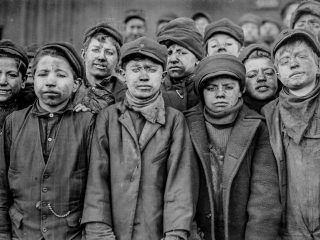
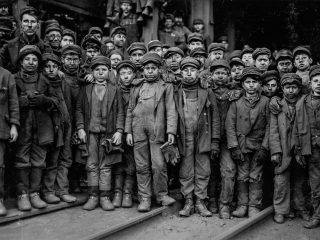
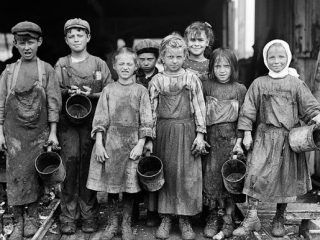
Child labor was a completely standard practice. Employers hired children by paying them 20% of an adult salary. The children were the perfect size to move between the machines and get into the mines more easily. Their little hands helped repair machines and they had more energy than many adults.
In 1874, the Law on Child Labor was passed in France, which established that the working hours of children under 12 years of age should be limited to six hours and they could not work night shifts. In 1901 in the United Kingdom the recruitment of children under 12 years of age was prohibited. Those over 12 years of age had working hours of up to 12 hours and could work in mines and quarries, and up to 16 years of age they had Sunday as a public holiday.
VidaDeUnObrero.
New social classes
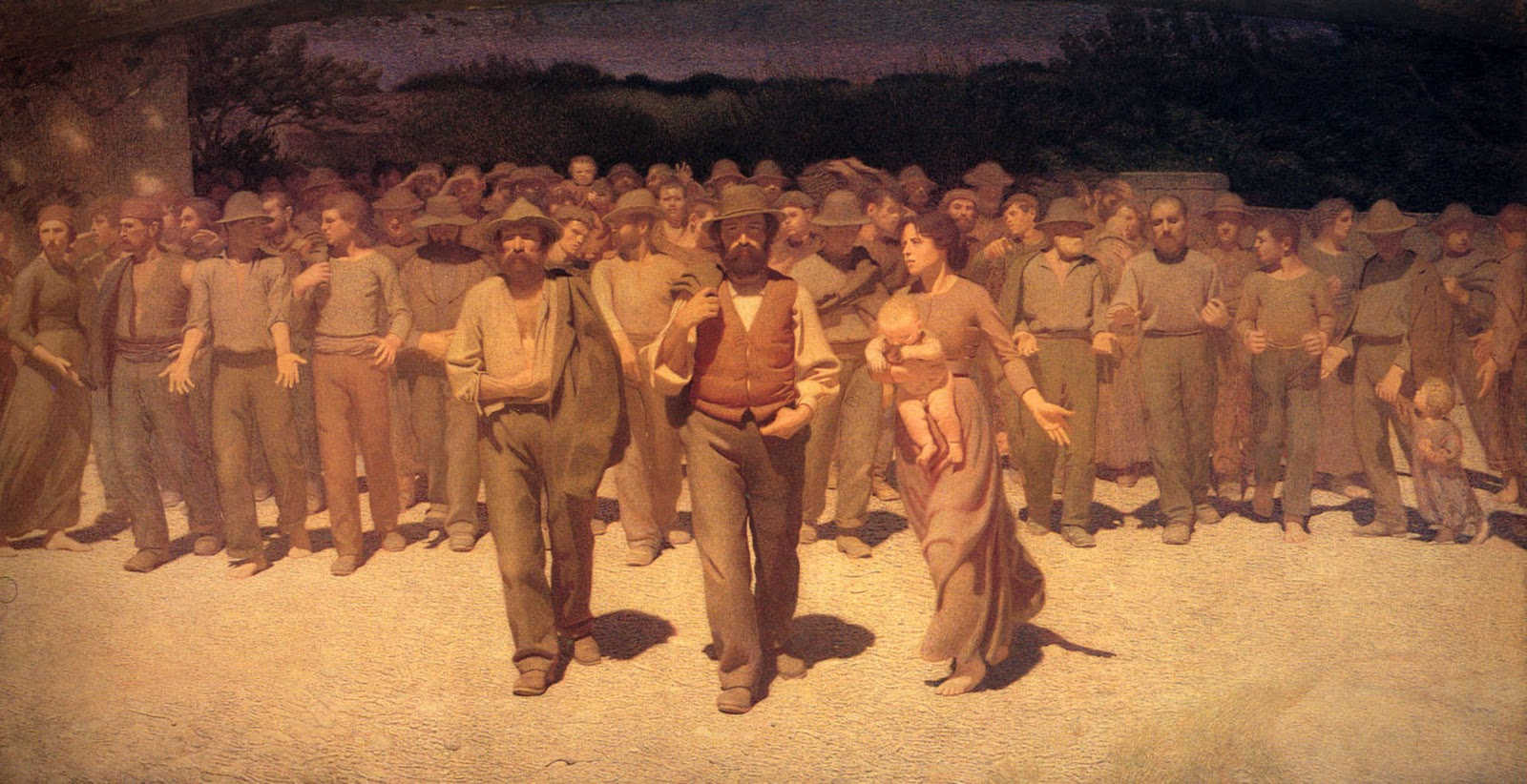
The Industrial Revolution brought with it the emergence of a new social class: the proletariat. It was made up of workers who worked in factories and lived in cities. The word «proletarian» derives from «prole», that is, the offspring, the children. It refers to the lack of workers of any other resource than their family. The workers did not own the machines they manipulated, they lacked control over them, they belonged to the bosses or the bourgeoisie. To survive, they sold their services to those in exchange for low wages.
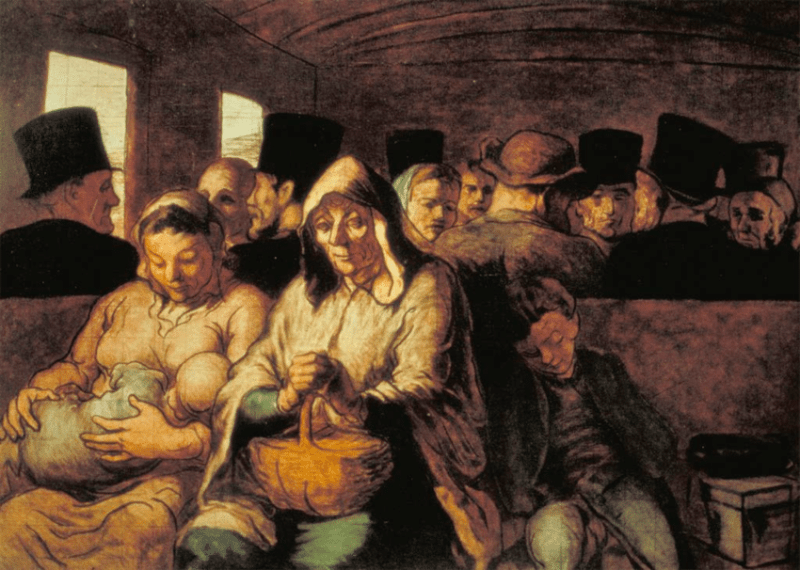
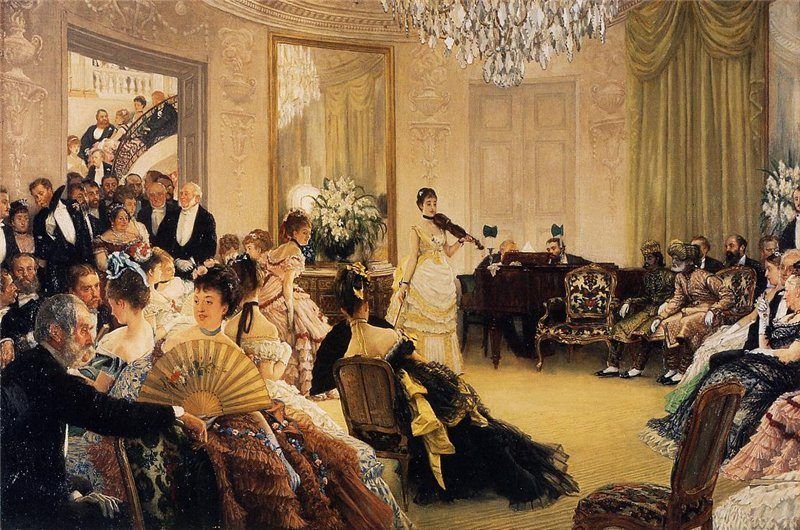
With the loss of power of the aristocracy and nobility (which during the Ancien Régime had enjoyed social preeminence), a new social class occupied the top of the new industrial society, the gentry. It encompassed diverse groups: businessmen, senior officials and some liberal professionals (doctors, lawyers, journalists …). They lived in the cities, in the new neighborhoods of the Ensanche, with numerous services, parks and public gardens. Their homes were comfortable and luxurious. They enjoyed a comfortable life and frequented the theater, opera, and dances. They also vacationed on the coast or in spas. They tried to imitate the nobility and aristocracy in their appearance (dress, manners, tastes), although the bourgeois did not possess noble titles or family privileges.
Labour movement
The precarious conditions in which the life of the working class developed, encouraged the emergence of ideologies that criticized the capitalist system. They advocated its destruction and the search for alternatives based on equality and solidarity. Thus arose various ideological currents such as utopian socialism, but two stood out for their importance: Marxism and anarchism. Marxism was the main ideology that inspired the labor movement. It was made by Karl Marx and his collaborator and friend Federico Engels.
- The proletariat organized itself into revolutionary political parties and unions to vindicate its interests and fight for the disappearance of capitalism. The SPD (Social Democratic Party of Germany) or the British Trade Unions were born as organizations.
- The workers, regardless of their nationality, had common problems and interests, this gave rise to the appearance of international associations such as the International Workingsmen’s Association, founded in 1864. The strike was one of the resources used as pressure measurement to meet your needs.
- Marxists proposed the formation of an international of strongly centralized workers’ parties, with a minimum program based on the struggle for concrete social and labor conquests, and a maximum program based on the struggle for social revolution through the conquest of the power of the State, while anarchists, led by Mikhail Bakunin, postulated a revolutionary model based on the associative-cooperative organization (social federalism) that proclaims the power of decision through consensus.