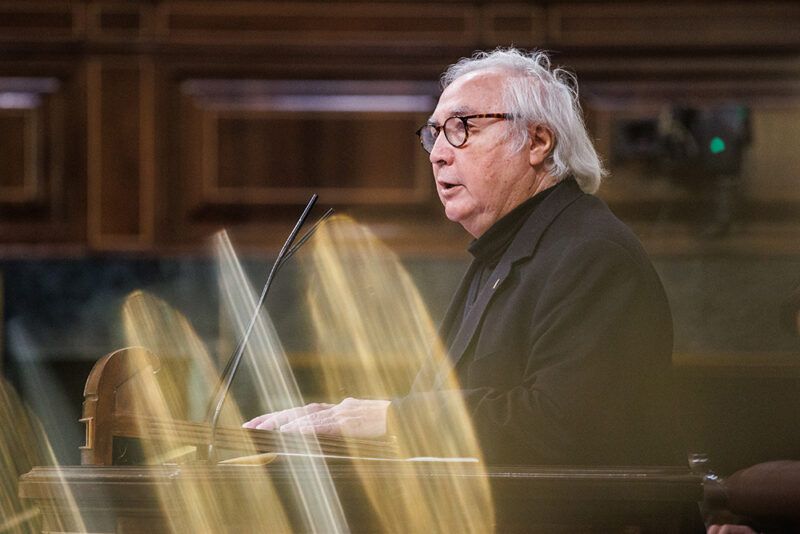
Transcripción de la conferencia impartida por Manuel Castells en la Universidad de Ciudad del Cabo (Sudáfrica) en el año 2009, titulada «Cities and Development». Las ideas clave que deja sobre la mesa el profesor son las siguientes:
-
La metropolización es el motor del desarrollo en la era global: Las regiones metropolitanas, organizadas en redes globales de comunicación y transporte, son los principales nodos donde se concentran innovación, conocimiento, capital y poder. Este proceso de concentración es irreversible, acelerado por la globalización y las tecnologías de la información.
-
Las ciudades concentran riqueza, pero también exclusión: La lógica de las redes globales crea espacios hiperconectados que generan valor, pero también excluyen grandes áreas urbanas y rurales. La desigualdad se intensifica dentro de las ciudades: zonas elitistas conectadas a la economía global coexisten con guetos y periferias sumidas en pobreza y exclusión.
-
El crecimiento urbano masivo genera contradicciones urbanas: Las grandes áreas metropolitanas provocan problemas medioambientales, crisis de movilidad, pérdida de espacio público y aumento de la fragmentación social y la violencia. A la vez que generan desarrollo económico, deterioran las condiciones de vida, especialmente para las clases populares.
-
Las soluciones deben priorizar un desarrollo metropolitano inteligente: No se puede frenar la urbanización masiva, pero sí gestionar mejor sus efectos. Castells propone fortalecer la innovación urbana, crear empleo mediante sectores como el turismo cultural o el emprendimiento, replantear el papel de las universidades y reconocer el papel estructural de la economía informal, en lugar de combatirla con modelos industriales ya obsoletos.
Transcripción del inglés
I want to acknowledge the invitation by the institution represented, the Cape Higher Education Consortium, and to the Center for Higher Education Transformation that initiated my current visit to South Africa. And certainly to the University of Cape Town in this particular case, it’s actually the first time that the University of Cape Town has invited me, and therefore the first time I came.
My lecture, «Cities and Development», will be of analytical character. So I will not go into the specifics of such or such situation, and certainly not into the specifics of the Cape Town metropolitan area, because I think would be arrogant on my part, given my limited knowledge, not completely grand, but limited knowledge on the situation. And also a number of people were interested in knowing my views or my comments on what has been sometimes called the Barcelona model and the situation in Barcelona. This I know better, but I would rather see what specifically introduced from the Barcelona situation and from the Barcelona model, and therefore I would welcome in the discussion both questions and comments and suggestions about both Cape Town and Barcelona, trying to land some of this problematique that I will first try to present to your consideration.
Let me start by saying that throughout history, cities had been both the engines of creation of wealth and the sites of power, and therefore the appropriators of wealth, of most of the wealth generated. And this is because cities had been always the major systems, actually communication systems, that induce innovation, generate knowledge, and process information effectively. It is not recent that knowledge and information are the decisive factors for economic and social development. They always have been. What is specific to our society is the extent and development of information and communication technologies, not the decisive character of knowledge and information. And not because they are not decisive now, because they were decisive always. And because knowledge and information are concentrated and generated in spatial agglomeration, particularly large-scale spatial agglomerations, cities always had been the fundamental engines of growth, innovation, and human progress. And this has been actually very well explained by Peter Hall in his major book, Cities in Civilization, going throughout the history and showing this particular role of cities, particularly of the largest cities.
However, therefore, to understand the development, it actually means to understand cities as sources of development. But this requires to situate this analysis in the historical and cultural context of the specific spatial forms of each society. And for this, we need to reassess the role of cities and development in the current context of information and communication technology revolution and the formation of global networks of appropriation and distribution of wealth, which are globally organized and locally developed. So I will first try to understand the combination between globalization and metropolitanization as the key global architecture of our planet in terms of spatial forms.
I will try to then analyze the reasons for why spatial concentration is so extraordinarily important. Concentration is so extraordinarily important. And then I will show the urban and environmental contradictions and economic contradictions of the model of full metropolitanization of society, ending with some of the implications on urban policies and urban planning on the basis of this analysis. That will be in the 40 minutes that we were promised. First of all, one of the paradoxes of our time is that in the midst of the largest and deepest telecommunication and communication revolution in history, we are also witnessing the largest wave of urbanization in history. And that was not supposed to happen according to the futurologists. You have telecommunications, you have internet, you have all these possibilities. Why to be all concentrated? I’ll come to this in a moment.
But starting empirically, at this point, we have already crossed last year, the end of 2008, the threshold of 50% of the urban population in the planet for the first time in history. And we are moving fast toward about 60% in 2020 and about 75% in 2050. Of course, this is not only in the developed regions. Latin America has been over 80%, South America, Mexico is over 75% urban, but South America has been in the last 10 years already over 80% urban. When people think about Brazil, they see Amazonia and they see all this rurality. Well, Brazil is 85% urban, much more than the United States at this point. So anyway, our planet is an urban planet, but of one particular spatial form, which is what I call the metropolitan region.
The metropolitan region is not simply a big city or a big urban agglomeration. It’s a much more specific area, which is characterized by the constant concentration of population and activities in settlements that are very large scale. But much more important than the scale and the size is the fact that they incorporate all kinds of activities. It’s not any longer the notion of manufacturing or services. It’s at the same time agricultural production into these mega areas. It’s at the same time spatial settlement of different kinds scattered over a very large area. And this is not in the old notion of city center and then the periphery that depending on cultures and institutions, it’s a middle class suburban periphery of a poor periphery. It’s a multi-sectoral, multi-zonal, multi-center region of a very large scale in which you don’t have any more one big center, but many different centers, and centrality is distributed as activities are distributed. This has been shown for a long time already in the developing world, but lately, precisely, Peter Hall and Kathy Payne published a very important book called The Polycentric Metropolis, an empirical analysis of the major metropolitan areas in Europe, showing that this old notion of the center and the semi-periphery and the periphery has disappeared. These are gigantic regions. We have many different centers. Of course, the city of London is critical for the financial function, but many other functions are scattered in different areas. The high-tech development, of course, is in the M4 corridor between the central London and the airport, and universities are distributed, and settlements are distributed by income, by class, but not all concentrated in one particular area.
So the key point here is to understand that the metropolitan region is the spatial form of our age, and this does not coincide anymore with cities. Or in other words, if you want, this is our kind of city, which has nothing to do historically with the cities that were before. This is also true, by the way, of Barcelona. Everybody has this nice, polished image of Barcelona, one and a half million people city, very human in a scale, dense culture, where apparently there are no poor people, no workers, and no nothing. Well, point is, the metropolitan region is what is the real unit. And the metropolitan area, which is smaller than the metropolitan region, which is the functionally interrelated area, the metropolitan area in Barcelona is four million people scattered over a very large area. And the metropolitan region is what is called now in the urban circles in Barcelona, Catalonia City, which is the entire Catalonia, 95%, which is about Catalonia in total is 7.4 million people. But what is functionally interrelated and with travel distances under two hours, it’s seven million people that go from the border to the south, where Catalans and Valencians fight for identity, to the north to France. So there is no border anymore, but there is clearly some geographical differentiation. And you take the most important city to the north, very close to the French border, Girona, which is a very rich, exactly the richest city in Spain and certainly in Catalonia. Girona now is with the new high speed train that will be there, it’s already in Barcelona, will be there in two years, is 20 minutes from the center of Barcelona.
So that is critical to understand that this system is not anymore one central city, it’s a system of cities within an integrated metropolitan region, which is functionally interrelated and people live in those spaces. Like they live in those spaces in the southeast metropolitan region of England, in the Paris metropolitan area, and in the rural, in the Randstad, but also, of course, in Buenos Aires, in Sao Paulo, in Mexico City, which are very large, but that’s not the important thing, it’s that they are interrelated within the same area. The largest area is the Guangdong-Hong Kong-Shenzhen-Macau-Pearl River Delta region, which at this point has a population functionally integrated about 55 million people. But again, it’s not all compact, it’s distributed in different areas with different connections, and it doesn’t reflect the division between manufacturing and rurality. Most of the manufacturing jobs in that area is in the Pearl River Delta, in rural areas, where there are eight million manufacturing jobs that produce much of the stuff that you are wearing today and you will wear in the future.
So we have to start, of course, the region where I spent half of my life now, Los Angeles. People again think Los Angeles, well, Los Angeles, in fact, is not Los Angeles, it’s a continuous, continuous urbanization with spots of agricultural land, with open space, with forests that burn regularly because they cannot stand the demographic pressure of people living there. That region is about 20 million people nowadays, and of course, integrates Tijuana across the border from Mexico, which is completely functionally related to the San Diego and to the rest of Los Angeles. So you get the idea. But the critical thing is that these metropolitan regions are connected between them in global networks of multimodal connection and communication. They are all connected. So all the wealth, investment, power of the planet is being sucked into these metropolitan regions that are connected and are leaving the rest of the planet increasingly depopulated, disinvested, and abandoned, literally, but under their strong influence. That’s the double movement, concentration of everything in these metropolitan regions, connection between the metropolitan regions, and increasing depopulation of the rest of the planet. And these global networks are multilayered networks. They are networks for manufacturing…
Network for the cultural and entertainment industries. Every activity has a global network with a different geography. That has been very well shown by Peter Taylor and his research group at Global University, mapping the networks between cities on a global scale and showing that each functional network has a different geography, but they all coincide in some of the keynotes. Meaning, the network of high technology and the network of manufacturing, of low-tech manufacturing, are not the same. The network of advanced services and the network of universities are not the same. The network of drug traffic, which is very important, and the network of cultural entertainment production are not the same. But each one of these global networks has localities which are nodes of this system and then attract people, capital, power into these particular localities. The more these networks, which are of different kind, coincide in their layers in one particular node, and the bigger the attraction of this node, not only because it has more networks converging into that node, but because the interaction between the different networks takes place in that node.
And that’s why you have the mega-metropolitan regions. For instance, London is a main node in every aspect. In every aspect. But let’s say, to some extent, if we talk about Latin America, Buenos Aires is a mega-node in many of the functions, but not in high technology, for instance. But it is in cultural entertainment industries. These days, the Latin American soap operas are beating in the competition, the American soap operas, in the export markets. From Mexico, from Venezuela, from Colombia, and particularly lately from Argentina. So, get the idea. The process of globalization is linked to the process of urbanization, and both are supported by networks that are organized around an infrastructure of computerized segments of communication, which is not only internet, telecommunications, etc., but is also the networks which are based on fast transportation, long-distance transportation, airplanes, and airports are fundamental, of course. And this is a computerized system. I mean, you don’t have pilots. They put pilots so that people are quiet, but it’s really the computer that flies the plane. The pilot usually drinks whiskey in the meantime. And the co-pilot takes the plane to take off and land. Or the containers. All the shipments are based on containers. Through ships, through trains, through trucks. All this is computers. All this is computerized. Otherwise, how do you know that the T-shirt that’s been weaved in the Peruvian Delta ends up being in London through a number of connections? It’s all computerized and all organized.
So globalization is a global network of connection, and the nodes of these networks are what constitute the metropolitan regions. Now, this is what leads to the explanation on why spatial concentration is so important, and why spatial concentration is really what determines the spatial dynamics and the structure of our planet. First of all, there is this infrastructure of connectivity, the nodes of the communication system, which is multimodal. And in fact, this is an old analysis in geography and in city and regional development analysis. Cities always have been nodes of communication systems, both inter-urban and intra-urban. So there are communication systems. They always have been. This place is started like this too, in a node in a global trade communication system between Europe and the East Indies. But it’s more thanthat in our economy. This is specific in our economy. Cities are also based on the capacity of developing innovation. And what I labeled years ago, milieu of innovation. That is innovation that milieu, territorial production complexes that through synergy generate more wealth, much more wealth than what is invested in any of the activities.
Silicon Valley is the typical example of that. With Peter Hall, we also studied around the world the formation of what we call the technopoles of the world and trying to show under which conditions these milieus of innovation are constituted and how different factors of production come into the innovation in high technology manufacturing and high technology design. All these high value, high added value activities are linked to processes of innovation which depend on territorial concentration. And you cannot move from there to actually ensure the level of innovation if you disperse the activities. The same thing now in advanced services. Advanced business services depend on concentration in a given territory and on face-to-face interaction. So all the high level, high value added activities require concentration. And then from there, they are linked to lower level activities with less value which then are distributed around the world.
But this logic of being concentrated in one area reproduces a different level. So you don’t go from high level of concentration, the city of London or in Silicon Valley or in Sao Paulo to then disperse dispersal patterns of activities. You go into smaller nodes that link to other nodes, link to other nodes until the whole system is constructed in a scale of constant interaction. That’s why the face-to-face contacts are critical for the same reason that most research universities are based on face-to-face interaction within a university campus or university system in a given year. Of course, we are all in the internet and through the internet we can connect. But it’s not connection of individuals. It’s connection of nodes of creativity and innovation that keep the fire alive in one node and then connect to other networks. So you cannot live without the networks but the networks cannot live without the nodes. But the nodes are the sources of creativity. All this is empirical research that we have done for many, many years now and that now is solidly established in the literature.
The same thing in manufacturing, in advanced technology, in advanced services, and they are also in all kinds of decision-making activities. Decision-making activities require face-to-face contact, particularly in financial services. Why? Because many of the transactions are marginally legal and cannot be registered. And anything you do in the internet, remember, by the way, is automatically registered. Anything, any interaction. Remember, Microsoft had the great idea years ago to put a little code, a little encrypted code, in every Word document that we send around the world. So anything you send through Microsoft can be traced back forever in your life. Okay? So I will not give you the alternatives so as not to be accused of doing a commercial in this distinguished academic environment. But face-to-face contacts are still absolutely critical. And then they are amplified, they are more important than ever because everything that can be automated and articulated over the internet, telecommunication networks, et cetera, can then be decentralized everywhere. But not what happens in the key decision-making processes.
That cannot be. Milieus of innovation and manufacturing, in manufacturing technology and advanced services certainly include the decisive role of universities in the production and distribution of knowledge. But not whatever university and not under any conditions. Why? Because universities, in order to be factors of development, they need tobe able to produce knowledge. It’s as simple as that. I mean, being a university does not guarantee that you produce knowledge. In most cases, they produce knowledge. In most cases, they produce the salaries of their staff. So therefore, it’s a tricky notion that universities are actors in development. It’s not an entitlement. They have to show it in practice. Second, a very important characteristic is more likely than a university not only generates knowledge but induces development, which is a different thing. That is how to go from knowledge to development, under the condition of being what I call an entrepreneurial university, which is a university that engages itself deliberately into distributing knowledge, not only for training purposes, but also to generate research, to apply research, and to produce the kind of students and the kind of graduates who are innovators. In other words, what I call people who are able to become self-programmable labor, which is the key labor in the knowledge economy. People who are able throughout their life to reprogram themselves in new activities because the kind of jobs, the kind of activities, the kind of knowledge that will happen in their lifetime will change many, many times.
So the skills that you learn today will be obsolete in five years. But the skills that are not obsolete is your mental capacity to find information where it is, which is in the Internet. It’s all in the Internet. The point is so much that you have to have the mental ability to know what you look for, how to look for it, where to look for it, and how to recombine it in relation to the application of this knowledge. So all this requires a certain type of worker, a certain type of manager, a certain type of researcher. So that’s the role of universities, not by magically being somewhere. And if I relate to my own experience, 24 years in Berkeley, Berkeley never really produced a lot of knowledge, more than this parvenu of Stanford. But Stanford took care that that knowledge would become development. Berkeley, we were too aristocratic for that. Lately it’s different, but for many, many years, we would not do some menial things such as make money or develop business or this kind of things. That was for exactly Stanford. So look, Berkeley was there, nothing came out in terms of an entrepreneurial milieu in Berkeley, but Stanford induced Silicon Valley. So my point is that universities are of different kinds and only certain types of universities work. And you can have MIT in Malaysia, yes, the Malaysian Institute of Technology. You know what? It’s not MIT. It’s a different kind of MIT.
So this connectivity is a key factor in concentration. Milieux of innovation of all kinds are key factors in concentration. From there appears the need to provide urban services, urban amenities and social services to the growing population that concentrates on this magnet of wealth creation. And that goes into producing jobs, particularly mainly jobs. Then the opportunities appear and the migrants come from the depressed areas and from the rural areas to find opportunities, not so much for themselves, for their children. The key variable in all the migration studies that people hope for their children. They know how bad things are going to be for them in arriving into the metropolitan area, in most cases for the poor migrants. But they hope that their children will have educational opportunities, they will have health services, and they will be visible. While in the middle of nowhere, no one can pay attention to them. Combined with something else, which is the destructuring of production and survival activities in the rural areas. The rural areas, as bad as conditions are in the shantytowns of metropolitan areas, and in most rural areas in the world, particularly in developing countries, people have no chances for survival. No chances. Every major program of the World Bank, etc., trying to retain migrants in the rural areas has failed. Why? Because people are not stupid. They know that as bad as they are going to be, they are much worsewhere they are. And therefore, it’s unstoppable. Unstoppable in China. Do you remember, some of you, the Ujamaa villages in Tanzania? From villages in Tanzania, now they are tourist spots.
I’m just saying no one has been or will be able to stop the endless movement of rural-urban migration, particularly rural-metropolitan migration. So these different arguments that we have found to lead to major metropolitan concentration combine to fit the process of spatial concentration and generating one of the most important industries in most major metropolitan areas. It’s real estate and construction, which is, of course, the second derivative from all this concentration activity, but it’s the fundamental economic sector later on, and more and more investment goes into that. Why? Because if all that is valuable comes into a metropolitan area and more and more people and activities concentrate in that metropolitan area, of course what becomes scarce is the land. And therefore the first who were there either sell the land to some other people or real estate companies buy the land and organize the distribution of this land with increasingly high prices. With one typical assumption, real estate prices will go up forever. That’s the fundamental assumption, correct? Well, we’ll see in a moment.
But that has been the assumption everywhere. Rich California, number one value-added industry in Los Angeles or in the San Francisco metropolitan area, real estate and construction. Number one, much more than all the Hollywood movies, all the electronic industry, everything. Real estate and construction, number one activity in creative Barcelona, real estate and construction, and so on and so on. New York, same thing. Increasingly connected to finance. So is finance, real estate and construction is the same system. Not all finance is this, but it’s directly connected because the ability for people to buy any property is related to the ability to obtain a loan. Only some mafiosi, not all, they are not all rich, can pay cash. But most activities are related to the finance system through the mortgage system that becomes collateral. You know all this, I’m simply putting things together so that the things become more clearly organized.
Now, the practical implication of all this analysis is that we must plan for a relentless metropolitan growth throughout the planet. That’s no way back from that entire metropolitanization of the planet. And this, of course, this spatial form of our time, which is the metropolitan region, creates all kinds of problems, what I call the urban contradictions of our time. Creates a major environmental crisis, both global and local. It contributes to the deterioration of the livability of the planet. By the way, not to the planet itself, it’s us in the planet. The planet is okay. Actually, it will be much better without us. But our livability in the planet is in danger. And the main sources of environmental destruction are these, precisely these major metropolitan areas that happen to be the engines of economic growth and the engines of wealth creation and of power enforcement. Second, of course, these areas concentrate poverty and social exclusion in an unprecedented scale, which is highly linked to the growing threats for ecological catastrophes. Pandemics of all kinds are emerging from there. Of course, you are in the middle of one of the biggest pandemics in human history, but that’s only the beginning. All the epidemiologists showed that the conditions of metropolitan concentration with no basic hygienic conditions, with no water, with no sewage, et cetera, et cetera, adding billions and billions andbillions to this particular pattern of urbanization creates pandemics which are, of course, not limited to the poor. And the same way that AIDS became serious in the world, when it was not only a matter of gays and blacks, the moment in which pandemics become a danger, because, you know, the viruses don’t stop at the door of a rich neighborhood, that’s becoming a major issue and a challenge to our current pattern of life.
But there’s more than that. It’s the loss of public space reduced to commercial space and privatized shopping centers, the loss of shared identity in the anonymity of the large metropolitan regions, and therefore the rise of violence and the emergence of the defensive space. Everybody retains behind fortified gate communities or turf in the poor neighborhood defended by territorial gangs. Gangs is simply the fragmentation of society to the limit. And the notion that my identity goes from this street to this street, and you cross that, I shoot you. Because that’s the last thing. They have some control over something, it’s control over territory. And remember, our primal instinct coming from the reptiles is territorial. And the defensiveness of space is a fundamental expression and source of violence. But there’s also a dramatic functional disorganization in these metropolitan regions, particularly in mobility. Mobility has become a recipe for immobility.
The notion of relying on the automobile in a planet in which first, many people don’t simply have the possibility to the automobile to start with. But second, in a planet in which these metropolitan regions have a limited amount of space, and therefore of space for the automobile, and therefore the actual capacity of the urban transportation system to manage these flows and the demand of transportation based on these primitive systems, it has broken down. We are in a permanent gridlock. Most here or in Los Angeles, you have this notion of people spending, buying these hugely expensive, luxurious automobiles, able to go 200 kilometers per hour, actually going slower than a bicycle, or for that matter, a horse carriage. All kinds of very good analyses have been done on this matter.
So to the point that in a recent article that I will give you the reference, because this is online and it’s fun, with an architect collaborating with Milo Sanchez, we have proposed, among other things, to build a system of using Obama money for infrastructure. Remember, Obama’s given lots of money for infrastructure now. Which kind of infrastructure? Well, we proposed the notion of bicycle freeways on top of the current freeway system. So you don’t use more land, you simply elevate. You design nice little holes so that the sun can go still for those who insist on cars. And then our calculations is that bicycles on this freeway with a nice open space in the middle, green, cafes, and everything, where you can stop from time to time, go much faster than the cars down. So we have to start using our imagination to go through, and it’s nothing stupid in terms of that, because if we are going to use money to broaden the freeways, why to broaden more freeways would be more cars, which ultimately would be bigger jumps. So some other innovations should start being provided. For the moment, there’s no mobility in this system. The old idea of the land use transportation pattern, that is not the fundamental thing, what determines the inability to manage this is that you cannot distribute activities in such a way that you always have to move from somewhere to somewhere because of the monofunctionality of the location patterns.
Now, therefore, to have smaller, more integrated, multifunctional units throughout the metropolitan region is what eliminates most of this flow. But it’stoo late. We cannot redo. These are the theories of the 1970s to connect the land use transportation system in a way that you reduce transportation needs. But at this point, we cannot reconstruct all the huge metropolitan area that we have done, so we have to deal with the decisive gridlock. Now, you know that some of the technocratic solutions is, well, let’s people pay for going into the places that they shouldn’t go. You know what? People don’t necessarily love traffic jams. If they go to where they go, it’s because they need for work, they need for the school, they need for shopping. There’s no way they can avoid that. Alternative mass transit, yes. But which kind of mass transit? Usually mass transit is to decongest middle class professional traffic from one point of the city to downtown. But it’s not for the majority of people. The majority of people in the developing world survive on collective taxis, which are flexible. As you do here, are flexible. But this is absolutely wasteful in terms of the system, in terms of the people’s resources, and in terms of the people’s time. But it’s the only way out of the current mess. So it’s ad hoc solutions which are deepening the crisis rather than solving it.
The fundamental contradiction is that, now for one line of theory, what I called years ago the space of flows, that is the global space constructed around communication and technological avenues, dominates the space of places, that is the space where people live. Why? Because cities around the world, to attract wealth, they have to invest everything they have in creating the conditions for capital investment and for attracting international trade, international capital, international high talent, etc. So being a node, one of these nodes that I was referring to, in the dominant space of flows, and telling the locals, say, this will first have to obtain the wealth, which is always from somewhere else, and then this will trickle down. This will trickle down to you. We cannot start with you because we don’t have the money. So we have to first get the money and then it will be your time. Of course, the time never arrives because you always have to update your telecommunication system, build your airport, create a new event to keep going in the global node. So Barcelona created the Olympics and then when they ran out of Olympics, they wanted another Olympics and they told them, no, you cannot. And then they invented something called the Forum of Culture that was a complete mess and nobody knew what that was. But just to keep going into this notion of attracting more and more activities, people to convention centers, to international hotels, etc., etc., until boom, the bubble bursts. Because eventually you cannot fly so high without relating to the local conditions of the local population.
And then, so what is the usual solution for that? Is, well, segregate the city. You have a great practice in that sense here. You have what’s, some of my students say, the visitor city and then the other city. The city where people live and the city that people visit. And you have these two cities going on everywhere in the world. And I also, I always, for you not to feel bad, I always keep my poor Barcelona pounding on it because that means in Barcelona, the Ramblas, the famous Ramblas, are a theme park now. There are no Barcelona people there. There are only tourists. And bye-bye Ramblas. I mean, it’s the same space, but it’s not anymore a local living space because Barcelona people have deserted that space, which is only a space for tourists. And some clowns that go around there. All this, by the way, has another major contradiction, which is an economic contradiction.
Increasingly, as I said, the economies of these megametropolitan regions depend on the vitality of the number one industry, which is the combination, again, between real estate, finance, and construction. Now, this just happens to be one of the most volatile types of industrial sectors, as we just saw in the crisis. The crisis we are in,the global crisis of capitalism nowadays, with its ups and downs, started in the mortgage market. And it started on the basis of the In the mortgage market, and it started on the basis of the assumption that people would always have enough money.
Traducción al castellano
Quiero agradecer la invitación por parte de la institución representada, el Consorcio de Educación Superior del Cabo (Cape Higher Education Consortium), así como al Centro para la Transformación de la Educación Superior (Center for Higher Education Transformation), que ha promovido mi visita actual a Sudáfrica. Y, por supuesto, a la Universidad de Ciudad del Cabo (University of Cape Town), que en este caso particular es la que me ha invitado. De hecho, es la primera vez que la Universidad de Ciudad del Cabo me invita, y por lo tanto, es la primera vez que he venido.
Mi conferencia, “Ciudades y desarrollo”, tendrá un carácter analítico. No entraré en los detalles concretos de tal o cual situación, y desde luego no me referiré específicamente a la zona metropolitana de Ciudad del Cabo, porque creo que sería arrogante por mi parte, dado mi conocimiento limitado —no totalmente ignorante, pero sí limitado— sobre la situación. También algunas personas estaban interesadas en conocer mi opinión o mis comentarios sobre lo que algunas veces se ha llamado el “modelo Barcelona” y sobre la situación de Barcelona. Sobre esto sí tengo más conocimiento, pero preferiría comentar solo lo que sea relevante del caso de Barcelona y de su modelo, y por ello, agradecería que en el debate posterior se plantearan preguntas, comentarios y sugerencias tanto sobre Ciudad del Cabo como sobre Barcelona, intentando aplicar parte de la problemática que voy a exponer a continuación.
Permítanme empezar diciendo que, a lo largo de la historia, las ciudades han sido tanto motores de creación de riqueza como lugares de poder, y por tanto, apropiadores de la mayor parte de la riqueza generada. Esto se debe a que las ciudades siempre han sido los principales sistemas, en realidad sistemas de comunicación, que inducen la innovación, generan conocimiento y procesan información de manera efectiva. No es algo reciente el hecho de que el conocimiento y la información sean factores decisivos para el desarrollo económico y social; siempre lo han sido. Lo específico de nuestra sociedad no es la importancia del conocimiento y la información, sino el desarrollo y la extensión de las tecnologías de la información y la comunicación (TIC), es decir, las herramientas tecnológicas actuales que permiten procesar información a gran velocidad. No es que ahora sean decisivos y antes no; siempre lo han sido. Y dado que el conocimiento y la información tienden a concentrarse y generarse en aglomeraciones espaciales, especialmente aglomeraciones de gran tamaño, las ciudades siempre han sido motores fundamentales de crecimiento, innovación y progreso humano. Esto lo explicó muy bien Peter Hall en su obra principal, Cities in Civilization, donde recorre la historia mostrando este papel particular de las ciudades, especialmente de las más grandes.
Por tanto, para entender el desarrollo, es necesario entender las ciudades como fuentes de desarrollo. Pero este análisis debe situarse dentro del contexto histórico y cultural de las formas espaciales específicas de cada sociedad (es decir, hay que considerar cómo son y han sido físicamente las ciudades en cada país y momento histórico). Para ello, necesitamos reevaluar el papel de las ciudades en el desarrollo dentro del contexto actual de revolución de las tecnologías de la información y comunicación, y de la formación de redes globales para la apropiación y distribución de la riqueza, redes que están organizadas globalmente pero que se desarrollan localmente. Por eso, primero intentaré analizar la combinación entre globalización y metropolización (es decir, la concentración creciente en grandes áreas urbanas) como la arquitectura clave de nuestro planeta en términos de formas espaciales. Después trataré de explicar por qué la concentración espacial es tan extraordinariamente importante. Luego mostraré las contradicciones urbanas, medioambientales y económicas del modelo de metropolización total de la sociedad, y concluiré con algunas implicaciones para las políticas urbanas y la planificación urbana, basándome en este análisis. Todo esto en los 40 minutos que nos han prometido.
Primero, uno de los grandes paradoxos de nuestra época es que, en medio de la mayor y más profunda revolución en telecomunicaciones y comunicación de la historia, estamos presenciando también la mayor oleada de urbanización de la historia. Y eso no era lo que predecían los futurólogos (quienes pensaban que con internet y las telecomunicaciones, la gente se dispersaría, viviendo lejos de las ciudades). Sin embargo, desde un punto de vista empírico, ya hemos cruzado —el año pasado, a finales de 2008— el umbral del 50% de población urbana en el planeta por primera vez en la historia. Y avanzamos rápidamente hacia un 60% en 2020 y aproximadamente un 75% en 2050. Esto no ocurre solo en las regiones desarrolladas. América Latina ya supera el 80%, Sudamérica y México están por encima del 75% de población urbana, y Sudamérica ya lleva más de 10 años con más del 80% de población viviendo en ciudades. Cuando la gente piensa en Brasil, imagina la Amazonía y lo rural, pero Brasil es un país 85% urbano, mucho más urbano que Estados Unidos en este momento.
Nuestro planeta es un planeta urbano, pero con una forma espacial particular: lo que yo llamo la región metropolitana. La región metropolitana no es simplemente una gran ciudad o una gran aglomeración urbana, sino un área mucho más compleja, caracterizada por una concentración constante de población y actividades en asentamientos a gran escala. Pero lo más importante no es el tamaño, sino el hecho de que incorpora todo tipo de actividades (incluyendo industria, servicios, agricultura), y distintos tipos de asentamientos dispersos en un área muy amplia.
Ya no es válida la vieja idea del centro de la ciudad con una periferia a su alrededor, que según la cultura podía ser suburbana de clase media o periferia pobre. Ahora es una región multi-sectorial, multi-zonal, multi-central, de gran escala, donde ya no existe un único gran centro, sino muchos centros diferentes, y la centralidad se distribuye igual que se distribuyen las actividades. Esto ya lo hemos visto durante mucho tiempo en el mundo en desarrollo, pero recientemente Peter Hall y Kathy Payne publicaron un libro muy importante, The Polycentric Metropolis (La metrópolis policéntrica), un análisis empírico de las principales áreas metropolitanas de Europa, mostrando cómo la vieja idea de centro y periferia ha desaparecido. Ahora son regiones gigantescas con muchos centros diferentes. Por ejemplo, Londres sigue siendo clave para las finanzas, pero muchas otras funciones están dispersas. El desarrollo tecnológico está en el corredor M4, entre el centro de Londres y el aeropuerto, las universidades están distribuidas, y los asentamientos se distribuyen según clase e ingresos, pero no están todos concentrados en un solo lugar.
La idea clave es que la región metropolitana es la forma espacial propia de nuestra época, y ya no coincide con lo que entendíamos históricamente por ciudad. Si queremos, este es nuestro “tipo de ciudad”, pero no tiene nada que ver con las ciudades de antes. Esto también pasa en Barcelona. Todo el mundo tiene esa imagen bonita y pulida de Barcelona como una ciudad de millón y medio de habitantes, escala humana, densa, cultural, donde aparentemente no hay pobres ni trabajadores. Pero la unidad real es la región metropolitana. El área metropolitana, que es más pequeña que la región metropolitana (el área funcionalmente interrelacionada), tiene cuatro millones de personas distribuidas en un área muy amplia. Y lo que ahora en los círculos urbanos de Barcelona se llama Cataluña Ciudad es en realidad toda Cataluña, donde aproximadamente un 95% de la población (unos 7,4 millones de personas) está funcionalmente conectada con Barcelona, a distancias de viaje menores de dos horas, desde la frontera hasta el sur (donde catalanes y valencianos debaten sobre identidad) hasta el norte hacia Francia. Ya no hay una frontera clara, pero sí una diferenciación geográfica. Por ejemplo, Girona, cerca de la frontera francesa, es actualmente la ciudad más rica de España y ciertamente de Cataluña, y con el nuevo tren de alta velocidad estará a 20 minutos del centro de Barcelona. Es clave entender que este sistema ya no es una ciudad central con suburbios, sino un sistema de ciudades dentro de una región metropolitana integrada funcionalmente, donde la gente vive y se mueve.
Esto pasa también en el sureste de Inglaterra, en el área metropolitana de París, en el Randstad (Países Bajos), pero también en Buenos Aires, São Paulo, Ciudad de México. Lo importante no es solo el tamaño, sino la interconexión dentro de un área integrada. La mayor región metropolitana es la región del Delta del Río de las Perlas (Guangdong-Hong Kong-Shenzhen-Macao), que actualmente tiene una población funcionalmente integrada de unos 55 millones de personas. No es una ciudad compacta, sino un sistema distribuido con conexiones, y que no refleja la división tradicional entre industria y ruralidad (por ejemplo, gran parte de la industria está en zonas rurales dentro del Delta). Yo mismo paso la mitad de mi vida en Los Ángeles, y allí ocurre lo mismo: no es solo la ciudad de Los Ángeles, sino una urbanización continua con espacios agrícolas, zonas abiertas y bosques que arden regularmente porque no soportan la presión demográfica. Esa región supera los 20 millones de habitantes, e integra incluso a Tijuana, cruzando la frontera con México, que está completamente conectada funcionalmente con San Diego y el resto de Los Ángeles.
La idea esencial es que estas regiones metropolitanas están conectadas entre sí mediante redes globales multimodales de comunicación y transporte. Todas están conectadas. Toda la riqueza, inversión y poder del planeta se están concentrando en estas regiones metropolitanas interconectadas, dejando el resto del planeta cada vez más despoblado, desinvertido y abandonado, aunque bajo su influencia. Es un doble movimiento: concentración de todo en estas regiones metropolitanas y creciente despoblación del resto del planeta. Redes para las industrias culturales y del entretenimiento. Cada actividad tiene su propia red global con una geografía distinta (es decir, los flujos mundiales de información, producción y consumo son diferentes según el sector económico). Esto ha sido mostrado muy bien por Peter Taylor y su equipo de investigación en la Global University, mapeando las redes entre ciudades a escala global y demostrando que cada red funcional tiene una geografía diferente, pero todas coinciden en algunos puntos clave. Es decir, la red de alta tecnología y la red de manufactura de bajo nivel tecnológico no son iguales. La red de servicios avanzados y la red de universidades no son iguales. La red del tráfico de drogas, que es muy importante (por volumen económico), y la red de producción cultural y de entretenimiento tampoco son iguales. Pero cada una de estas redes globales tiene localidades que funcionan como nodos de este sistema y que atraen personas, capital y poder hacia esos lugares concretos.
Cuanto más coinciden estas redes —que son de diferentes tipos— en sus capas sobre un mismo nodo, más fuerte es la atracción de ese nodo, no solo porque confluyen más redes, sino porque la interacción entre las diferentes redes ocurre precisamente en ese nodo. Y por eso existen las mega-regiones metropolitanas. Por ejemplo, Londres es un nodo principal en todos los aspectos. En todos. Pero si hablamos de América Latina, Buenos Aires es un mega-nodo para muchas funciones, pero no lo es en alta tecnología, por ejemplo. Sin embargo, sí lo es en industrias culturales y del entretenimiento. Hoy en día, las telenovelas latinoamericanas están ganando la competencia a las telenovelas estadounidenses en los mercados de exportación. Desde México, desde Venezuela, desde Colombia, y últimamente, sobre todo, desde Argentina. Así que, entiendan la idea: el proceso de globalización está vinculado al proceso de urbanización, y ambos se sostienen sobre redes organizadas en torno a una infraestructura segmentada y computarizada de comunicación. Esto no es solo internet o telecomunicaciones, sino también redes basadas en transporte rápido, transporte de larga distancia, donde los aviones y los aeropuertos son fundamentales, por supuesto.
Todo este sistema es computarizado. No es que el piloto maneje el avión; los pilotos están ahí para que la gente esté tranquila, pero es realmente el ordenador el que pilota el avión. El piloto normalmente se toma un whisky mientras tanto, y el copiloto solo interviene para despegar y aterrizar. Lo mismo ocurre con los contenedores: todo el transporte marítimo, ferroviario o por carretera se basa en contenedores y es totalmente gestionado mediante sistemas informáticos. Si no, ¿cómo sabrían que una camiseta tejida en el Delta del Perú acaba estando a la venta en Londres tras múltiples conexiones? Todo esto es gestionado por computadoras y redes logísticas. Por tanto, la globalización es una red global de conexiones, y los nodos de estas redes son las regiones metropolitanas. Esto es lo que nos lleva a explicar por qué la concentración espacial es tan importante y por qué determina la dinámica y la estructura espacial de nuestro planeta.
Primero, existe una infraestructura de conectividad, los nodos del sistema de comunicación, que es multimodal (es decir, que combina distintos medios de comunicación y transporte). Y esto no es un análisis nuevo en geografía o en estudios sobre desarrollo urbano y regional. Las ciudades siempre han sido nodos de sistemas de comunicación, tanto entre ciudades como dentro de las ciudades. Las ciudades empezaron así, como nodos de comunicación para el comercio global entre Europa y las Indias Orientales. Pero en nuestra economía actual es más que eso. Las ciudades también se basan en la capacidad de generar innovación. Esto es lo que llamé hace años milieu de innovación (medioambiente de innovación): son complejos productivos territoriales que, mediante sinergias, generan más riqueza de la que se invierte inicialmente. El ejemplo típico es Silicon Valley. Con Peter Hall estudiamos en todo el mundo la formación de lo que llamamos tecnópolis del mundo (technopoles), intentando mostrar en qué condiciones se crean estos entornos de innovación y cómo los diferentes factores productivos convergen para producir innovación en la manufactura de alta tecnología y en el diseño tecnológico. Todas estas actividades de alto valor añadido dependen de procesos de innovación que, a su vez, dependen de la concentración territorial. No se puede garantizar innovación si se dispersan estas actividades.
Lo mismo ocurre hoy en los servicios avanzados. Los servicios empresariales avanzados dependen de la concentración en un territorio determinado y de la interacción cara a cara. Todas las actividades de alto nivel y alto valor añadido requieren concentración. Desde ahí se conectan con actividades de menor valor, que sí pueden estar distribuidas por todo el mundo. Pero esta lógica de concentración se reproduce en todos los niveles. No pasamos de un nivel de concentración máxima —como en la City de Londres, Silicon Valley o São Paulo— a una dispersión total, sino a patrones de nodos menores que se conectan a otros nodos, formando un sistema completo en escalas de interacción constante. Por eso el contacto cara a cara sigue siendo crítico, igual que en las universidades de investigación, que siguen basadas en la interacción personal dentro de un campus o sistema universitario durante todo el año. Por supuesto, estamos en internet, pero no es lo mismo conectar individuos que conectar nodos de creatividad e innovación que mantienen el “fuego vivo” en un lugar concreto y lo conectan con otras redes. No podemos vivir sin redes, pero las redes tampoco pueden existir sin nodos, porque son los nodos los que generan la creatividad.
Todo esto no es una teoría, sino investigación empírica, que hemos realizado durante muchos años y que hoy está sólidamente establecida en la literatura. Lo mismo ocurre en la manufactura, en la tecnología avanzada, en los servicios avanzados y también en todo tipo de procesos de toma de decisiones. Las decisiones requieren contactos personales, sobre todo en los servicios financieros. ¿Por qué? Porque muchas de las transacciones son legalmente “marginales” (en el límite de la legalidad o directamente opacas) y no pueden ser registradas. Recuerden: cualquier cosa que se haga en internet queda registrada. Todo, absolutamente todo. Por ejemplo, Microsoft tuvo la brillante idea hace años de incluir un código cifrado en cada documento Word que enviamos. Así, cualquier documento que se mande con Microsoft se puede rastrear de por vida. Por respeto a este ambiente académico no daré alternativas, para que no me acusen de hacer publicidad (bromea), pero los contactos presenciales siguen siendo imprescindibles. Precisamente por eso, todo lo que pueda automatizarse se puede descentralizar, pero no los procesos clave de decisión. Eso no se puede. Los entornos de innovación, tanto en la industria como en los servicios avanzados, incluyen el papel decisivo de las universidades en la producción y distribución del conocimiento. Pero no cualquier universidad ni bajo cualquier condición. Las universidades, para ser actores del desarrollo, tienen que ser capaces de producir conocimiento. Ser universidad no garantiza nada. En muchos casos, las universidades solo producen sueldos para su personal. Así que es una noción falsa pensar que todas las universidades contribuyen al desarrollo. No tienen un derecho automático; deben demostrarlo con hechos.
En segundo lugar, es más probable que una universidad genere conocimiento e induzca desarrollo (que es distinto a solo producir conocimiento) si es lo que llamo una universidad emprendedora: es decir, una universidad que se compromete activamente a distribuir el conocimiento, no solo formando estudiantes, sino generando investigación, aplicándola, y produciendo egresados que sean innovadores. Dicho de otro modo, lo que yo llamo trabajadores auto-programables, que son los trabajadores clave en la economía del conocimiento. Personas capaces de reprogramarse a lo largo de su vida, porque el tipo de trabajos, actividades y conocimientos cambiarán muchas veces a lo largo de su existencia. Las habilidades que uno aprende hoy quedarán obsoletas en cinco años, pero lo que no queda obsoleto es la capacidad mental de buscar información, saber dónde está (que es internet), saber qué buscar, dónde buscarlo, y cómo recombinar ese conocimiento para aplicarlo. Y eso requiere un cierto tipo de trabajador, de directivo, de investigador. Ese es el verdadero papel de la universidad, no simplemente existir en algún sitio.
Desde mi propia experiencia, después de 24 años en Berkeley, puedo decir que Berkeley nunca produjo tanto desarrollo como Stanford, a pesar de tener más conocimiento académico. Stanford se ocupó de convertir el conocimiento en desarrollo. En Berkeley éramos demasiado aristocráticos para “rebajarnos” a hacer dinero o desarrollar empresas. Eso era para Stanford. En Berkeley el conocimiento se quedaba encerrado. Stanford generó Silicon Valley. Mi punto es que hay universidades de distinto tipo y solo algunas funcionan como agentes de desarrollo. Puedes tener un “MIT” en Malasia, sí, el Instituto Tecnológico de Malasia, pero no es el MIT. Es otro tipo de “MIT”. Esta conectividad es un factor clave de la concentración. Los entornos de innovación son un factor clave de concentración. A partir de ahí surge la necesidad de ofrecer servicios urbanos, equipamientos urbanos y servicios sociales para la creciente población que se concentra en estos imanes de creación de riqueza. Eso genera empleo, especialmente empleo básico. Aparecen oportunidades y llegan migrantes desde zonas deprimidas y rurales, no tanto para ellos, sino para sus hijos. En todos los estudios de migraciones, la variable clave es la esperanza en los hijos. Los migrantes pobres saben que su vida en la ciudad será difícil, pero esperan que sus hijos tengan oportunidades educativas, servicios sanitarios y, sobre todo, visibilidad social, algo que en su lugar de origen no tienen.
Esto se combina con otro fenómeno: la destrucción de las actividades de producción y subsistencia en las zonas rurales. Por muy duras que sean las condiciones en los barrios marginales metropolitanos, en muchas zonas rurales del mundo la gente no tiene ninguna opción de supervivencia. Ninguna. Cada programa del Banco Mundial para retener a la gente en zonas rurales ha fracasado. ¿Por qué? Porque la gente no es tonta: sabe que, aunque la vida sea dura en la ciudad, es peor quedarse donde están. Por eso las migraciones son imparables. Imparables en China, imparables en todo el mundo. ¿Recuerdan, algunos de ustedes, las aldeas Ujamaa en Tanzania? Ahora son zonas turísticas.
Argumentemos sobre esto: lo que estoy diciendo es que nadie ha podido ni podrá detener el movimiento interminable de migración rural-urbana, y especialmente la migración rural hacia las áreas metropolitanas. Por tanto, estos distintos argumentos que hemos visto, que conducen a una concentración metropolitana masiva, se combinan para explicar el proceso de concentración espacial y generan una de las industrias más importantes en la mayoría de grandes áreas metropolitanas: el sector inmobiliario y la construcción. Esta industria es la segunda derivada directa de toda esta actividad de concentración, pero acaba siendo el sector económico fundamental, el que más inversión recibe. ¿Por qué? Porque si todo lo que tiene valor —personas, capital, actividades— se concentra en un área metropolitana, y cada vez se concentra más, lo que se vuelve escaso es el suelo. Por tanto, quienes llegaron primero venden sus tierras o las empresas inmobiliarias las compran y organizan su distribución a precios cada vez más elevados. La suposición típica es simple: los precios del suelo y la vivienda subirán para siempre. Esa es la creencia fundamental, ¿correcto? Bueno… ya veremos. Pero esa ha sido la suposición en todas partes.
En la rica California, la industria número uno en términos de valor añadido, tanto en Los Ángeles como en San Francisco, es el sector inmobiliario y la construcción. Mucho más importante que todas las películas de Hollywood, que toda la industria electrónica o cualquier otra cosa. Lo mismo en la creativa Barcelona: la actividad número uno es inmobiliaria y construcción. Lo mismo en Nueva York. Además, cada vez más está conectada a las finanzas. Financiación, inmobiliaria y construcción forman parte del mismo sistema.
No todo el sistema financiero es esto, pero está directamente conectado: la capacidad de la gente para comprar una propiedad depende de su capacidad para obtener un crédito. Solo algunos mafiosos pagan en efectivo; la mayoría depende del sistema financiero y las hipotecas, que se convierten en garantías de deuda. Ustedes ya conocen esto; yo solo estoy organizando los elementos para que se entienda mejor el cuadro completo. La implicación práctica de todo este análisis es clara: debemos planificar para un crecimiento metropolitano imparable en todo el planeta. No hay vuelta atrás: vamos hacia una metropolización total del planeta.
Y esta forma espacial propia de nuestra época —la región metropolitana— genera toda una serie de problemas, lo que yo llamo las contradicciones urbanas de nuestro tiempo. Por un lado, provoca una gran crisis medioambiental, tanto a escala global como local. Contribuye a la degradación de la habitabilidad del planeta. No del planeta en sí: el planeta estará bien. De hecho, seguramente estará mejor sin nosotros. Lo que está en peligro es nuestra propia habitabilidad en el planeta.
Las principales fuentes de destrucción medioambiental son precisamente estas grandes regiones metropolitanas, que al mismo tiempo son motores de crecimiento económico, generadores de riqueza y de concentración de poder. En segundo lugar, estas áreas concentran pobreza y exclusión social a una escala sin precedentes. Y esto está profundamente conectado con las crecientes amenazas de catástrofes ecológicas. Las pandemias de todo tipo emergen precisamente en estas condiciones. Ustedes están viviendo una de las mayores pandemias de la historia, pero es solo el principio. Todos los epidemiólogos demuestran que las condiciones de concentración metropolitana —sin agua, sin saneamiento, sin condiciones básicas de higiene—, sumadas a la masificación urbana, crean pandemias que no afectan solo a los pobres. Las pandemias se convierten en un problema global cuando afectan también a los barrios ricos. Los virus no se detienen en la puerta de las urbanizaciones de lujo. Por eso la amenaza es real: ya no es posible evitarla simplemente segregando socialmente las ciudades.
Pero hay más contradicciones: está la pérdida de espacio público, reducido a espacios comerciales y centros comerciales privatizados; la pérdida de identidad colectiva, sustituida por el anonimato de las grandes regiones metropolitanas. Esto alimenta la violencia y genera “espacios defensivos”: comunidades fortificadas para las clases medias y altas, o barrios defendidos por pandillas territoriales en los sectores populares. Las pandillas son el síntoma extremo de la fragmentación social. La identidad se reduce a un territorio mínimo: “de esta calle a esta calle; si cruzas, te disparo”. Esto responde a un instinto básico, territorial, profundamente animal. Y la defensa del territorio es hoy una fuente clave de violencia.
También existe una desorganización funcional dramática en estas regiones metropolitanas, sobre todo en la movilidad. La movilidad se ha convertido en una receta para la inmovilidad. La dependencia del automóvil es insostenible: millones de personas no pueden acceder a un coche, y además el espacio urbano es limitado. El sistema de transporte se ha colapsado. Hoy mucha gente compra coches carísimos que podrían ir a 200 km/h… para acabar avanzando más despacio que una bicicleta. O que un carro tirado por caballos. Se han hecho muy buenos estudios sobre esto. Por ejemplo, en un artículo que puedo compartirles (en colaboración con el arquitecto Milo Sánchez), proponemos usar el dinero de infraestructuras del gobierno Obama para construir autopistas para bicicletas, elevadas sobre las actuales autopistas, sin ocupar más suelo, con espacios abiertos, zonas verdes y cafeterías, donde la bicicleta circularía más rápido que los coches de abajo. Hay que usar la imaginación. Porque si vamos a gastar dinero público en ampliar carreteras, solo generaremos más coches y más atascos.
El problema no es solo de transporte: es estructural. Las áreas metropolitanas actuales están organizadas en patrones monofuncionales (zonas para trabajar, otras para vivir, otras para comprar), lo cual obliga a desplazarse constantemente y genera flujos imposibles de gestionar. Lo ideal serían unidades más pequeñas, integradas, multifuncionales, distribuidas a lo largo del territorio metropolitano. Pero ya es tarde: las grandes ciudades ya están construidas y no podemos rehacerlas desde cero. Algunas soluciones tecnocráticas —como peajes para acceder a ciertas zonas— son ineficaces: nadie elige estar en un atasco; la gente se desplaza porque necesita ir a trabajar, al colegio o al mercado. El transporte público es parte de la solución, pero en muchos países en desarrollo lo que funciona de facto son los taxis colectivos: flexibles, pero ineficientes. El resultado es una crisis permanente.
La contradicción fundamental es la siguiente: lo que llamé hace años el espacio de los flujos —el espacio global organizado por redes tecnológicas— domina al espacio de los lugares, donde vive la gente. Las ciudades, para atraer riqueza, lo invierten todo en ser atractivas para el capital global, para el comercio internacional, para los talentos globales… siempre priorizando las inversiones extranjeras antes que las necesidades locales. La promesa siempre es la misma: primero traemos el dinero y luego os llegará a vosotros. Pero el momento para la población local nunca llega. Porque siempre hay que hacer más: mejorar las telecomunicaciones, ampliar aeropuertos, crear grandes eventos para mantener el estatus global. Barcelona organizó los Juegos Olímpicos, luego quiso más y no pudo, así que inventaron el Fórum de las Culturas, que fue un fracaso y nadie sabía para qué servía… pero siempre bajo la lógica de atraer turistas, convenciones, congresos, hasta que… ¡boom!, estalla la burbuja. Porque no se puede volar tan alto sin atender las necesidades reales de la población local.
¿Cuál es la respuesta habitual? Segregar la ciudad. Crear la “ciudad visitable” y la “ciudad habitable”. Una ciudad para turistas y otra para residentes. En Barcelona pasa lo mismo. Las Ramblas ya no son un espacio vivido por los barceloneses, es un parque temático para turistas, lleno de mimos y estatuas humanas, pero sin vida de barrio. Esto tiene otra contradicción clave: la económica. Como hemos visto, la economía de estas megalópolis se basa cada vez más en la combinación de inmobiliaria, finanzas y construcción. Y ese es precisamente uno de los sectores más inestables del capitalismo. La crisis global reciente empezó en el sector hipotecario, basado en la idea de que la gente siempre tendrá dinero suficiente para pagar propiedades cada vez más caras.