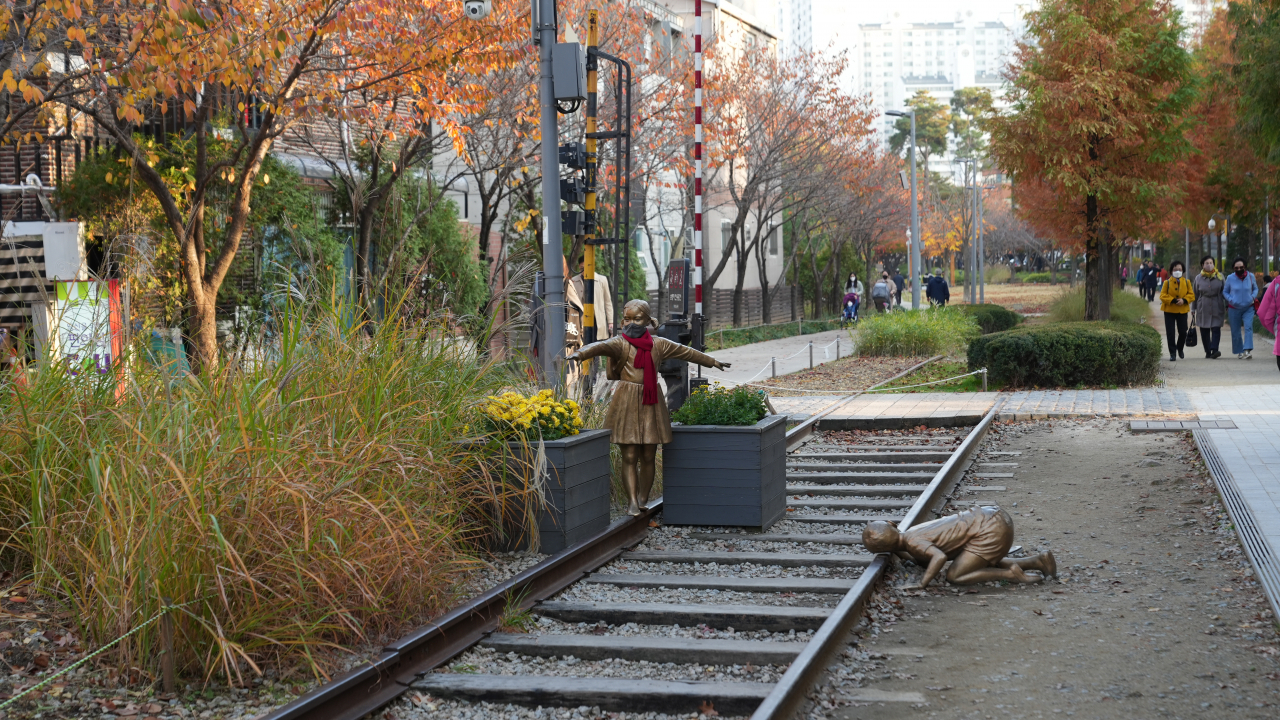
For a long time, railway tracks were one of the great wounds of industrial cities. They cut through neighbourhoods, produced noise, separated streets, left residual spaces around them, and reminded us that the modern city had been built as much with infrastructure as with scars. That is why, when an old railway line is transformed into a park, the story seems to have a happy ending. Where there used to be a barrier, there is now a promenade. Where there used to be noise, there are now trees. Where there used to be an urban void, there are now benches, paths, grass, cafés, and people walking.
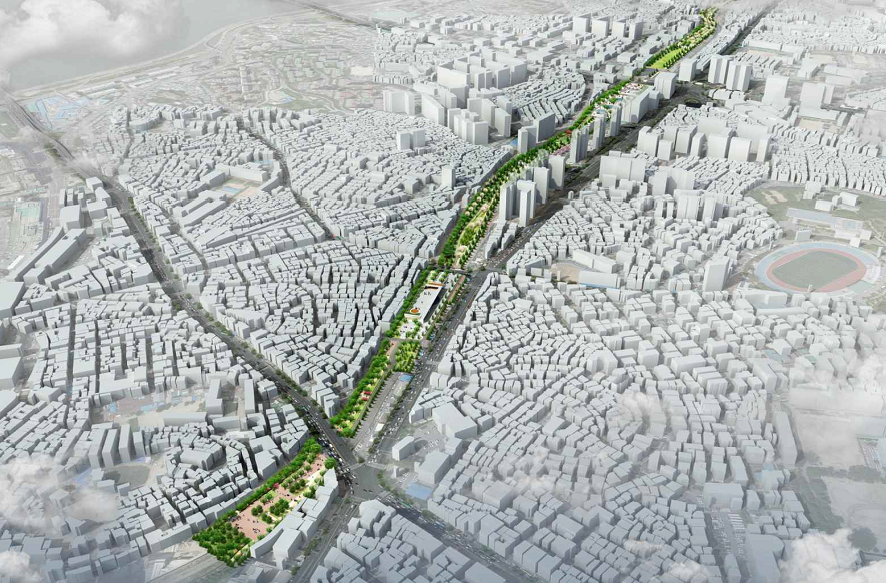
That is, at first glance, the story of Gyeongui Line Forest Park in Seoul: a former railway infrastructure reconverted into an urban linear park. A green corridor that crosses several parts of the city and that, in the Yeonnam-dong section, has acquired an identity of its own under a very revealing name: Yeontral Park. The reference to Central Park is not accidental. In a single word, it condenses an entire urban transformation: a relatively discreet residential neighbourhood begins to present itself as an attractive, young, walkable, green, creative, and lively place.
Up to this point, everything seems positive. And in part, it is. It would be absurd to deny the benefits of a park. Cities need more greenery, more shade, more pedestrian spaces, more places of encounter, more ecological corridors, and less dependence on cars. A linear park can improve air quality, provide spaces for rest, connect neighbourhoods, encourage walking, and recover formerly underused land. In a metropolis as dense as Seoul, interventions of this kind are far from minor: they can change the everyday experience of thousands of people.
But the contemporary city has an uncomfortable rule: almost everything that improves a neighbourhood can also make it more expensive. And this is where the paradox of Gyeongui Line Forest Park begins. Urban nature, when inserted into highly pressured real-estate markets, does not only produce well-being. It also produces value. And that value is not distributed neutrally.
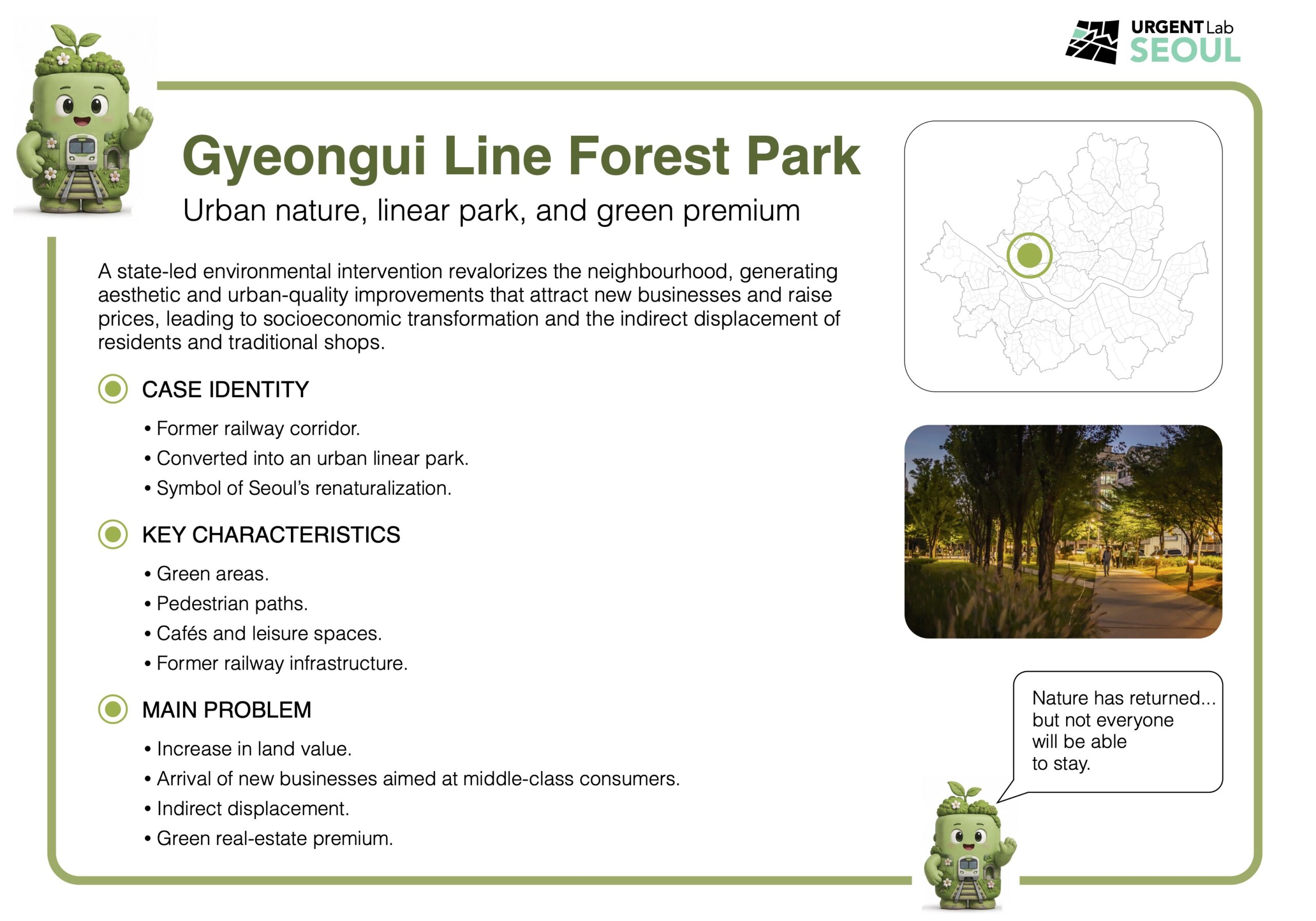
The clearest case is found in Yeonnam-dong, the best-known and most popular section of the park. Before the intervention, this area had a mainly residential profile, with low- and mid-rise housing, local uses, everyday commerce, and limited centrality. The old railway line did not function as an urban attraction, but rather as a barrier or residual space. Its transformation into a park radically changed the perception of the place. Suddenly, living near that green corridor became desirable. Walking there became an experience. Opening a café next to the park began to make economic sense. Photographing the neighbourhood became part of its new identity.
The transformation did not happen overnight, but it did have a clear turning point. The project was developed in phases: a first opening in 2012, a second in 2015 —with the Yeonnam-dong section as one of the key areas— and a third in 2016. From then on, the area around the park gained increasing prominence. Yeonnam-dong ceased to be just a residential neighbourhood and became an urban destination associated with leisure, food, cafés, walks, social media, and cultural consumption.
This is where the central concept appears: green gentrification. Green gentrification occurs when an environmental improvement —a park, an ecological corridor, a restored riverfront, a sustainable mobility infrastructure— increases the attractiveness of an area and ends up generating real-estate revalorization, commercial transformation, and indirect displacement. The idea may feel uncomfortable, because no one wants to oppose a park. But that is precisely why it is so important to analyse it: the point is not to say that green space is bad, but to ask who can enjoy its benefits in the long term.
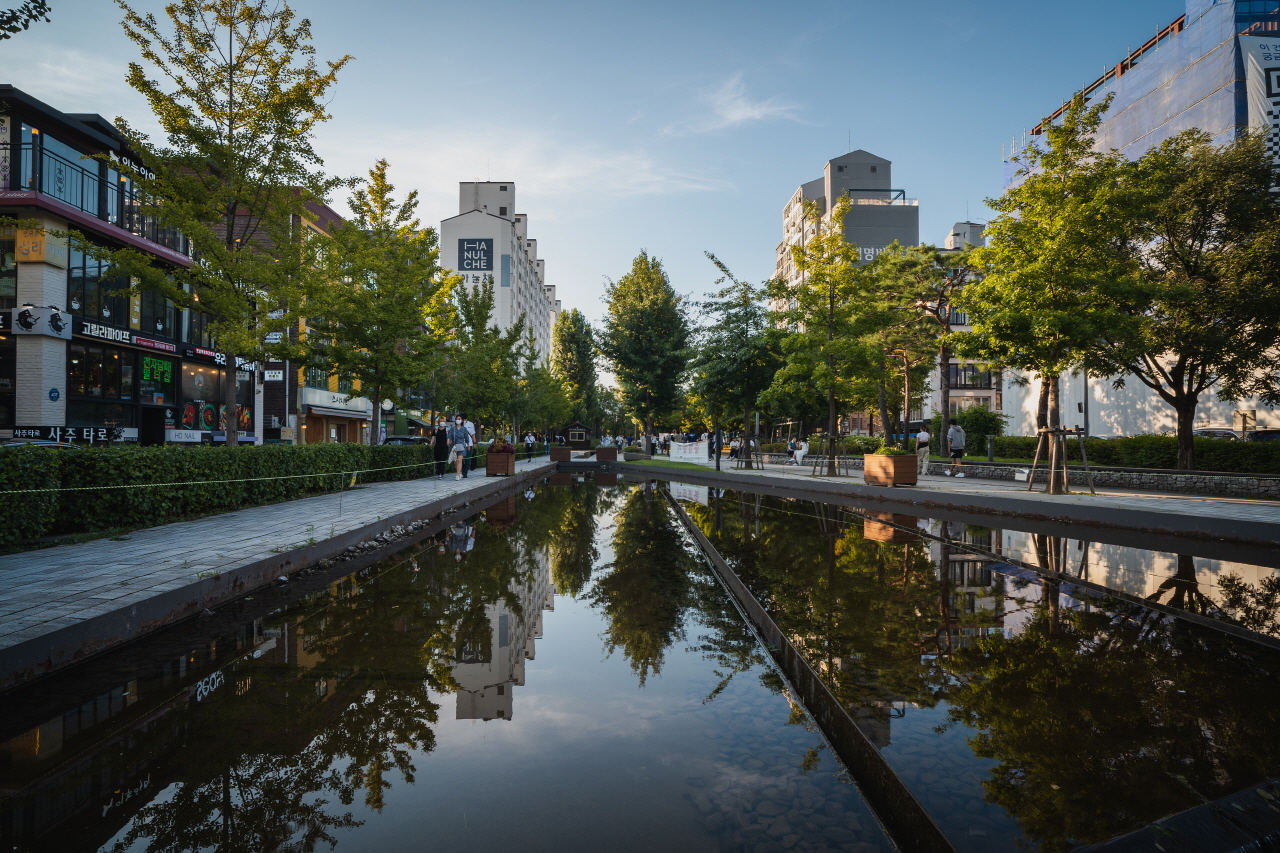
In Gyeongui Line Forest Park, the park acts as the trigger for a new neighbourhood economy. Proximity to green space becomes a real-estate argument. The area becomes more walkable, more pleasant, more photogenic, more recognizable. Businesses begin to orient themselves towards new publics. Cafés, restaurants, shops, small cultural spaces, and leisure venues multiply around the park. The walk ceases to be just a walk; it becomes a circuit of consumption.
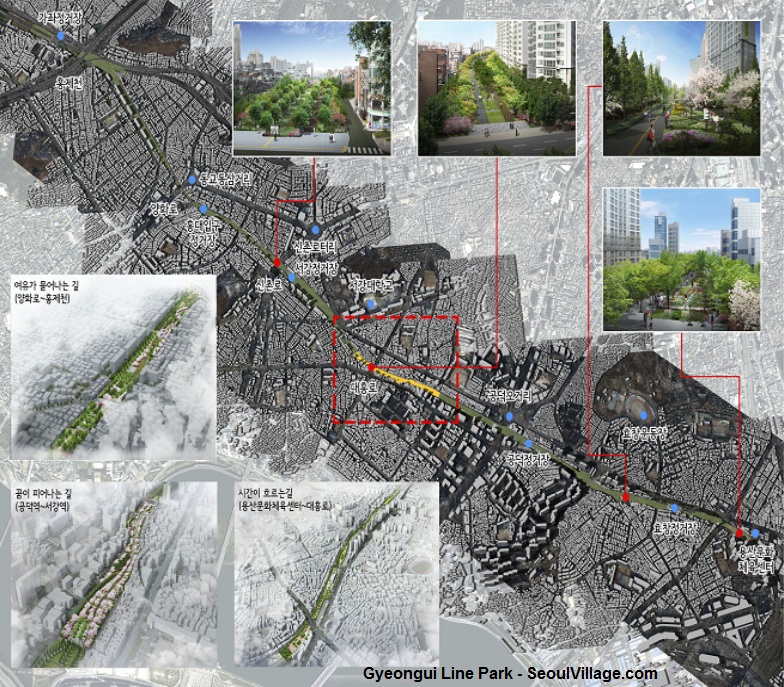
The word “Yeontral Park” is very important in this process. It is not merely a charming nickname. It is a brand. It turns a green intervention into an urban identity. The name suggests centrality, lifestyle, leisure, and prestige. It tells the visitor and the future resident: this is not just any neighbourhood; this is a special place. And in global cities, when a place becomes special, the market usually reacts quickly.
The literature on the case has identified a fairly concrete spatial impact: the effects on housing prices are concentrated especially around the park, within an approximate area of influence of between 500 and 700 metres. In other words, proximity to the park is not only a pleasant feeling; it becomes measurable value. What we might call a green premium appears: paying more to be close to trees, paths, shade, landscape, and attractive urban life.
This point is fundamental. Green gentrification does not necessarily operate through direct eviction. No excavator needs to expel residents. It is enough for the environment to be revalorized, rents to rise, businesses to change, property owners to acquire new incentives, and everyday life to be reorganized around other publics. The exit may be slow, indirect, even difficult to register. But it exists.
The available data for Yeonnam-dong point precisely in that direction. After the opening of the park section in 2015, the neighbourhood experienced a significant decline in population and households, while businesses, employment, and the conversion of residential properties into commercial uses increased sharply. Between 2010 and 2019, Nam and Lee document a population decline of 18.4%, a 4.5% decrease in households, a 73.9% growth in businesses, and a 36.7% increase in employment. We are not dealing with a simple “improvement of public space”. We are dealing with a functional reconfiguration of the neighbourhood: less residential centrality and more commercial, cultural, and leisure centrality.
The urban scene changes. Where everyday uses once predominated, uses oriented towards visitors, young consumers, urban middle classes, and external publics begin to appear. The neighbourhood becomes more attractive, yes, but also more dependent on consumption. People walk in order to consume. They stay in the park to have something to drink. They photograph the surroundings. They share the experience. Green space functions as environmental infrastructure, but also as economic infrastructure.
This does not mean that Gyeongui Line Forest Park can simply be compared to extreme cases such as New York’s High Line, where the creation of an elevated park was linked to very intense real-estate revalorization and major luxury developments. The Seoul case is more gradual, less spectacular, and less dominated from the outset by large financial operations. That is precisely what makes it so interesting. It shows a less obvious, but very real, version of green gentrification.
This is not an ultra-luxury operation, nor a mass expulsion through demolition, nor a corporate megaproject that erases an entire neighbourhood. It is something more subtle: an environmental improvement that increases the attractiveness of the place, a park that reorganizes pedestrian flows, a neighbourhood brand that changes the area’s reputation, a commercial expansion that displaces the residential function, and a real-estate market that captures the value of the new urban nature.
The key is to understand that green space does not act only as green space. It acts as landscape, as brand, as a promise of quality of life, as a sales argument, as an excuse to open businesses, as a reason to raise prices. Urban nature becomes a sign of distinction. Living next to the park no longer means simply having trees nearby. It means living in a neighbourhood with reputation, atmosphere, cafés, walking routes, and a desirable urban image.
And here we find one of the great contradictions of the sustainable city. For decades, we have rightly argued that cities need more green spaces. But if those green spaces are implemented without affordable housing policies, without protection for local commerce, without rent control, and without mechanisms to ensure neighbourhood permanence, they may end up reinforcing inequalities. The city becomes more beautiful, healthier, and more walkable, but also less accessible to those who were already there.
This is the heart of green gentrification: environmental improvement can produce social injustice if its benefits are captured by the market. Not because trees expel anyone, but because trees increase land value. Not because a park is negative, but because in a commodified city even clean air, shade, and walking can become rent.
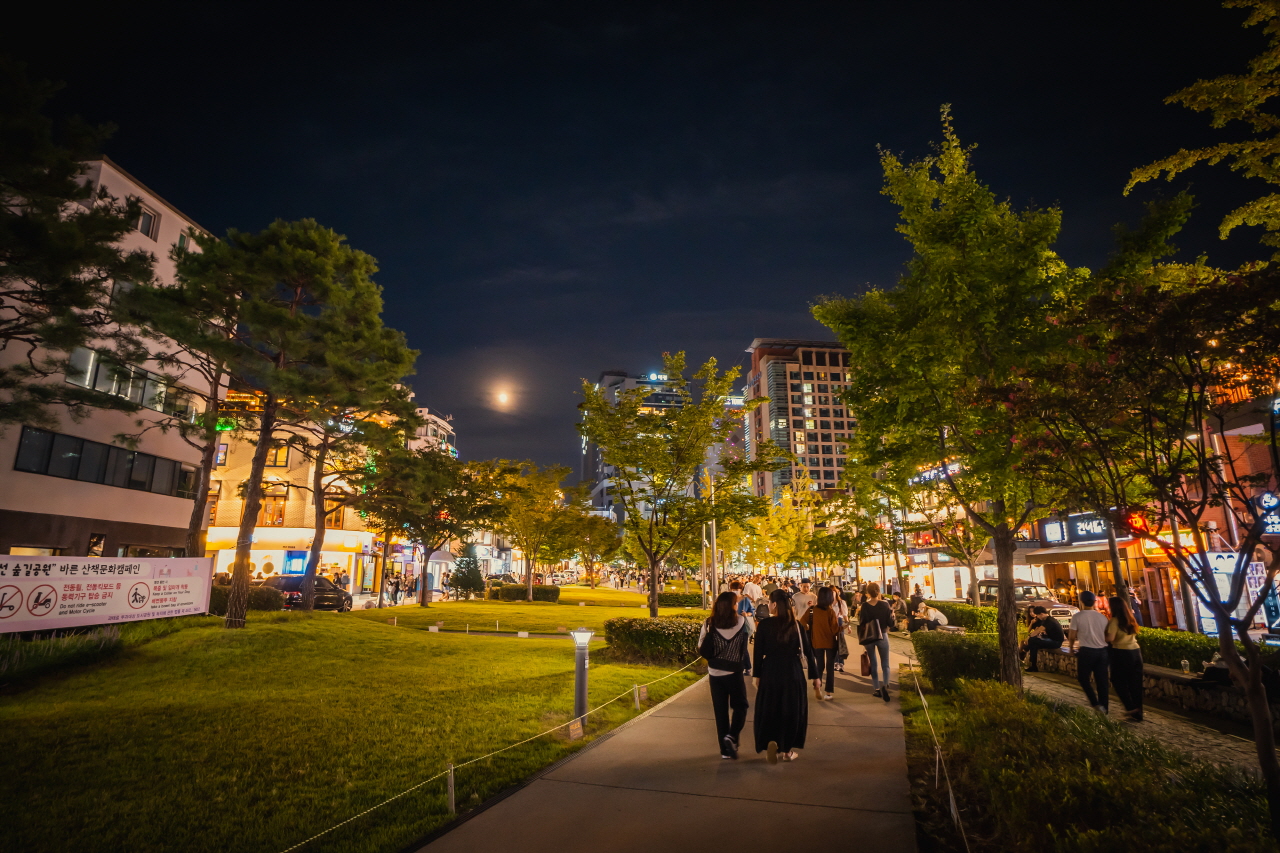
Gyeongui Line Forest Park allows us to see this very clearly. The park did not destroy Yeonnam-dong; it made it more desirable. And by making it more desirable, it changed its position within the city. The neighbourhood gained symbolic and commercial centrality. It became more recognizable, more visited, more attractive. But that gain had a reverse side: relative population loss, transformation of uses, pressure on residents and traditional businesses, and the consolidation of a new urban profile more oriented towards consumption.
The question should not be whether we want parks or not. Of course we do. The question is what kind of green city we are building. A green city can be more just, more liveable, and more democratic. But it can also become a green city for those who can afford it. That is the difference between a genuinely urban environmental policy and an embellishment strategy that ends up functioning as a real-estate engine.
Some authors have proposed the idea of “just green enough”. The expression may sound strange, but it raises an important question: the point is not to give up urban nature, but to design it in such a way that it does not automatically trigger a wave of elitization. In other words, the goal should not be to create spectacular green spaces to attract investment, but to improve everyday life in neighbourhoods without expelling their residents.
This means thinking about parks together with housing. Thinking about trees together with rents. Thinking about walkability together with local commerce. Thinking about urban beauty together with the right to remain. If green planning is limited to planting trees and designing pleasant spaces, but does not address the power relations of the urban market, it may end up producing exactly what it claimed to combat: an unequal, segregated, and exclusionary city.
Gyeongui Line Forest Park does not invalidate the need for green infrastructure. On the contrary, it shows that such infrastructure is necessary, desirable, and capable of positively transforming urban experience. But it also shows that environmental improvements cannot be analysed apart from social justice. A park is not just a park when it changes land value, attracts new businesses, modifies the identity of the neighbourhood, and alters residents’ possibilities of remaining.
That is why this case is so valuable. It is not a simple success story, nor an easy denunciation of sustainability. It is a nuanced warning. It tells us that the green city can be emancipatory, but it can also be exclusionary. It can repair a railway scar, but open a real-estate gap. It can return nature to the city, but remove social ground from those with less capacity to compete in the market.
In Yeonnam-dong, the old railway line became a promenade. The barrier became a corridor. The void became a park. Grey infrastructure became green infrastructure. But at the same time, the neighbourhood changed function. Residential life lost weight in relation to the leisure economy. Proximity to the park became value. The improved landscape began to speak the language of rent.
That is the great lesson of Gyeongui Line Forest Park: in the contemporary city, even nature can become a mechanism of revalorization. And that is why, if we want greener cities, we also need more protected cities. More trees, yes. More parks, yes. More promenades, yes. But also more affordable housing, more everyday commerce, more neighbourhood participation, and more right to remain.
Because a green city that displaces its neighbours is not yet a just city. It is simply a more beautiful city for those who can still afford to live in it.