There are wealthy neighbourhoods, and there are very wealthy neighbourhoods. And then there are urban enclaves that seem to operate on another scale, almost in another reality. Places where housing ceases to be simply housing and becomes a symbol, a patrimonial asset, a refuge of privacy, a status brand, and a social password. Spaces where the point is not only to live well, but to inhabit a position within the urban hierarchy.
Hannam-dong, in Seoul, belongs to that category. Located in Yongsan-gu, in a strategic position between the Han River, Itaewon, the former U.S. military area, and some of the most sought-after parts of the South Korean capital, Hannam-dong has become one of the country’s most exclusive residential enclaves. But its interest does not lie merely in the fact that it is an expensive neighbourhood. That would be too simple. What matters is that Hannam-dong allows us to observe an advanced form of gentrification: supergentrification.
Classic gentrification is usually imagined as the arrival of middle or upper-middle classes in working-class neighbourhoods, with rising prices, commercial transformation, and the progressive displacement of residents. Supergentrification operates in a different league. It does not describe the arrival of urban professionals in a cheap neighbourhood, but rather the elitist intensification of spaces that were already affluent. In other words: neighbourhoods that had already reached a high position within the city are revalorized once again, this time for publics that are even richer, more mobile, more global, and more exclusive.
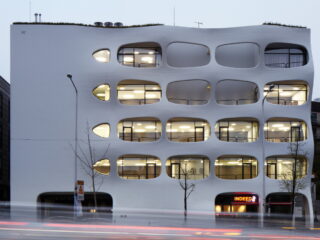
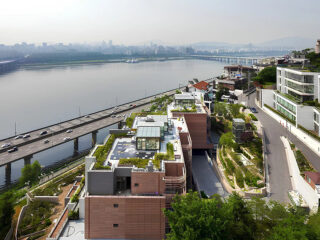
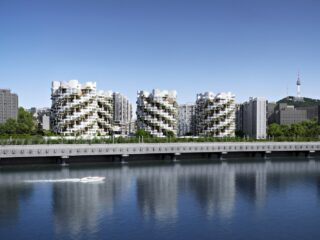
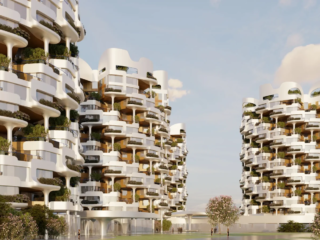
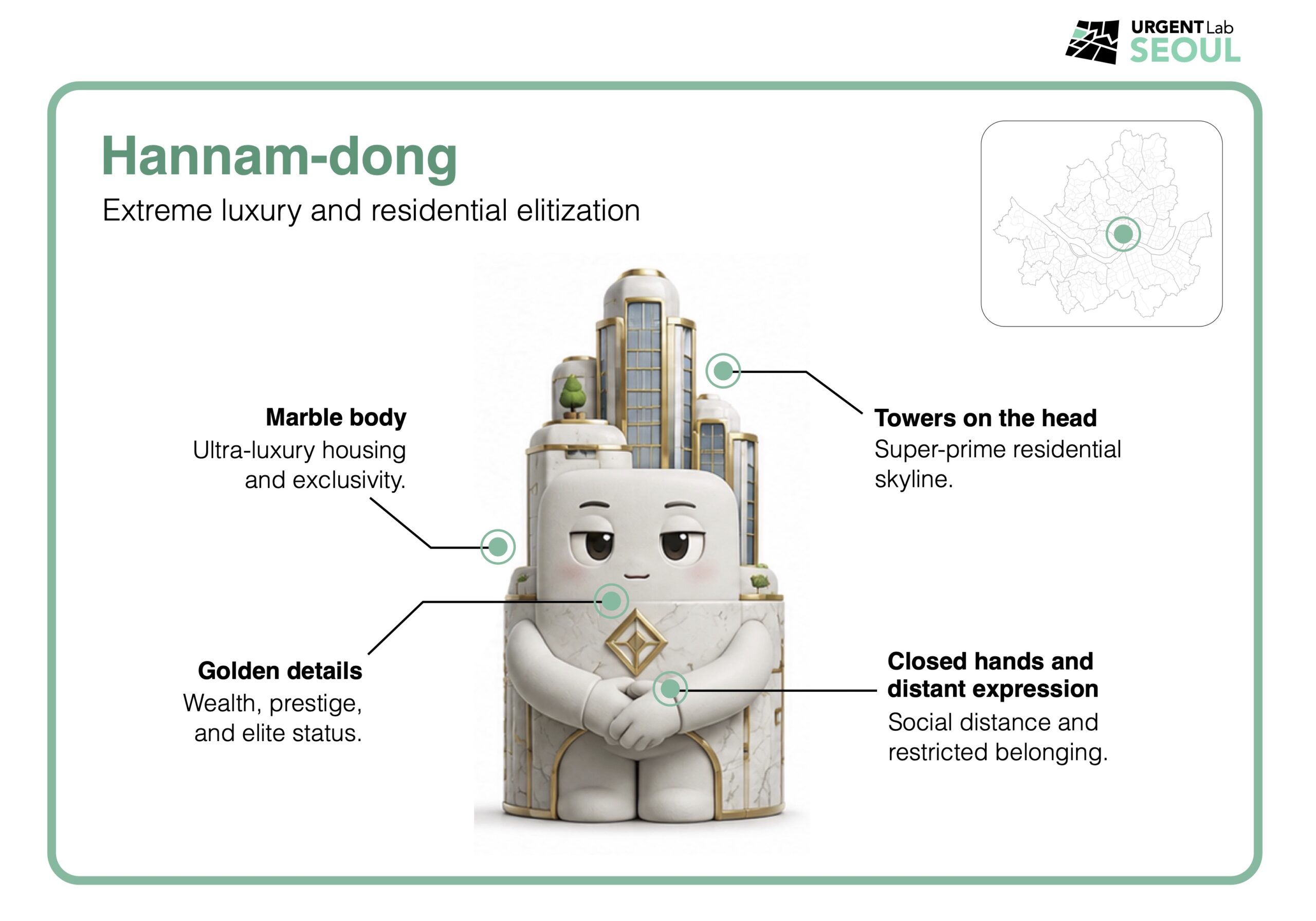
In Hannam-dong, we are not dealing with the typical working-class neighbourhood that fills up with specialty cafés and new creative residents. Nor are we dealing with a heritage tourist district like Bukchon, or a green intervention like Gyeongui Line Forest Park. Here, the main driver is different: ultra-luxury housing, record prices, private security, patrimonial capital, celebrities, diplomats, great fortunes, elite cultural consumption, and the symbolic transformation of the neighbourhood into a brand of prestige.
Hannam-dong was already a special enclave before the current cycle of extreme luxury. In 2008, it was described as a kind of “mini global village” in central Seoul, with foreign residents, diplomats, executives, protected villas, and high rents. That prior condition is important because it reminds us that supergentrification does not emerge in a vacuum. It does not arrive in a devalued territory, but in a space that already had social, real-estate, and symbolic capital. What happens afterwards is an intensification.
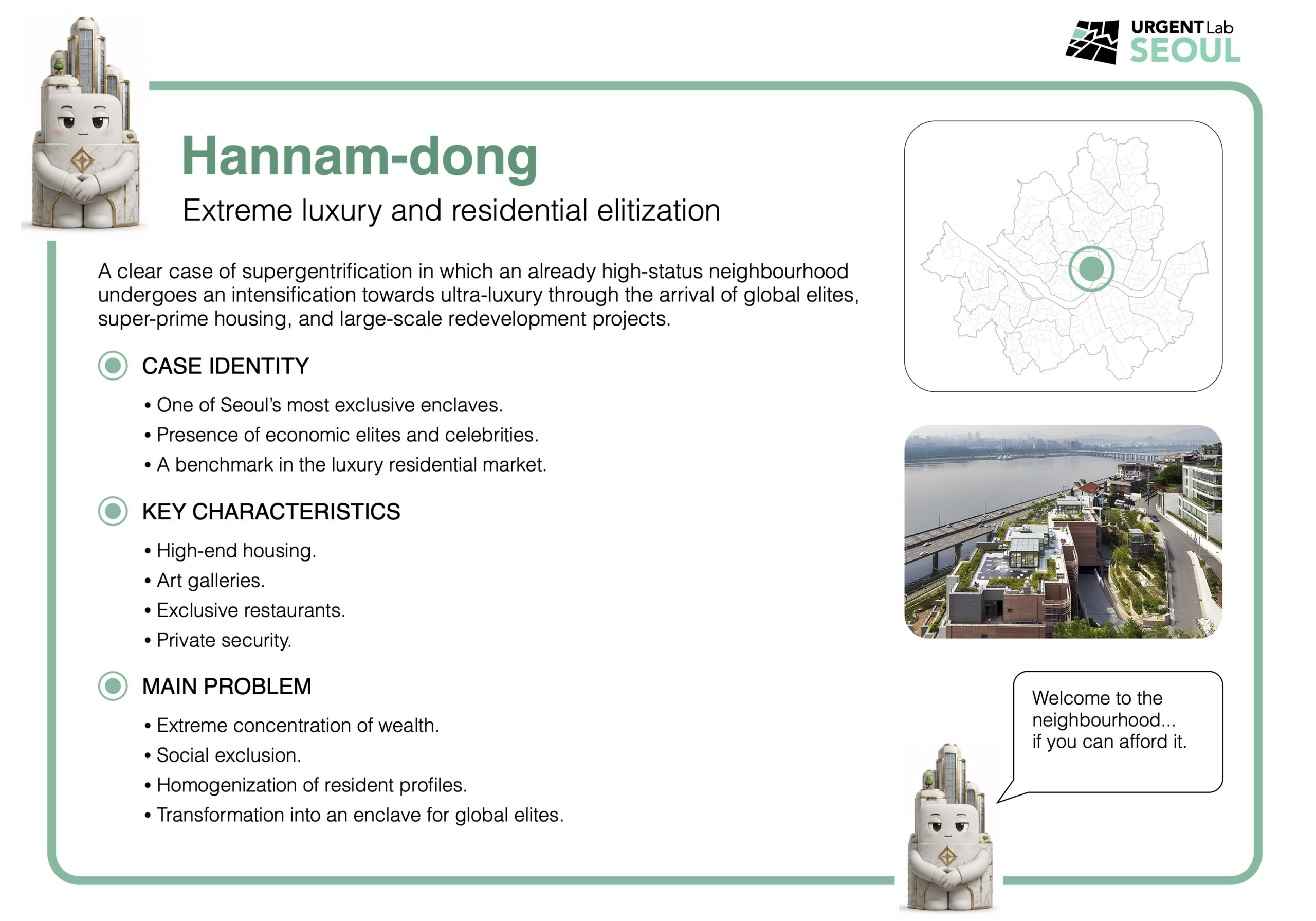
That intensification can be seen clearly in complexes such as Hannam The Hill, Nine One Hannam, PAARC Hannam, and UN Village. These are not simply expensive residential developments. They are urban products designed for an extraordinarily restricted clientele. Large floor areas, privacy, low density, exclusive services, security, premium design, views, access control, and prices beyond the reach not only of working-class residents, but even of affluent sectors of the city.
Nine One Hannam captures this new scale very well. Occupied since 2019, it has become one of the most emblematic residential complexes in Korea’s super-prime market. Transactions recorded in recent years, with sales reaching tens of billions of won, show that housing here is not valued only for its size or location. It is valued for its scarcity, its exclusivity, the reputation of the complex, who lives there or might live there, and the social image it projects.
In these kinds of spaces, price is not only an economic barrier. It is part of the message. Saying “this costs a fortune” also means saying “this is not for everyone”. Exclusion is not a side effect: it is a condition of the product. Inaccessibility is part of the value.
That is why Hannam-dong helps us understand that supergentrification is not simply about prices rising sharply. It consists in the production of an urban environment oriented towards elites with extremely high purchasing power. Housing separates itself from the common idea of home and moves closer to the logic of a prestige asset. It is bought to live in, yes, but also to preserve wealth, project status, secure privacy, access exclusive social networks, or situate oneself within an urban geography of power.
EXPLORE MORE: «Hannam-dong The Neighborhood of Gourmet Food and Culture Beloved by K-Stars»
Security is a central element in this geography. In luxury enclaves, protection does not function only as defence against the outside. It also functions as language. Cameras, barriers, access controls, private surveillance, discreet streets, opaque façades, gated or semi-gated developments: everything communicates separation. The message is clear: inside here, life is lived differently. The city remains close, but controlled. Centrality is enjoyed without fully assuming the exposure of common urban life.
There is a particularly interesting idea in Hannam-dong: the city of those who no longer need the city. Its residents can benefit from central location, proximity to art, exclusive restaurants, embassies, international schools, business centres, and global circuits of consumption. But at the same time, they can isolate themselves from the social mix, noise, conflict, and unpredictability that have historically defined urban life. It is a form of selective urbanity: being in the city without fully being with the city.
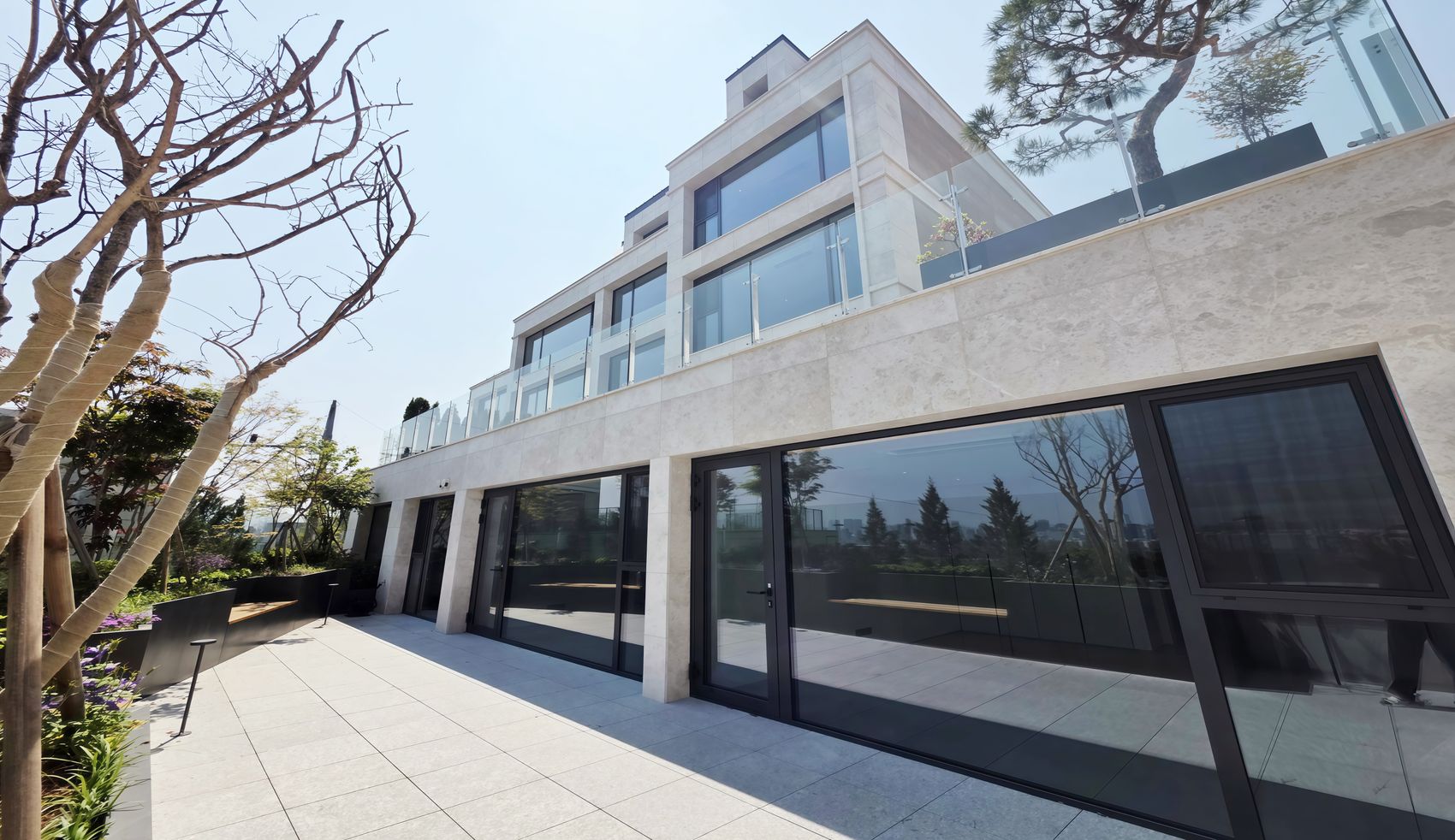
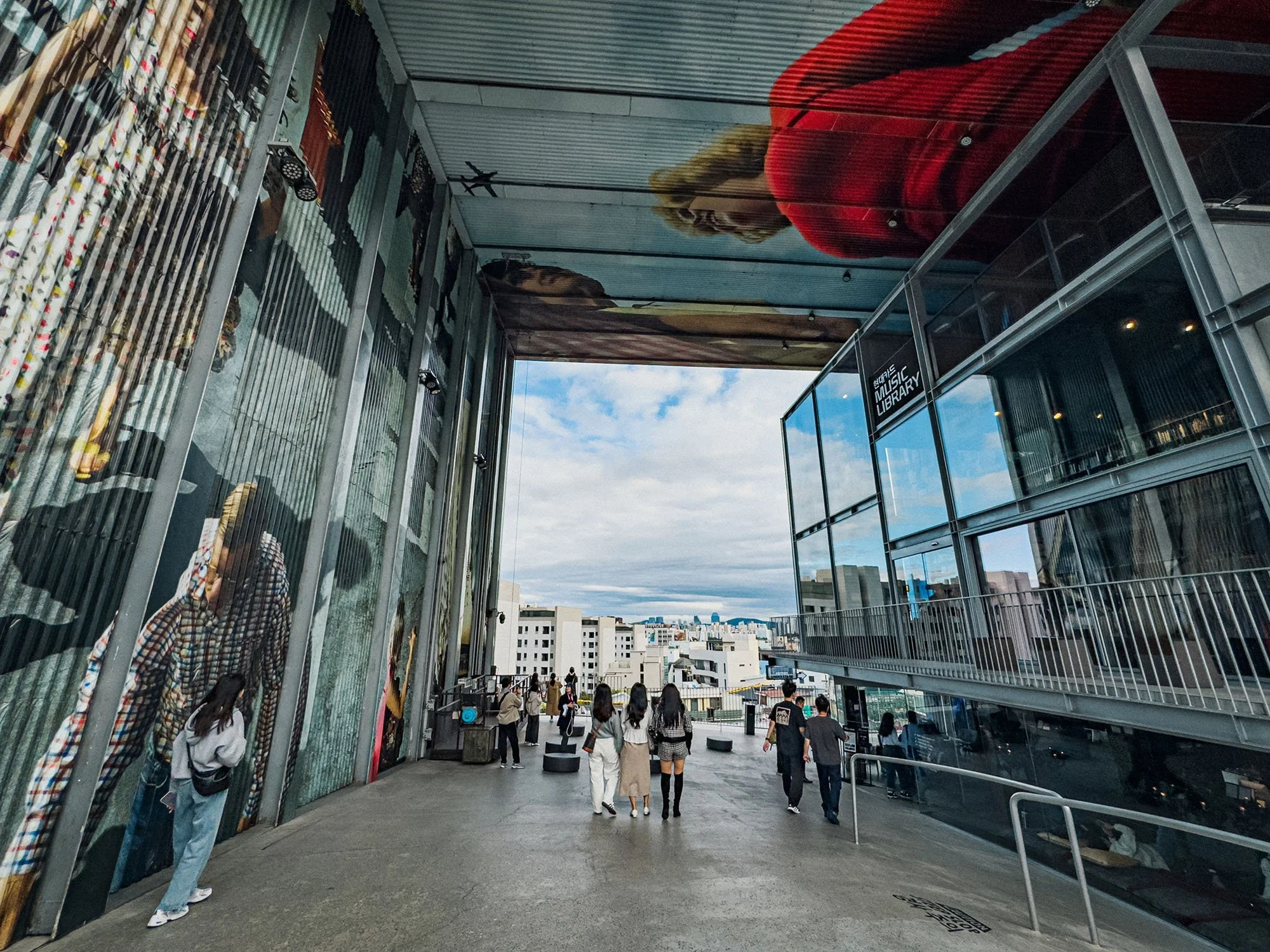
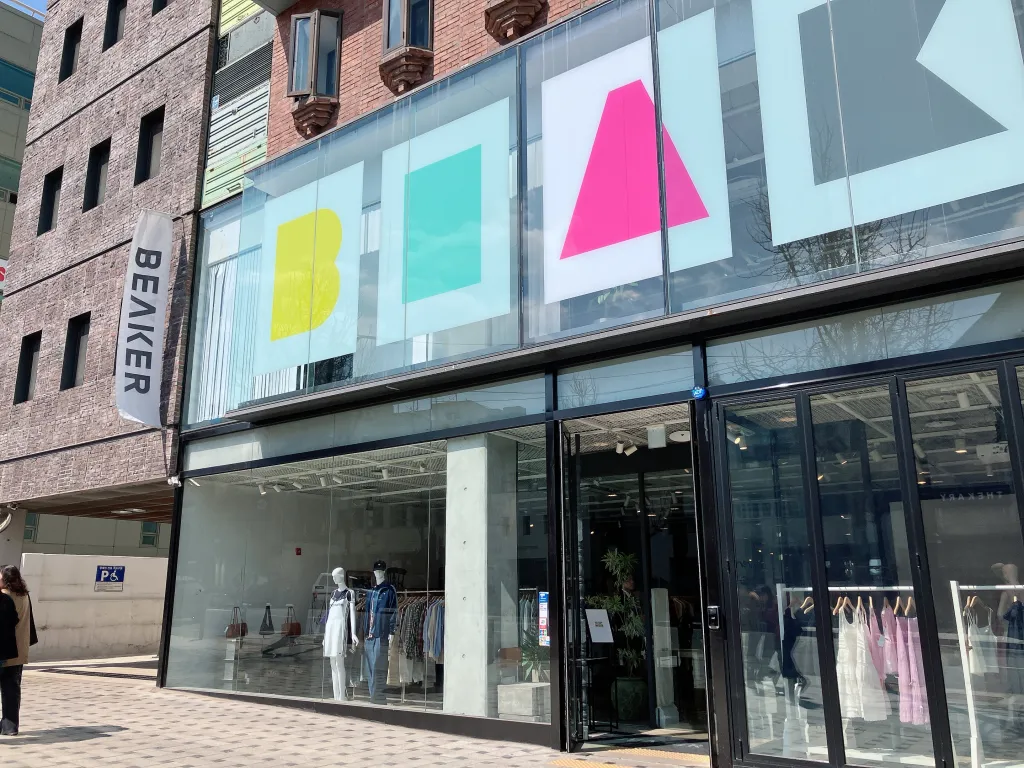
This selective urbanity is reinforced by a very specific cultural layer. Hannam-dong is not only residential. Its surroundings include galleries, exclusive restaurants, high-end stores, lifestyle spaces, and prestigious cultural institutions such as the Leeum Museum of Art. But this component should not be confused with the symbolic gentrification of neighbourhoods such as Mullae. In Mullae, alternative culture acts as the initial driver of revalorization in an industrial district. In Hannam, culture functions more as an accompaniment to the elite: an infrastructure of distinction that reinforces the value of the enclave.
Art, design, gastronomy, and luxury build an atmosphere. This is not popular culture or grassroots creativity. It is an ecosystem of sophisticated consumption that confirms the position of the neighbourhood. Luxury housing needs a coherent landscape around it: galleries, discreet restaurants, selective brands, museums, well-kept streets, privacy, and prestige. Everything must speak the same language.
But Hannam-dong is not only shine. And this is where the case becomes more complex. Alongside the super-prime residential core appears the conflictive dimension of Hannam New Town, especially in areas such as Zone 3, which affects parts of Hannam-dong, Bogwang-dong, and Itaewon. There, supergentrification is expressed not only as consolidated exclusivity, but as territorial expansion: urban emptying, evictions, business closures, demolition, and the expectation of rebuilding a much more expensive and homogeneous urban fabric.
This double face is fundamental. In the luxury core, exclusion operates through price, security, and social selection. On the redevelopment edge, exclusion can take more direct forms: forced moves, loss of businesses, empty streets, dispersed communities, buildings abandoned while awaiting demolition. Luxury has a clean façade, but its expansion can leave landscapes of absence behind.
MORE INFORMATION: «Seoul’s Hannam Shopping District in Summer»
Supergentrification is often presented through elegant language: premium renewal, exclusive housing, urban improvement, high residential quality, a new standard of living. But beneath those words lies an uncomfortable question: what happens to territories that do not yet fit that image? What happens to small businesses, long-term residents, independent cultural spaces, lower-income foreign populations, or more mixed urban fabrics? Very often, the answer is simple: they get in the way of the new narrative.
In Hannam-dong, the transformation cannot be understood as a simple rise in prices. It is a complete reorganization of urban value. It changes who can live there, what kind of commerce makes sense, what forms of culture are visible, which streets become attractive, which buildings are considered obsolete, and which social profiles are compatible with the new image of the neighbourhood.
The difference from other processes of gentrification is one of scale and direction. In classic gentrification, the middle classes may displace working-class groups. In supergentrification, extreme elites may displace even those who were already part of an affluent city. The threshold rises so high that the neighbourhood ceases to be expensive and becomes inaccessible. We are not talking about middle-income upgrading; we are talking about an extreme concentration of economic and symbolic capital.
That is why it is not enough to say that Hannam-dong is a luxury neighbourhood. Luxury is only the visible surface. What is at stake is a form of urban production that turns certain territories into enclaves for the super-rich. The city ceases to be organized as a shared space and begins to fragment into islands of restricted access, connected to one another through networks of capital, international mobility, elite consumption, and private security.
This raises a profound urban dilemma. Cities have always had affluent neighbourhoods. Spatial inequality is not new. But supergentrification introduces a different intensity: exorbitant prices, social disconnection, market internationalization, property as patrimonial investment, low community interaction, and the growing privatization of urban experience. The neighbourhood remains in the city, but behaves like an enclave.
The word enclave matters. A neighbourhood, in the full sense, implies a certain degree of mixture, shared everyday life, unplanned encounters, and a relationship between housing, commerce, street, and community. An enclave, by contrast, operates through separation. Its boundaries are clearer, even when they are not always visible walls. It filters who enters, who buys, who remains, who feels out of place. Hannam-dong is moving increasingly towards that logic.
The role of the State also deserves attention. Although the dominant vector is supergentrification, we should not forget that large redevelopment operations require planning, permits, regulatory frameworks, and institutional decisions. In Hannam New Town, a secondary authoritarian component appears: the top-down transformation of a complex urban fabric in order to make it compatible with a future high-value residential centrality. It is not the same pattern as Yongsan, where the violence of redevelopment was the core of the case, but there is indeed public intervention facilitating territorial reorganization.
Hannam-dong therefore shows elite gentrification with several layers. A residential layer, made up of super-prime complexes. A financial and patrimonial layer, linked to great fortunes and extremely high-value real-estate assets. A symbolic layer, built through art, luxury, and prestige. A security layer, based on privacy and control. And a territorial layer, where the expansion of the model reorganizes more heterogeneous areas.
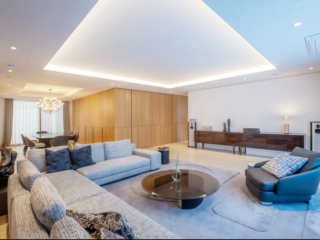
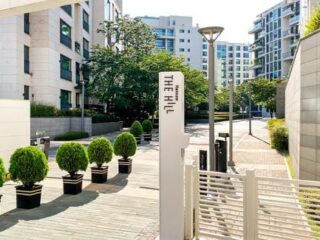

Perhaps the most interesting aspect of the case is that it does not produce an image of urban crisis in the traditional sense. We do not necessarily see degradation, abandonment, or open conflict in the heart of the enclave. On the contrary: we see order, cleanliness, carefully designed architecture, privacy, quality services, investment. Precisely for that reason, critique becomes more difficult. How can one question a neighbourhood that seems to function so well? The answer lies in asking: for whom does it function?
It functions for those who can buy a record-priced home. It functions for those who need extreme privacy. It functions for those who move within elite networks. It functions for those who understand the city as a catalogue of premium locations. But it functions much worse for those who are left outside that market, for those who lose their business in redevelopment areas, for those who watch their neighbourhood empty before being rebuilt, for those who no longer recognize the place where they lived or worked.
Supergentrification is, ultimately, a question about the limits of the city as a common good. If certain neighbourhoods become prestige assets for a global minority, what happens to the idea of an open, mixed, shared city? If housing becomes an instrument of extreme distinction, what remains of its social function? If security becomes real-estate value, what kind of relationship is established with public space?
Hannam-dong is not an anecdotal case. It is a window onto a broader trend in global cities: the production of spaces that are increasingly exclusive, expensive, protected, and disconnected from ordinary urban life. A city does not become unequal only when it expels the poor from central neighbourhoods. It also becomes unequal when it reserves its best locations for those who can buy not only square metres, but silence, privacy, prestige, and social distance.
That is the core of the case. Hannam-dong does not show gentrification as the arrival of hipster culture, or as mass tourism, or as a green park, or as the immediate demolition of a working-class neighbourhood. It shows something else: the global city as a machine for producing refuges for the super-rich. Spaces that do not need to mix because their value depends precisely on not mixing too much.
The final question is not whether Hannam-dong is beautiful, safe, or exclusive. It probably is all of those things. The important question is what urban model it represents. And what it represents is a city where centrality, beauty, security, and privacy are concentrated in the hands of those who can pay extraordinary prices for them. A city where some neighbourhoods cease to be common spaces and become residential showcases of global wealth.
Hannam-dong reminds us that gentrification can also occur at the top. It does not only displace from below; it can also close the city from above. And when that happens, the problem is not only who leaves, but what kind of city remains for everyone else.