In major cities, some neighbourhoods change abruptly, through cranes, evictions, urban plans, and large real-estate operations. But others change much more slowly, almost silently. First, an art studio appears in an abandoned warehouse. Then a mural. Then a small café, a gallery, a festival, an article in a cultural magazine, an alternative route for curious visitors. And before one realizes it, that neighbourhood once seen as industrial, grey, or marginal has become “authentic”, “creative”, and “trendy”.
This is, to a large extent, what has happened in Mullae Arts Village, in Seoul. And that is why it is such an interesting case for understanding a specific form of gentrification: symbolic gentrification. It is not the most spectacular form of gentrification, nor the most visibly violent. It does not necessarily begin with a major demolition or a massive eviction. But it can end up profoundly transforming the neighbourhood, its uses, its rents, its businesses, and its identity.
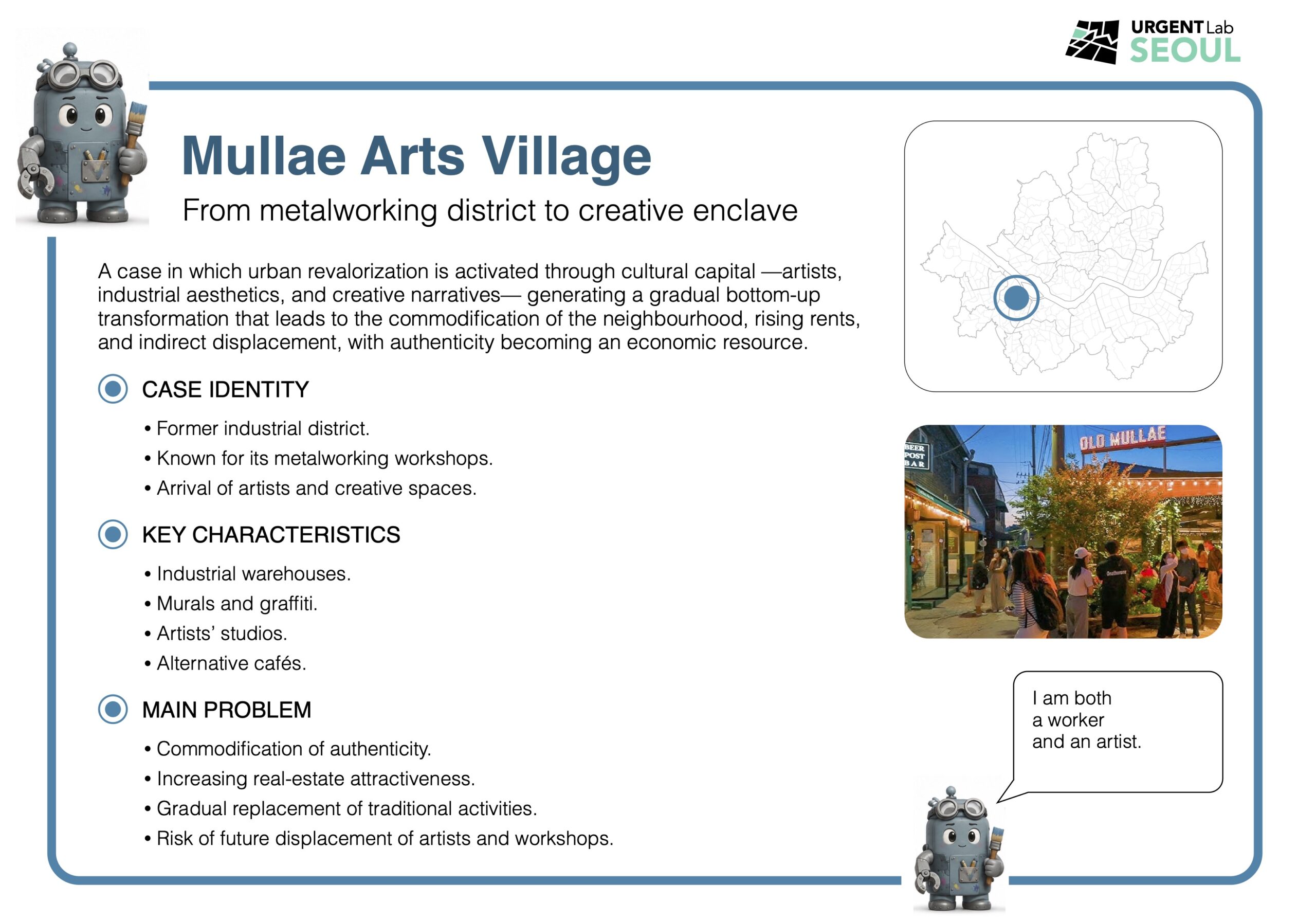
Mullae-dong is located in Yeongdeungpo-gu, in southwestern Seoul. For decades, it was a metalworking district: a space of workshops, small factories, manual trades, industrial components, narrow alleys, and the noise of machinery. It was not a creative backdrop or an urban postcard. It was a place of work. A productive, working-class neighbourhood, full of small firms and workers specialized in metalworking.
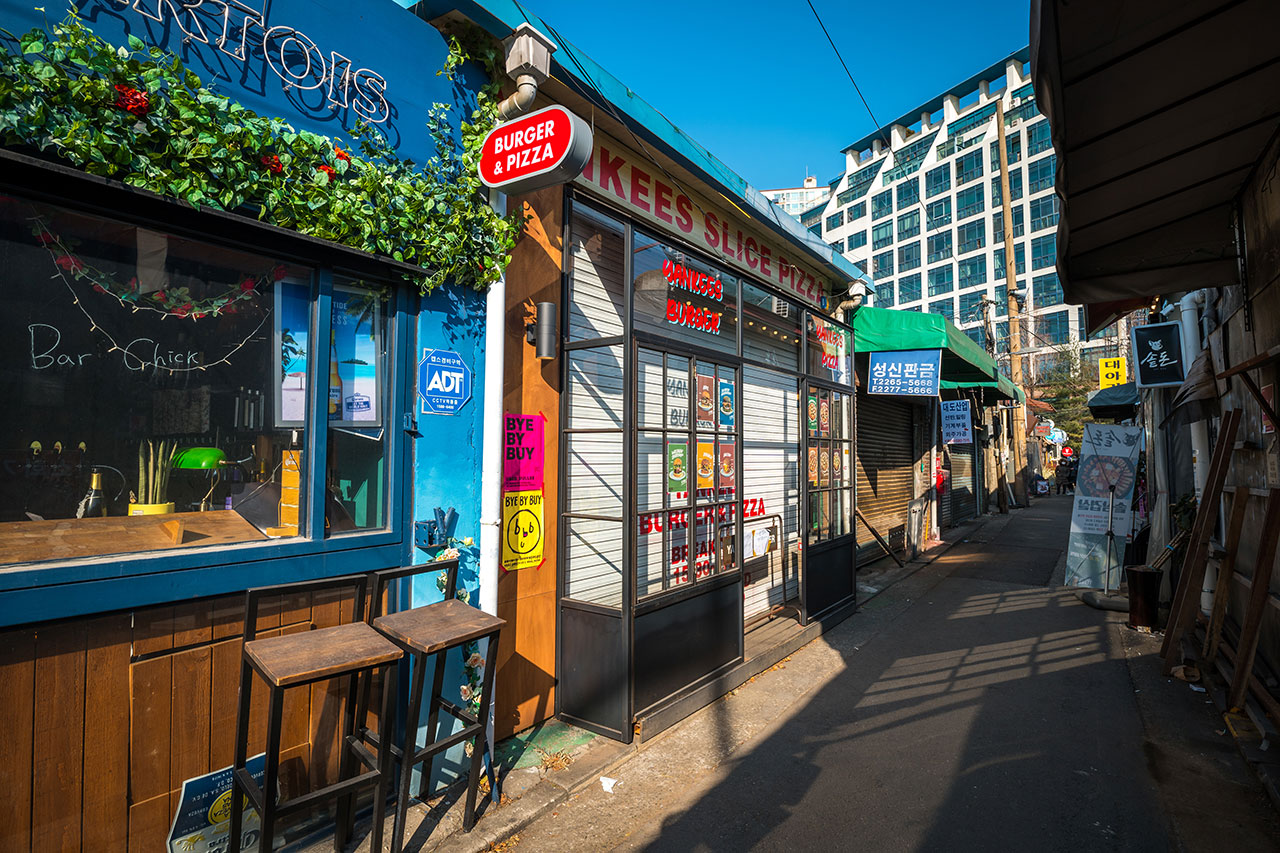
Its landscape was made up of low-rise warehouses, metal shutters, storage spaces, machinery, tools, cables, welding, and industrial materials. All of this, which for a long time had been associated with the old, the harsh, or the unattractive, gradually began to be read in a different way. The contemporary city has that ability: it can turn exposed brick, rust, concrete, sheet metal, and the traces of working-class labour into a desirable aesthetic. What was once simply industry becomes “industrial atmosphere”. What was once precariousness or abandonment can become “authenticity”.
In the early 2000s, several artists began to settle in Mullae. Many of them had been displaced from other creative districts in Seoul that had become more expensive, such as Hongdae or Daehangno. Mullae offered something very valuable to them: cheap, relatively large spaces with an industrial aesthetic that made it possible to work, experiment, and create. Artists occupied upper floors, vacant workshops, or underused industrial spaces, and little by little they began to coexist with metalworkers.
At first, this coexistence did not mean immediate replacement. In fact, one of the most interesting aspects of Mullae is that for a while it functioned as a hybrid space. It did not stop being industrial overnight. The workshops kept working, the artists kept creating, and the neighbourhood began to acquire a double identity: metalworking district and cultural enclave. That mixture is precisely what made it attractive. Mullae was not an artistic neighbourhood built from scratch, but a place where art was inserted into an already existing productive fabric.
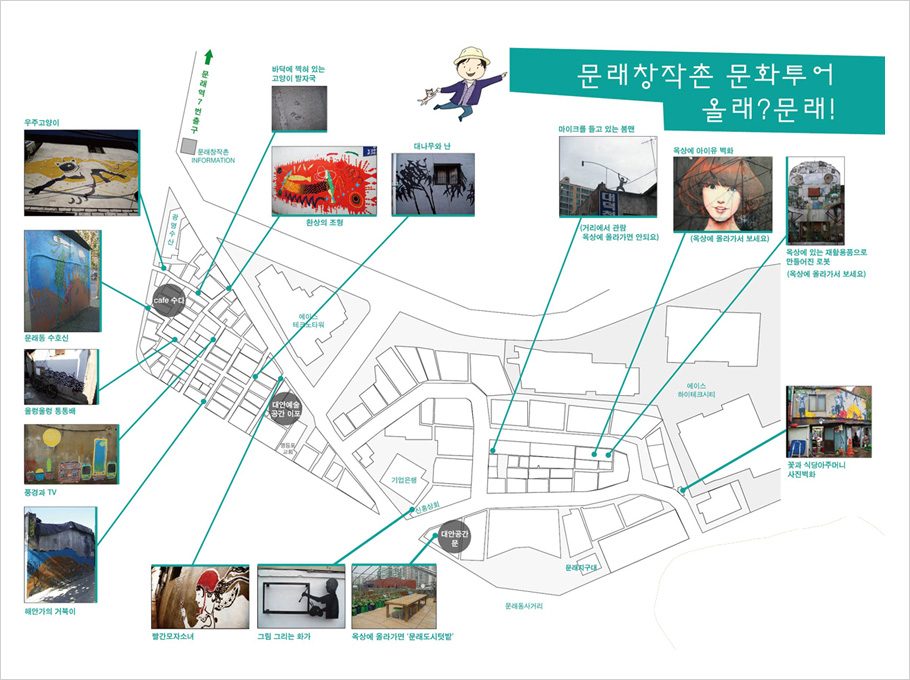
Here lies the key to the case: the value of the neighbourhood began to change not only because of what was materially there, but because of what Mullae began to mean. Its image was transformed. It ceased to be merely an industrial district and became “Mullae Arts Village”, an artistic village in the middle of the great metropolis of Seoul. Murals, studios, alternative cafés, galleries, festivals, and cultural routes gradually built a new urban narrative. Mullae began to be presented —explicitly or implicitly— as an authentic, creative, alternative, and distinctive place.
This type of process is what we can call symbolic gentrification. Instead of beginning with a large real-estate investment, it is activated through cultural capital: artists, urban aesthetics, neighbourhood identity, narratives of authenticity, and alternative consumption. The neighbourhood is revalorized because its image changes. And that change of image eventually produces very concrete economic effects.
The sociologist Sharon Zukin had already explained something similar in her studies of New York. Former industrial spaces could become desirable territories when occupied by artists and culturally re-signified. The problem is that this creativity, which at first may emerge from below and in a relatively spontaneous way, often ends up being captured by the market. Artists arrive because the neighbourhood is cheap. They make it attractive. The neighbourhood becomes fashionable. Prices rise. New businesses arrive. And, eventually, the very artists and workers who gave life to the process begin to find it difficult to stay.
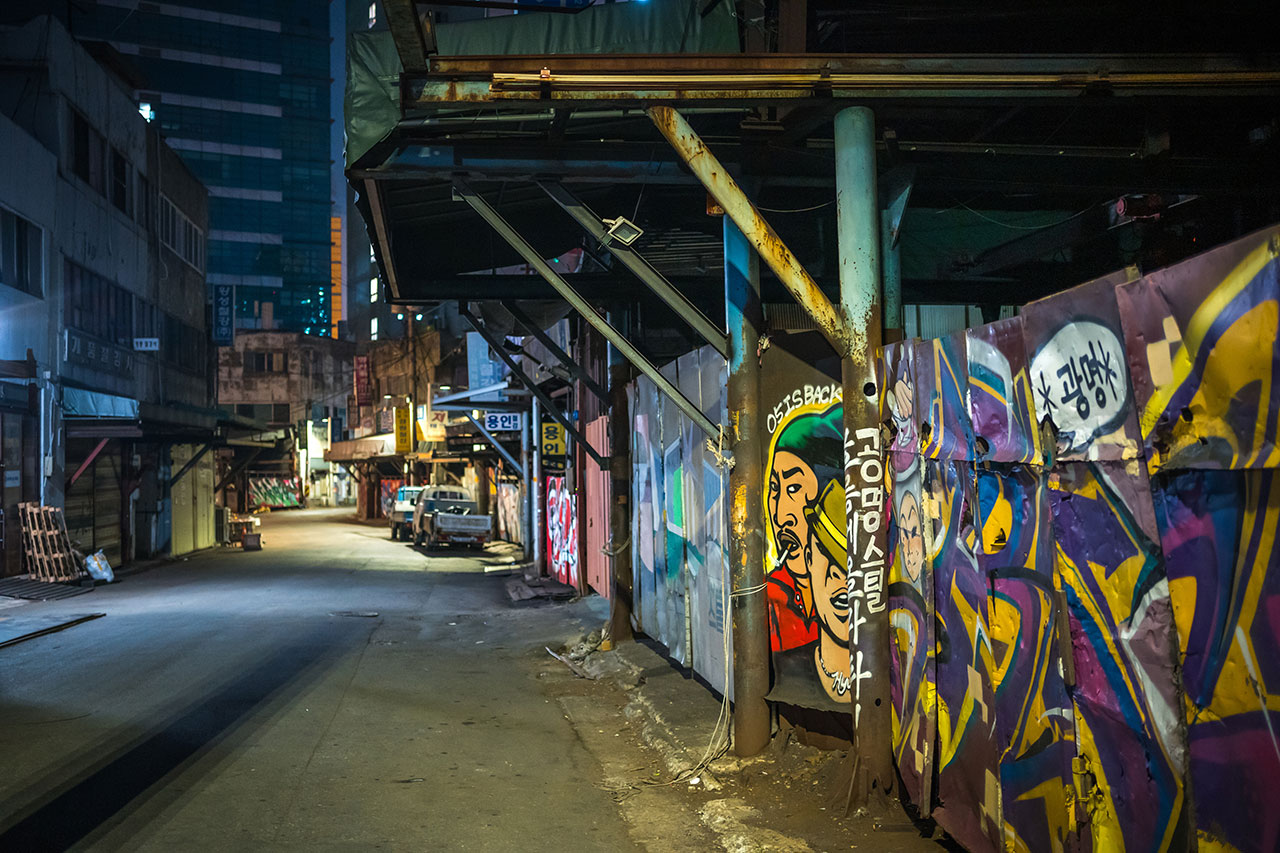
Mullae fits this sequence very well. Culture does not appear here as a mere urban ornament, but as a driver of revalorization. Art changes the perception of the place. That perception attracts visitors. Visitors attract cafés, bars, restaurants, galleries, and small businesses oriented towards cultural consumption. Media attention and institutional support consolidate the new image of the neighbourhood. And little by little, what had been a relatively alternative artistic scene begins to become an urban product.
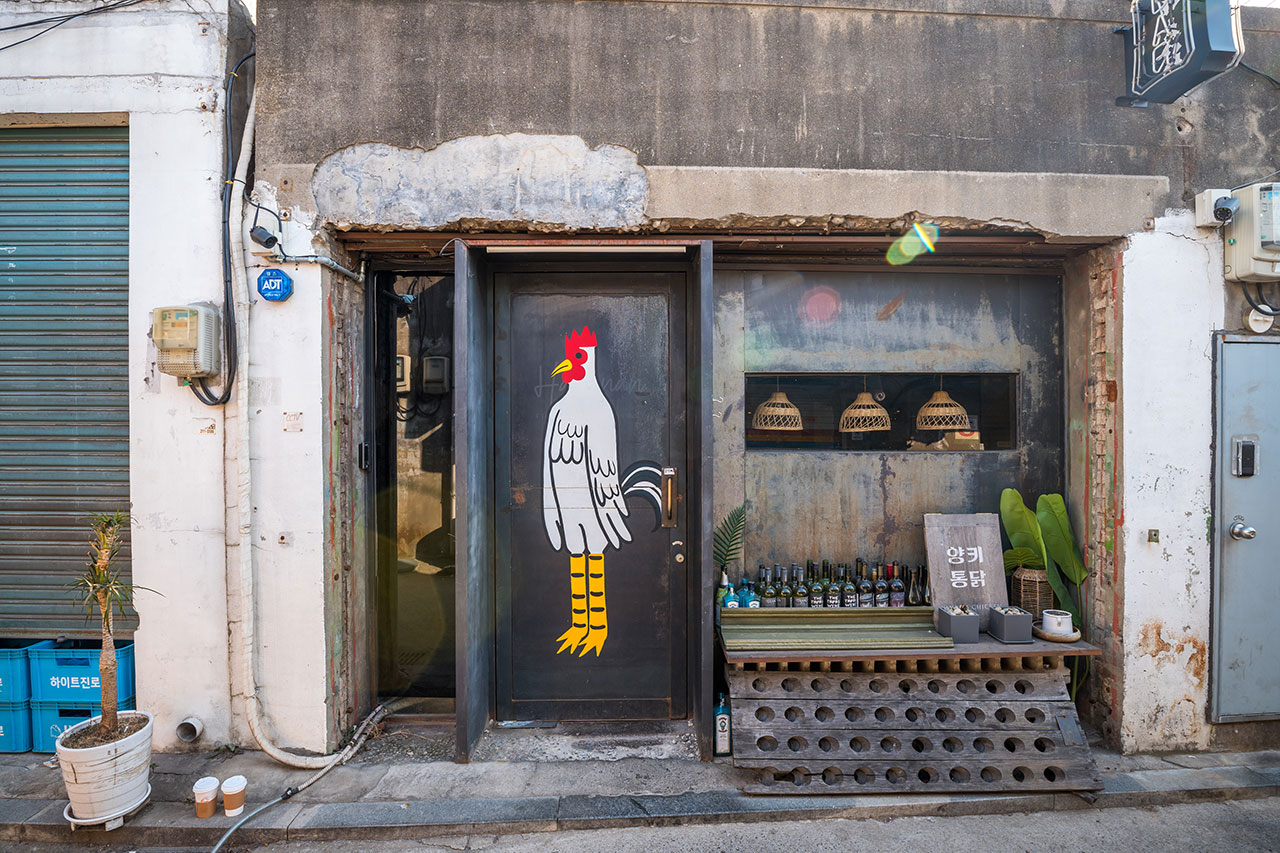
The paradox is that Mullae’s appeal depends precisely on what may end up disappearing. The neighbourhood is interesting because it preserves an industrial aesthetic, because there are workshops, because it maintains a rare mixture of metalworking and art, because it does not seem like a space completely domesticated by the market. But that very authenticity becomes an economic resource. The industrial becomes scenery. The working-class becomes a brand. The alternative becomes a consumer experience.
The process does not have the brutality of Yongsan, where authoritarian redevelopment was marked by eviction, police violence, and the disaster of 2009. Mullae works differently. It is slower, more ambiguous, apparently gentler. No one would necessarily say, when seeing a mural or a beautiful café in a former warehouse, that there is an urban problem there. But symbolic gentrification often works in exactly this way: it does not first displace through force, but through rising prices, functional replacement, and the progressive loss of the conditions that make it possible to remain.
For metalworkers, the problem is not simply that artists or visitors arrive. The problem appears when the surrounding environment begins to change its function. If rents rise, if property owners prefer to lease premises to cafés or galleries, if industrial activity begins to be seen as noisy or incompatible with the new image of the neighbourhood, workshops become increasingly vulnerable. They do not need to be directly expelled. It is enough for the neighbourhood to stop being organized around them.
Something similar can happen to the pioneering artists themselves. Many arrive in Mullae because it is cheap and flexible. But once the neighbourhood is consolidated as a creative enclave, prices rise and the cultural scene becomes institutionalized or commercialized. Then the artists who helped produce the symbolic value of the place may be left out of the new Mullae. It is a well-known dynamic: creators open the way, and the market arrives later.
That is why Mullae is such a useful case for thinking about the contemporary city. It forces us to look beyond the simple idea of an “improved neighbourhood”. Because yes, Mullae may seem like a positive story: a former industrial district filled with art, cultural life, and new uses. But the important question is different: who benefits from that transformation? Who can stay once the neighbourhood becomes attractive? Which activities are protected, and which start to be seen as an obstacle? Does culture serve to strengthen the existing urban fabric, or to prepare its replacement?
The answer is not simple. Mullae is not merely a victim of the market, nor is it an artificial operation created from above. Its richness lies precisely in the mixture. There is real creativity there, interesting artistic practices, reuse of industrial spaces, and forms of coexistence between trades and culture. But there is also commodification, real-estate pressure, cultural touristification, and the risk of indirect displacement. This ambivalence is what makes the case so powerful.
Mullae shows that gentrification does not always arrive dressed in luxury. Sometimes it arrives dressed as art, authenticity, independent design, an alternative café, an urban mural, or a cultural festival. And that makes it harder to detect, because it becomes confused with processes that, at first glance, may seem desirable. Who would be against a neighbourhood having more culture, more art, more activity in the streets? The problem is not culture itself. The problem appears when culture becomes the spearhead of a revalorization process that ends up displacing those who sustained the neighbourhood before it became attractive.
The great lesson of Mullae is that urban authenticity can be a form of wealth, but also a trap. A neighbourhood may be valued for its working-class history, its workshops, its social mixture, and its industrial aesthetic; but if that valuation translates only into rising rents and external consumption, the result may be the disappearance of the very things that made it special.
That is why, when we talk about Mullae Arts Village, we are not simply talking about a beautiful or curious neighbourhood in Seoul. We are talking about a much broader question: can a city incorporate culture without automatically turning it into a commodity? Can it protect the workers, artists, and small businesses that produce the value of the neighbourhood? Can it recognize authenticity without transforming it into a brand?
Mullae remains a living, complex, layered space. It is not a closed case or a definitive postcard. It is a neighbourhood in tension between metalworking and art, between work and consumption, between everyday creativity and real-estate valorization. And perhaps that is why it captures so well one of the central paradoxes of the global city: even what begins as an alternative can end up being integrated into the circuits of urban capital.
In Mullae, gentrification does not begin by demolishing buildings. It begins by changing the meaning of the place. And sometimes, in the contemporary city, changing the meaning of a neighbourhood is the first step towards changing who can live, work, and remain there.