VENTURA
  • Cultura
    • Videojuegos
    • Arte
    • Cine
    • Series
    • Literatura
    • Música
  • Divulgación
    • Geografía
    • Historia
    • Geopolítica
    • Seguridad
    • Desarrollo y Medio Ambiente
    • Ciencia y Tecnología
    • Economía
    • Religión y Teología
  • Educación
    • Historia
      • Historia (Secundaria)
        • Actividades y proyectos
        • Prehistoria
        • Historia Antigua
        • Antigua Grecia
        • Antigua Roma
        • Edad Media
        • Edad Moderna
        • UD 1 – Antiguo Régimen e Ilustración
        • UD2 – Liberalismo y nacionalismo
        • UD3 – Revolución Industrial
        • UD4 – España: S.XIX
        • UD5 – Imperialismo y 1ª GM
        • UD6 – Periodo de entreguerras
        • UD7 – Revolución rusa
        • UD8 – 2ª Guerra Mundial
        • UD9 – España: primer tercio S.XX
        • UD10 – Guerra Fría
        • UD11 – España: desde 1939
        • UD12 – El Tercer Mundo
        • UD13 – Un mundo en transformación
      • Historia (Bachillerato)
        • Edad Moderna
        • Edad Contemporánea
        • Liberalismo
        • La Restauración
        • Segunda República y Guerra Civil
        • Historia y Cultura de Aragón
    • Geografía
      • Geografía (Secundaria)
        • Actividades y proyectos
        • UD1 – La Geografía, una ciencia total
        • UD2 – Organización del territorio
        • UD3 – Geoeconomía y Geopolítica
        • UD4 – Sector primario
        • UD5 – Sector secundario
        • UD6 – Sector terciario
        • UD7 – Geografía de la población
        • UD8 – Geografía urbana
        • UD9 – Desarrollo y medioambiente
      • Geografía (Bachillerato)
        • Geografía de la Población
        • Geografía Urbana
        • Geografía Rural
        • Geografía Económica
        • Desarrollo y medioambiente
        • > Acceso a la Universidad
          • > > > Materiales para la EvAU 2024
          • > > > Materiales para la PAU 2025
      • Geografía (Universidad)
        • Geografía de la Población
        • Geografía de Hispanoamérica
        • Seminario para docentes
    • Bilingüe
      • History
      • Geography
    • Filosofía
      • 0. Listado de filósofos
      • 1. Los presocráticos y el arché
      • 2. Todo Platón
      • 3. Todo Aristóteles
      • 4. Todo Santo Tomás de Aquino
      • + El concepto de ‘sustancia’
      • + Filosofía en ‘Matrix’
    • Literatura
      • Ilustración y Romanticismo
      • Realismo
      • Generación del 27
      • El teatro
      • Literatura en el siglo XX
    • Historia del Arte
      • Pintura
      • Escultura
      • Arquitectura
    • Ciudadanía y Valores Éticos
    • Inglés
  • Reflexión
    • Reflexión sobre la Realidad
    • Reflexión sobre la Sociedad
  • AUTOR
  • BLOG
  • IDVA
  • RECURSOS
  • BMVA
  • LIBROS
  • VEN
  • MÁS
VENTURA
  • Divulgación
  • Cultura
  • Educación
  • Reflexión
  • Imperialism & World War I

Imperialism: causes and consequences

  • 13 agosto, 2016
  • 8.2K views
  • VENTURA Educación

The term imperialism implies the extension of the dominion of one country over others. The country that conquers is the metropolis and the conquered territories are the colonies. This practice, which dates back to antiquity and acquired great relevance between the 15th and 18th centuries, reached its peak during the last third of the 19th century and the first years of the 20th century. If in previous centuries the countries with colonial empires were Spain, Portugal, the United Kingdom, France and Holland, in the 19th century the British Empire became the main protagonist, extending its dominance over 20% of the earth’s surface and about a quarter of the world’s population.

Imperialism: causes

The imperialist powers conquered or annexed most of the world. While in 1800 35% of the earth’s land depended on Europe and the United States, in 1914 this percentage was 84%. It could be said that Europe was the master of the world. How was arrive to this situation? The causes are diverse.

Economic causes

In part, imperialism was a consequence of the Industrial Revolution. Faced with the increase in production and wealth, the colonies became profitable markets for the metropolises where they could sell their production without having to pay customs fees. They were also spaces where they could invest their capital, through the construction of public works, such as railways and ports. In addition, the metropolises colonized those territories rich in natural resources, which offered cheap raw materials for their industries.

Demographic causes

In western countries the population grew intensely in the 19th century. Millions of Europeans migrated to the colonies seeking new opportunities. This lessened the problems of unemployment and social unrest in the metropolises. Improvements in transportation (steamships, rail) made travel easier.

Religious causes

Imperialism was justified in many cases by the desire to Christianize peoples who preserved their own religions. The missionary work of the Catholic and Protestant Church was of great importance: missions were founded in Asia, Africa and Oceania.

Political causes

The powers conquered certain places that were strategic to control important sea and land routes. For example, the United Kingdom considered it essential to dominate Egypt to control the routes between Europe and India. Territorial expansion also served to increase the prestige of a country in the world and strengthen national pride among its population.

Ideological causes

The feeling of superiority of the white race and the ideal of civilizing peoples that they considered backward also drove colonial expansion. In the West, during the 19th century, racist ideologies were very powerful. Westerners were convinced that the white race was superior and that this gave them the right to dominate other peoples, whom they believed inferior.

Scientific causes

Scientific curiosity also contributed to the momentum of conquests. In the United Kingdom, France, the United States and Germany geographic societies were created that carried out scientific expeditions around the planet. Once a territory had been explored, the country that had organized the expedition had the right to conquer and exploit it.

Multicausality

.

DOWNLOAD THIS TASK

Imperialism: consequences

Economic exploitation

The metropolises exploited the natural resources of the colonies for their own benefit. An economy based on plantation agriculture and the exploitation of the mineral wealth of its subsoil (gold, diamonds, coal …) was imposed. The native populations were dispossessed of their lands by private companies from the metropolis, which created large plantations of coffee, tea and rubber.

The metropolises had no interest in developing the industry of the colonies and the local artisans did not resist the competition of European industrial products, so they were impoverished. The indigenous people were converted into cheap labor that worked on the plantations and in the mines in conditions similar to slavery.

The colonizers built transport infrastructures, such as ports and railways, to carry out their activities, but these did not benefit all the colonies, which remained poorly communicated with each other.

The social and cultural effects

The introduction of Western sanitary practices made it possible to reduce the mortality of indigenous populations. However, the birth rate remained high, which caused a notable increase in the population, which resulted in frequent famines.

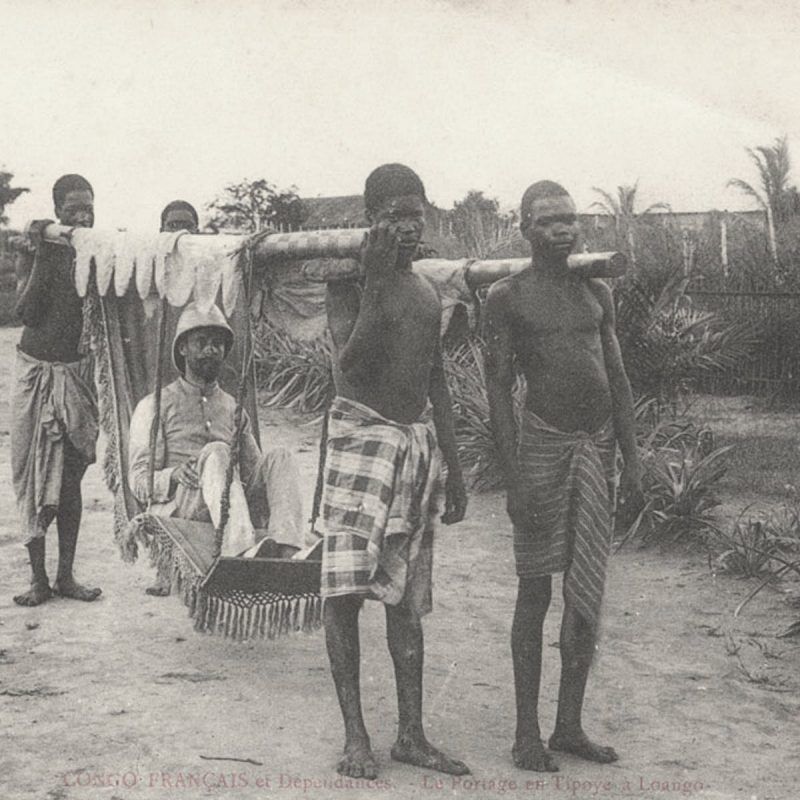
Colonization caused the breakdown of traditional society. The colonizers occupied the highest levels of colonial society: they controlled the economy and held high positions. The indigenous people, considered inferior, were marginalized: they were forced to live in separate neighborhoods, they were prohibited from entering certain places, etc. In some regions, like Australia and New Zealand, they were even systematically exterminated.

The diffusion of Western ways of life in the colonies originated a deep crisis of autochthonous cultures, giving rise to a phenomenon of acculturation, that is, of loss of one’s own culture due to the imposition of another. Indigenous elites studied at European universities and became Westernized.


Possible exam questions

Possible question 1

Explain the factors that drove imperialism.

Possible question 2

What consequences did imperialism have?
VENTURA Educación

VENTURA Educación es un proyecto de VENTURA para crear materiales y apuntes de Historia, Literatura, Geografía, Inglés, Filosofía e Historia del Arte. Estudiantes y profesores pueden plantear dudas y pedir contenidos escribiendo a venturaeduca@gmail.com

Ver Publicación
  • Cine

Ciudades de película: las mejores películas por ciudad

  • Juan Pérez Ventura
  • 3 octubre, 2024
Ver Publicación
  • Geografía
  • Religión

Subiendo al Monte Athos

  • Juan Pérez Ventura
  • 13 agosto, 2023
Ver Publicación
  • Teorías de la gentrificación

Gentrificación: propuesta de tipología y ejemplos de cada tipo

  • Juan Pérez Ventura
  • 16 junio, 2025
Ver Publicación
  • París

Estadios llenos, casas vacías: París 2024 y la gentrificación

  • Juan Pérez Ventura
  • 11 septiembre, 2024
Ver Publicación
  • Arte

Las fachadas de Salamanca

  • Juan Pérez Ventura
  • 16 mayo, 2024
Ver Publicación
  • Música

La Gran Migración del Blues

  • Juan Pérez Ventura
  • 23 noviembre, 2023
Ver Publicación
  • Religión

El debate central en el cristianismo: Jesús, ¿Hijo de Dios o Dios?

  • Juan Pérez Ventura
  • 1 agosto, 2024
Ver Publicación
  • Economía

El siglo de China: presencia en la economía global

  • Juan Pérez Ventura
  • 18 diciembre, 2024
Social Accounts
Facebook Likes
Twitter Followers
Instagram Followers
LinkedIn Followers
  • El espejismo de la gentrificaciónEl espejismo de la gentrificación
    El episodio «The City Part of Town» (T19E03) de South Park presenta una sátira brillante sobre la gentrificación, el proceso por el cual barrios anteriormente desfavorecidos son transformados en zonas…
  • Israel y Palestina: vecinos por la Gracia de DiosIsrael y Palestina: vecinos por la Gracia de Dios
    “El político debe ser capaz de predecir lo que va a ocurrir mañana, el mes próximo y el año que viene, y de explicar después por qué no ha ocurrido”…
  • Los Mejores Pintores de la HistoriaLos Mejores Pintores de la Historia
    He de reconocer que me encanta el arte, y especialmente cuando se plasma sobre lienzos. Es una manera más de comprender cómo funciona el mundo, y de tratar de conocer cómo…
  • Ucrania y Rusia: tensiones del pasadoUcrania y Rusia: tensiones del pasado
    La enemistad que mantienen Rusia y Ucrania, agravada con el estallido de la Guerra en el Este de Ucrania en 2014, se ha de entender desde un análisis histórico. El…
  • ¿Por qué es Donald Trump presidente de Estados Unidos?¿Por qué es Donald Trump presidente de Estados Unidos?
    ¿Por qué ha ganado las elecciones del país más importante del mundo un personaje machista, racista, xenófobo, maleducado, sin experiencia política, multimillonario, escandaloso y que produce rechazo generalizado? ¿cómo es…
  • La ciudad en ‘Las Flores del Mal’ de BaudelaireLa ciudad en ‘Las Flores del Mal’ de Baudelaire
    La ciudad moderna es uno de los temas centrales en Las flores del mal de Charles Baudelaire. A través de sus poemas, Baudelaire captura la vida urbana de París, con…
  • La desinformación que nos relajaLa desinformación que nos relaja
    En la trilogía conformada por «Sponsored Content» (T19E08), «Truth and Advertising» (T19E09) y «PC Principal Final Justice» (T19E10), South Park plantea una de las cuestiones más urgentes de nuestra era:…
VENTURA
  • AUTOR
  • BLOG
  • IDVA
  • RECURSOS
  • BMVA
  • LIBROS
  • VEN
  • MÁS
venturacontenidos@gmail.com

Ingresa las palabras de la búsqueda y presiona Enter.