VENTURA
  • Cultura
    • Videojuegos
    • Arte
    • Cine
    • Series
    • Literatura
    • Música
  • Divulgación
    • Geografía
    • Historia
    • Geopolítica
    • Seguridad
    • Desarrollo y Medio Ambiente
    • Ciencia y Tecnología
    • Economía
    • Religión y Teología
  • Educación
    • Historia
      • Historia (Secundaria)
        • Actividades y proyectos
        • Prehistoria
        • Historia Antigua
        • Antigua Grecia
        • Antigua Roma
        • Edad Media
        • Edad Moderna
        • UD 1 – Antiguo Régimen e Ilustración
        • UD2 – Liberalismo y nacionalismo
        • UD3 – Revolución Industrial
        • UD4 – España: S.XIX
        • UD5 – Imperialismo y 1ª GM
        • UD6 – Periodo de entreguerras
        • UD7 – Revolución rusa
        • UD8 – 2ª Guerra Mundial
        • UD9 – España: primer tercio S.XX
        • UD10 – Guerra Fría
        • UD11 – España: desde 1939
        • UD12 – El Tercer Mundo
        • UD13 – Un mundo en transformación
      • Historia (Bachillerato)
        • Edad Moderna
        • Edad Contemporánea
        • Liberalismo
        • La Restauración
        • Segunda República y Guerra Civil
        • Historia y Cultura de Aragón
    • Geografía
      • Geografía (Secundaria)
        • Actividades y proyectos
        • UD1 – La Geografía, una ciencia total
        • UD2 – Organización del territorio
        • UD3 – Geoeconomía y Geopolítica
        • UD4 – Sector primario
        • UD5 – Sector secundario
        • UD6 – Sector terciario
        • UD7 – Geografía de la población
        • UD8 – Geografía urbana
        • UD9 – Desarrollo y medioambiente
      • Geografía (Bachillerato)
        • Geografía de la Población
        • Geografía Urbana
        • Geografía Rural
        • Geografía Económica
        • Desarrollo y medioambiente
        • > Acceso a la Universidad
          • > > > Materiales para la EvAU 2024
          • > > > Materiales para la PAU 2025
      • Geografía (Universidad)
        • Geografía de la Población
        • Geografía de Hispanoamérica
        • Seminario para docentes
    • Bilingüe
      • History
      • Geography
    • Filosofía
      • 0. Listado de filósofos
      • 1. Los presocráticos y el arché
      • 2. Todo Platón
      • 3. Todo Aristóteles
      • 4. Todo Santo Tomás de Aquino
      • + El concepto de ‘sustancia’
      • + Filosofía en ‘Matrix’
    • Literatura
      • Ilustración y Romanticismo
      • Realismo
      • Generación del 27
      • El teatro
      • Literatura en el siglo XX
    • Historia del Arte
      • Pintura
      • Escultura
      • Arquitectura
    • Ciudadanía y Valores Éticos
    • Inglés
  • Reflexión
    • Reflexión sobre la Realidad
    • Reflexión sobre la Sociedad
  • AUTOR
  • BLOG
  • IDVA
  • RECURSOS
  • BMVA
  • LIBROS
  • VEN
  • MÁS
VENTURA
  • Divulgación
  • Cultura
  • Educación
  • Reflexión
  • Industrial Revolution

Economic changes: productivity and liberalism

  • 11 mayo, 2015
  • 3.8K views
  • VENTURA Educación

Industrialization followed different rhythms and patterns according to the different states, but it had implicit consequences that affected everyone in general.

  • The agrarian society was replaced by an industrial one. Industry and services concentrated most of the active population, concentrated in cities rather than in the countryside.
  • Both industrial and agricultural production increased enormously, eliminating famines and multiplying consumption.
  • The population grew at a hitherto unknown rate and was subject to great mobility, leading to large migrations.
  • Capitalism underwent notable changes, tending towards business concentration, banking and the Stock Market acquired more and more prominence, giving rise to financial capitalism.
  • The economy became more and more global.

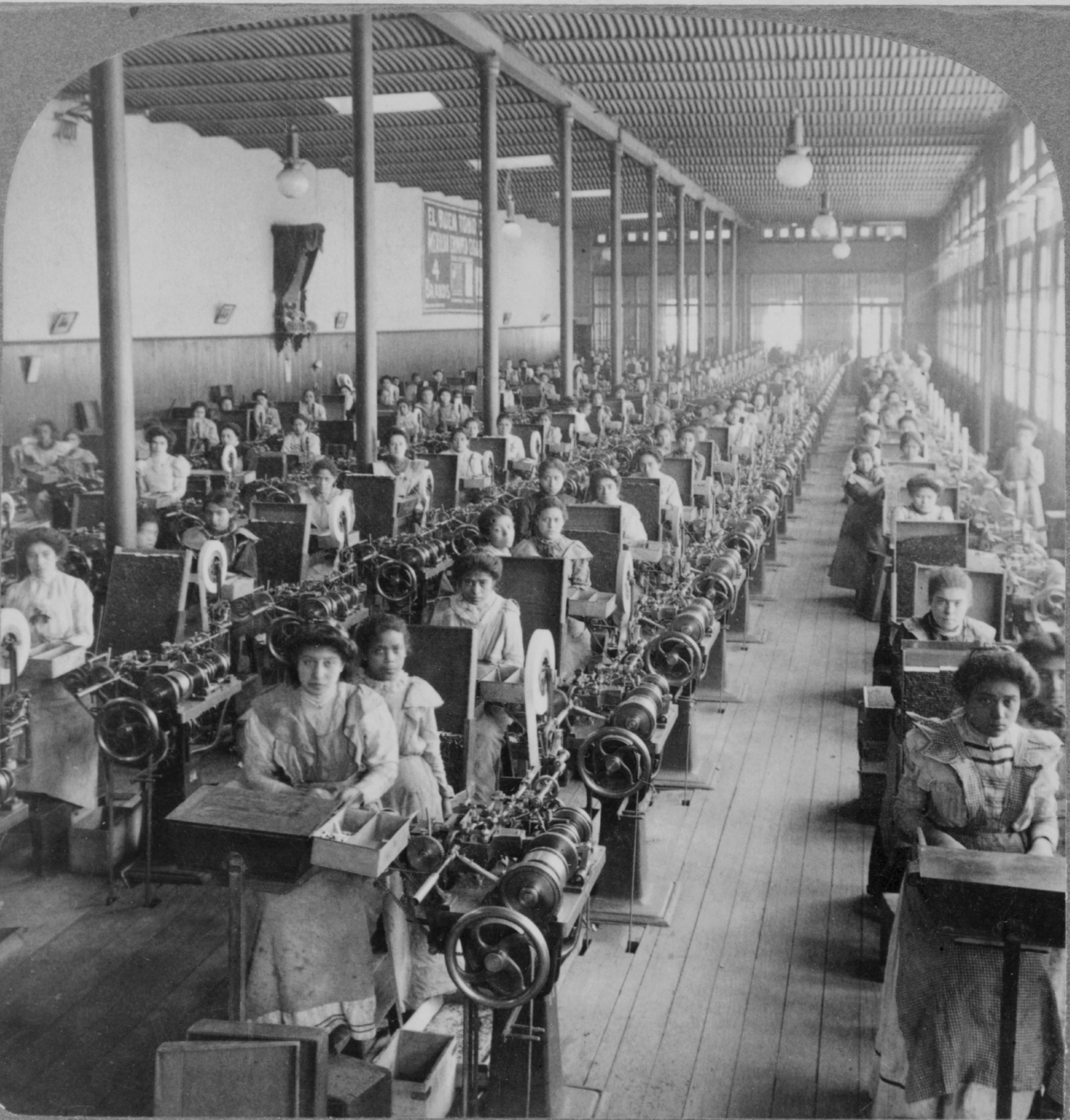
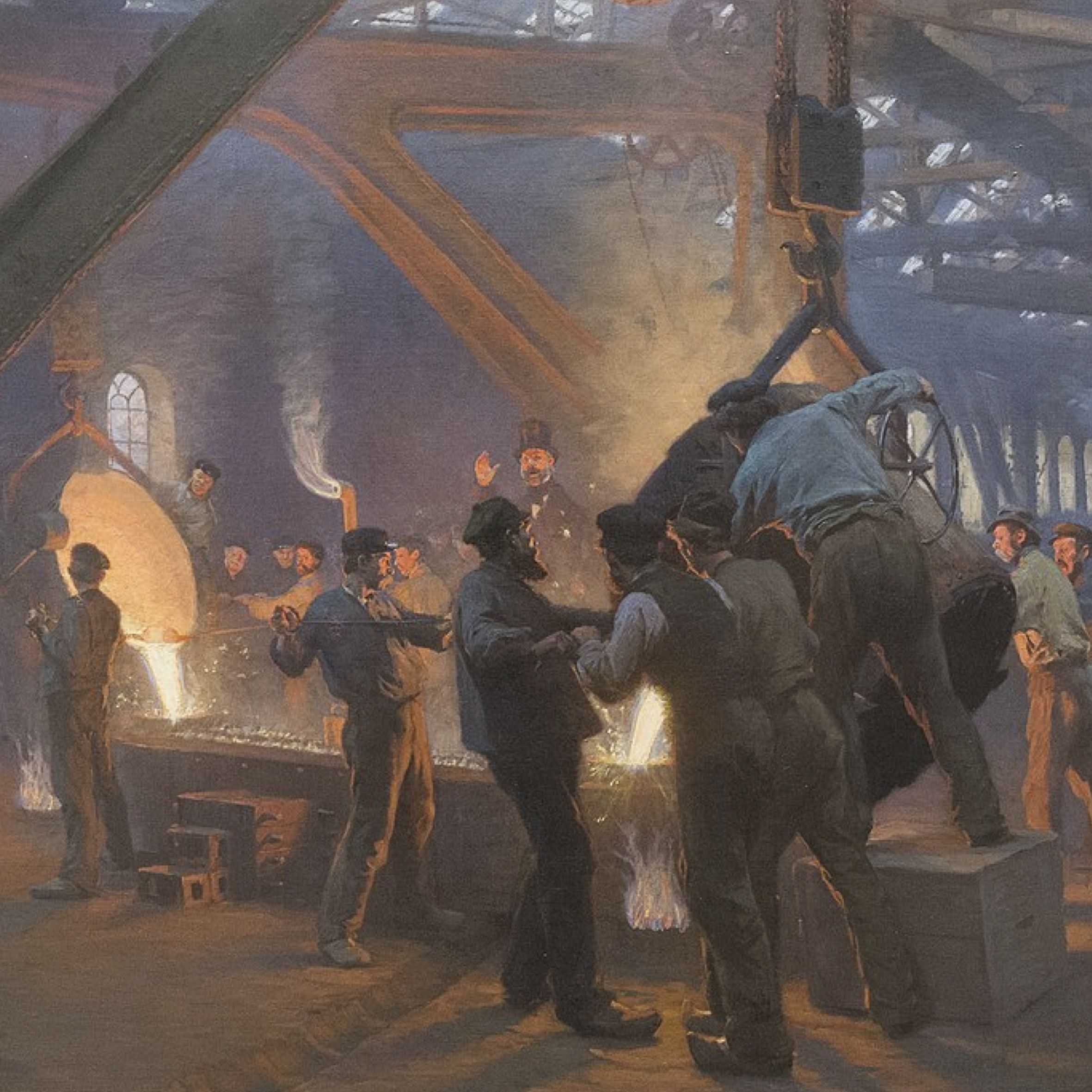
Factories, new centers of power

The appearance of the factories was a complete revolution and had consequences:

  • Industrial activities were concentrated in certain places: industrial regions were created (in the center of England, in the Ruhr area, in Saxony, in Lombardy …) that led the economic growth of the states.
  • The way of working was modified: each worker specialized in a single task in the production process, which was called the division of labor. Each worker had a fixed schedule and had to work at the rhythm of the machine.
  • Productivity increased: workers were able to make more pieces than a craftsman in the same time.
  • The prices of the products fell: with so much supply (high productivity) and so much competition (many companies), prices fell trying to attract buyers.
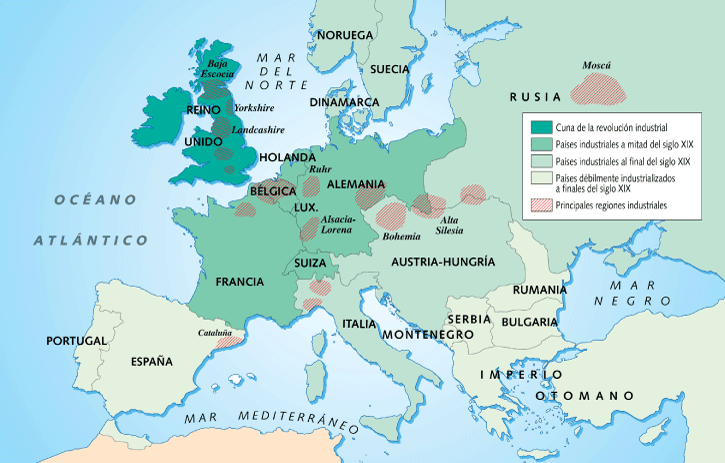
Expansion of industrialization (in shades of green) and major industrial regions (in brown).

The industrialized industries

The UK led the industrial revolution and economic growth thanks to advances in two main sectors, the textile industry and the steel industry.
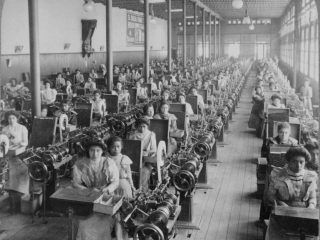
Textile industry

The cotton textile industry was the most important in the United Kingdom at the beginning and in which technological transformations took place the fastest. The cotton has been considered the leading sector of the industrial revolution given its size and its ability to carry over other sectors. Cotton replaced the wool fabrics, predominant in previous centuries, and the majority of British production went abroad, thus strangling textile production in other countries. The British textile industry was successful thanks to four new machines:

  • Spinning Jenny (1764) dramatically increased the amount of yarn that one person could produce per day.
  • Water Frame (1765) made it possible to produce cotton strong enough to be used as a warp.
  • Spinning mule (1775) made it possible to make a new fabric that was much smoother and finer.
  • Power loom (1784) increased productivity definitively. With these looms powered by the steam engine, an enormous quantity of textiles could now be made.
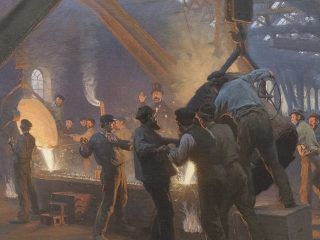
Steel industry

The iron industry reached a great development in the middle of the 19th century. The main innovation was the new coking coal (or mineral coal) smelting process, which was a very abundant type of coal in the UK. The use of charcoal (from wood) to melt iron was thus abandoned, which was the type of charcoal that had traditionally been used and generated poorer quality metals (in addition to the fact that wood was scarce in the UK). In 1783, the puddling process was invented to obtain quality refined iron ingots on a large scale. Modern blast furnaces were built and the demand for and production of iron multiplied. This material was used to make machines and tools. In Spain, the largest company in the country was Altos Hornos de Vizcaya (AHV).

Revolution in transportation
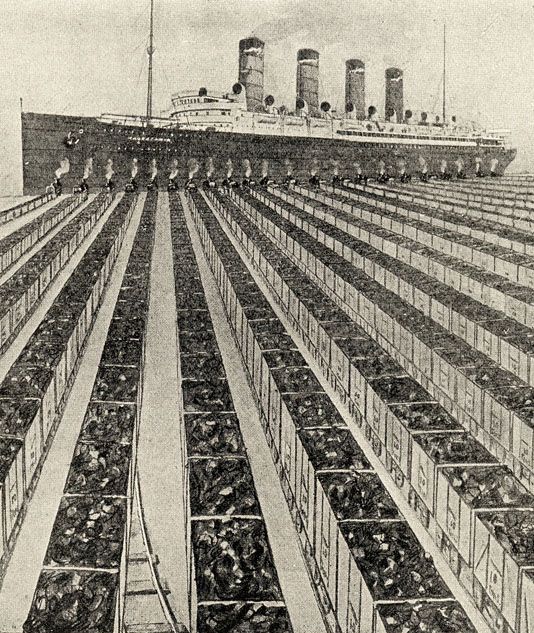
The new transport, faster, safer and with greater load capacity, had a strong economic and social impact.

  • They promoted the development of industries such as mining, metallurgy and iron and steel and the appearance of new jobs, such as machinists or stokers.
  • Trade developed as crossing times and transportation costs were reduced, and travel was favored.
  • They promoted the specialization of the global economy. Industrialized countries specialized in the production of manufactured products (which they then exported) while non-industrialized countries and colonies were dedicated to selling raw materials to industrial countries.
  • They modified daily life. They made it possible to improve the diet, by being able to transport perishable food, and facilitated emigration.

Liberalism and capitalism

Parallel to the industrialization process, a new economic doctrine, liberalism, spread throughout the Western world. It was based on the theory put forward by the Scotsman Adam Smith (1723-1790) in his work The Wealth of Nations (1776). For this thinker, economic activity should be based on:

  • economic freedom to create businesses, hire workers, and set conditions and prices for products. Quite the opposite of the guilds that existed during the Middle Ages and the Old Regime.
  • the State should not intervene in the economy, because it adjusted naturally through the action of the so-called invisible hand of the market. Smith believed that the law of supply and demand was responsible for regulating the economy, setting prices and wages fairly: if there was much supply of products or labor and little demand, prices and wages would decrease; if supply was low and demand high, prices and wages would rise.
  • the division of labor so that each worker specialized in a phase of the production process, since in this way production and productivity would increase.

At the end of the 19th century, new systems were applied to increase production:

  • the engineer Frederick W. Taylor created Taylorism. The production process was divided into small tasks, the duration of which was timed. Each worker specialized in a task and received a salary proportional to the work performed.
  • businessman Henry Ford used chain work in his automobile factories. Products were passed from one operator to another through an assembly line; This way, downtime between one task and another was avoided and the number of products produced by each operator increased.

The need to make large investments and the desire to control the markets led to mergers and agreements between companies. Thus arose different forms of business concentration:

  • Cartel: it is an association of companies dedicated to the same branch of activity, which reach agreements to control production and distribution, set prices and share profits.
  • Holding: is a group of companies controlled by one of them, which is the owner of most of its shares.
  • Trust: it is a voluntary grouping of different companies to cover all stages of production of a product, in order to dominate the market and eliminate competition.

Possible exam questions

Possible question 1

Draw a schematic map of Great Britain and point and name the industrial zones.

Possible question 2

Explain four consequences of the appearance of factories.

Possible question 3

Explain four consequences of the transportation revolution.

Possible question 4

Why was the British textile industry successful?

Possible question 5

Why was the British steel industry successful?

Possible question 6

Explain what economic liberalism is.

Possible question 7

What is business concentration? Name three of its forms.

Possible question 8

What is chain work? What entrepreneur was a pioneer in using this strategy?
VENTURA Educación

VENTURA Educación es un proyecto de VENTURA para crear materiales y apuntes de Historia, Literatura, Geografía, Inglés, Filosofía e Historia del Arte. Estudiantes y profesores pueden plantear dudas y pedir contenidos escribiendo a venturaeduca@gmail.com

Ver Publicación
  • Cine

Ciudades de película: las mejores películas por ciudad

  • Juan Pérez Ventura
  • 3 octubre, 2024
Ver Publicación
  • Geografía
  • Religión

Subiendo al Monte Athos

  • Juan Pérez Ventura
  • 13 agosto, 2023
Ver Publicación
  • Teorías de la gentrificación

Gentrificación: propuesta de tipología y ejemplos de cada tipo

  • Juan Pérez Ventura
  • 16 junio, 2025
Ver Publicación
  • París

Estadios llenos, casas vacías: París 2024 y la gentrificación

  • Juan Pérez Ventura
  • 11 septiembre, 2024
Ver Publicación
  • Arte

Las fachadas de Salamanca

  • Juan Pérez Ventura
  • 16 mayo, 2024
Ver Publicación
  • Música

La Gran Migración del Blues

  • Juan Pérez Ventura
  • 23 noviembre, 2023
Ver Publicación
  • Religión

El debate central en el cristianismo: Jesús, ¿Hijo de Dios o Dios?

  • Juan Pérez Ventura
  • 1 agosto, 2024
Ver Publicación
  • Economía

El siglo de China: presencia en la economía global

  • Juan Pérez Ventura
  • 18 diciembre, 2024
Social Accounts
Facebook Likes
Twitter Followers
Instagram Followers
LinkedIn Followers
  • Modelos Alternativos de Desarrollo 1/4 – Definición de Desarrollo y críticas al modelo vigenteModelos Alternativos de Desarrollo 1/4 – Definición de Desarrollo y críticas al modelo vigente
    En 1970, Buthán era uno de los países más pobres y subdesarrollados del mundo. A partir de entonces, el país comenzó una estrategia de desarrollo basada en el equilibrio entre…
  • El misterioso Club BilderbergEl misterioso Club Bilderberg
    Cuando se habla del nuevo orden mundial se tiende a pensar en conspiraciones y teorías fantasiosas. Son muchos los que rechazan la idea de que exista un plan secreto para establecer…
  • Ucrania y Rusia: tensiones del pasadoUcrania y Rusia: tensiones del pasado
    La enemistad que mantienen Rusia y Ucrania, agravada con el estallido de la Guerra en el Este de Ucrania en 2014, se ha de entender desde un análisis histórico. El…
  • La Puerta del Paraíso, una obra maestra de la esculturaLa Puerta del Paraíso, una obra maestra de la escultura
    Florencia olía a cera caliente y a piedra antigua. El sol, cada mañana, se filtraba con obstinación por la ventana de mi taller, y se posaba como una bendición sobre…
  • ¿Potencias emergentes? No: potencias que regresan¿Potencias emergentes? No: potencias que regresan
    Quizás el periodo 1850-2050 sea un simple paréntesis en la historia económica del mundo. Un paréntesis en el que jóvenes potencias como Reino Unido, Estados Unidos o Alemania han monopolizado…
  • El Índice PRG aplicado al caso de rehabilitación urbana de High Line (Manhattan)El Índice PRG aplicado al caso de rehabilitación urbana de High Line (Manhattan)
    El High Line de Manhattan es uno de los proyectos urbanos más emblemáticos de las últimas décadas. Inaugurado en 2009 sobre una antigua vía férrea elevada en desuso, fue presentado…
  • Goya: contexto y obraGoya: contexto y obra
    1. Goya y su contexto La figura de Francisco de Goya (1746–1828) está profundamente entrelazada con uno de los periodos más convulsos de la historia de España y de Europa.…
VENTURA
  • AUTOR
  • BLOG
  • IDVA
  • RECURSOS
  • BMVA
  • LIBROS
  • VEN
  • MÁS
venturacontenidos@gmail.com

Ingresa las palabras de la búsqueda y presiona Enter.