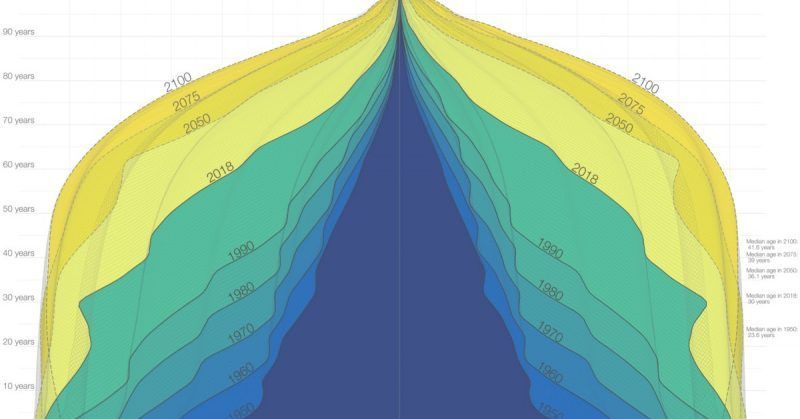
Population pyramids can have different shapes depending on the birth rates, death rates, and life expectancy in a country or region. These shapes help us understand how the population is structured and how it might change in the future. They also allow us to analyse the economic, social, and environmental challenges that countries may face because of their population structure.
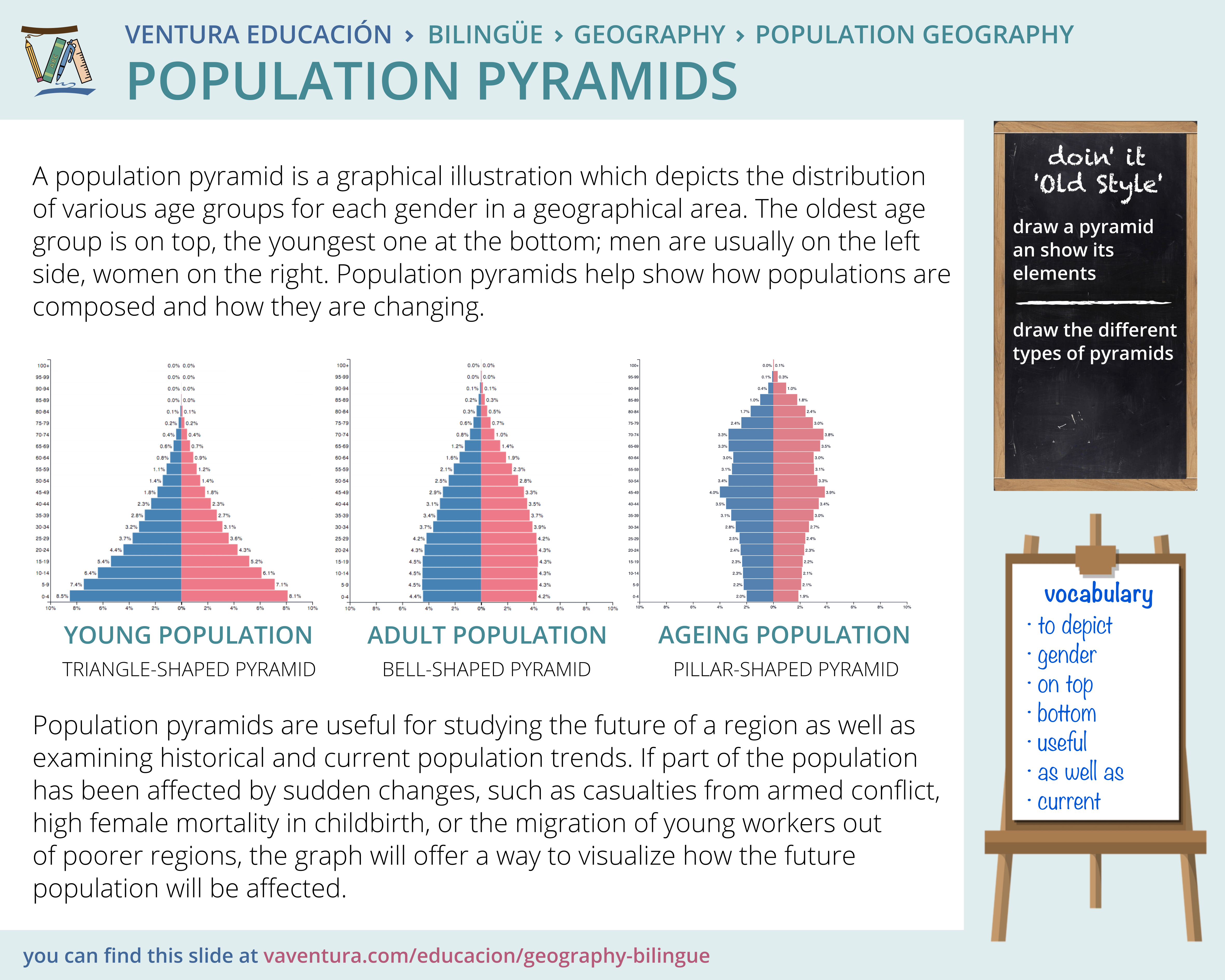
A triangle-shaped pyramid has a very wide base and a narrow top, which means there are many young people and very few elderly people in the country. This type of pyramid appears in countries with high birth rates, where many children are born each year, but also with high death rates, especially among young children and adults due to lack of medical care, poor nutrition, and difficult living conditions.
Countries with this type of pyramid are often developing countries in Africa and parts of Asia, such as Nigeria, Chad, or the Democratic Republic of Congo. These countries experience rapid population growth because many children are born, and although some may die at a young age, the total number of people continues to increase. This shape indicates that these countries will need to invest in education, healthcare, and job creation to support a young and growing population. There can also be pressure on natural resources such as water, food, and energy because many people depend on these resources to live.

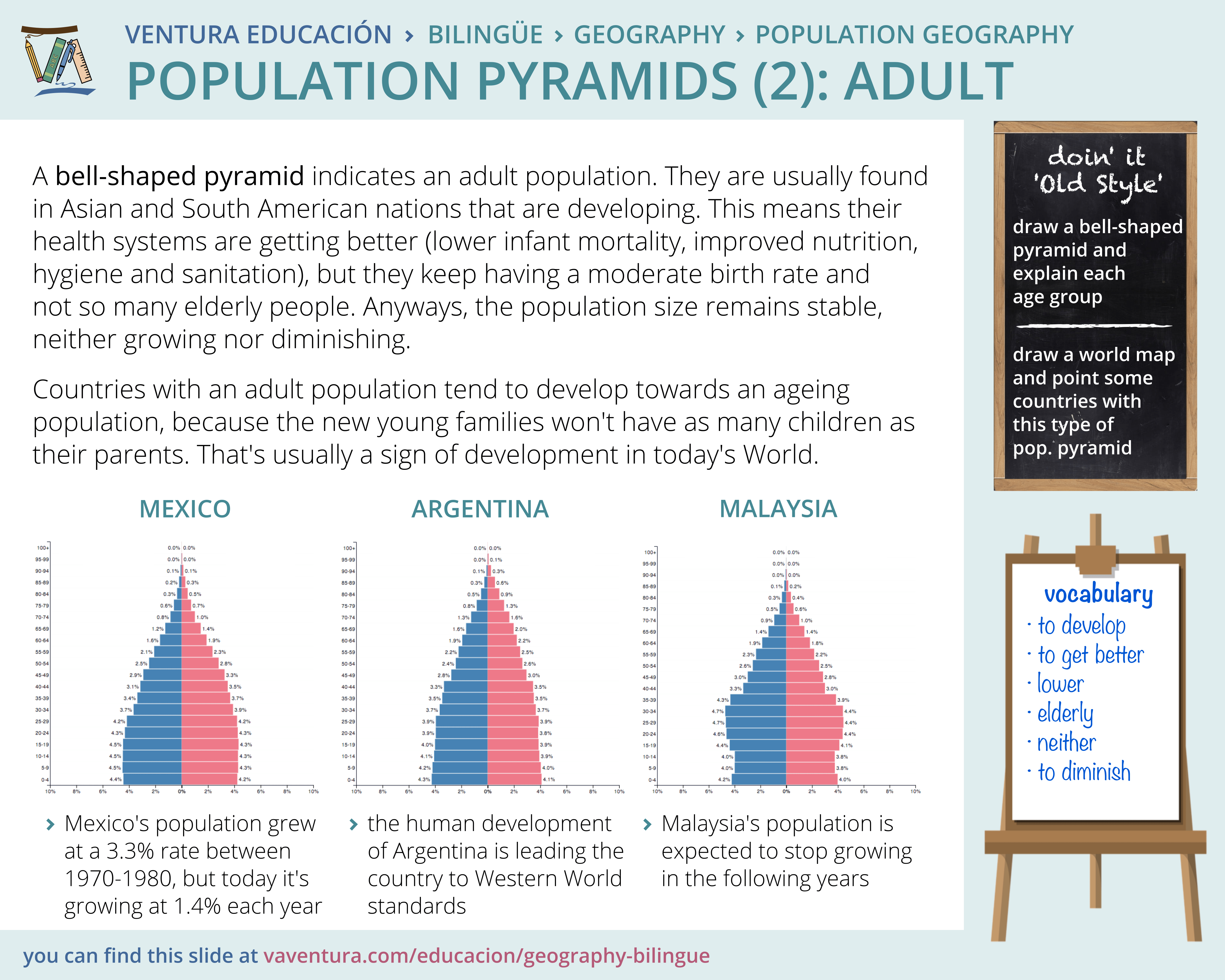
A bell-shaped pyramid has a base that is still wide but starts to narrow more slowly compared to the triangle shape, and the middle part is wider, showing a large number of working-age adults. This type of pyramid is found in emerging economies where birth rates have started to decline, and death rates are lower due to improvements in healthcare, hygiene, and living standards.
Countries like India, Brazil, and Mexico may have this type of population pyramid. This shape indicates a more balanced age structure with a large workforce that can contribute to the economy, helping the country develop further. However, these countries still need to manage urban growth carefully because many people may move to cities in search of jobs, creating challenges with housing, transportation, and services. The bell shape also shows that in the future, the proportion of elderly people will increase, and governments will need to prepare for providing pensions and healthcare for an ageing part of the population while continuing to support education for young people.
A pillar-shaped pyramid has almost straight sides and a narrow base, indicating low birth rates and low death rates. The number of people in each age group is quite similar until the older ages, where the numbers reduce slowly due to natural ageing. This shape is typical in developed countries such as Japan, Germany, and Italy, where life expectancy is high, and many people live to old age. The birth rates in these countries are low because many families choose to have fewer children due to lifestyle choices, higher living costs, and access to family planning. The pillar shape shows that these countries have stable or slowly declining populations, with a large proportion of adults and elderly people and fewer young people. This creates challenges because there may not be enough young workers to replace older workers who retire, leading to labour shortages in some sectors. The countries also need to invest in healthcare systems and pension systems to support a large elderly population. At the same time, these countries often have high levels of technology, infrastructure, and economic development, which can help manage these challenges if proper policies are planned.

SEARCH FOR THE PYRAMID OF ANY COUNTRY HERE
Population pyramids are very useful for understanding not just how many people live in a country, but also how old they are and how this will affect the future of the country. They help us predict the demand for schools, hospitals, and jobs and allow governments to prepare plans for economic and social development. They also help us analyse past events such as wars, migration, or epidemics, which can affect the shape of the pyramid by causing sudden changes in the number of people in certain age groups. Understanding population pyramids is important for creating a sustainable future, managing resources, and ensuring that people of all ages can live with good quality of life.