Jules Ferry, in favor of colonialism
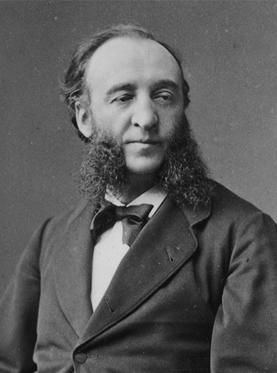 To fully understand Jules Ferry’s arguments in favor of colonialism, it is crucial to contextualize his era and his position within the context of the Third French Republic. We will explore his rise to power and his vision of France as a colonial power on the world stage.
In this context, it is essential to understand France’s colonial ambitions and the international context in which French colonialism unfolded. In the latter half of the 19th century, Europe experienced a colonial fever in which European powers competed for territories in Africa and Asia. France was no exception and sought to expand its colonial empire.
One of Jules Ferry’s fundamental arguments in favor of colonialism was the notion of the «civilizing mission.» According to this theory, European colonial powers, including France, had a responsibility to bring civilization and progress to the colonized regions. Ferry argued that European culture, particularly French culture, was superior, and it was their duty to elevate indigenous peoples to a higher status.
Ferry argued that French colonialism was not only beneficial for France but also in the interest of the colonized populations. He maintained that the French presence would bring development, education, technological advancements, and greater stability to the colonies. Additionally, he argued that French imperialism would help curb the influence of other colonial powers, such as Great Britain or Germany, who were also seeking expansion in Africa and Asia.
In his defense of colonialism, Ferry also emphasized the importance of economic and commercial expansion. He argued that colonies would provide natural resources, markets for French products, and investment opportunities. This economic view of colonialism aligned with the interests of French business and financial elites.
Ferry believed that colonial expansion would strengthen France’s position on the international stage. He thought that an extensive colonial empire would enhance France’s prestige and influence in world politics. Furthermore, he argued that colonies would serve as strategic bases for the French navy and as support points in case of international conflicts.
The French leader also stressed the importance of national cohesion and unity. He believed that colonialism would contribute to the consolidation of France’s identity and unity around a common project. According to Ferry, colonial expansion would allow France to overcome internal divisions and strengthen its position as a united and powerful nation.
Jules Ferry’s arguments in favor of colonialism serve as an example of the justifications used by European colonial powers during the era of imperialism. However, these arguments also generated controversy and opposition. The Catholic Church, in particular, opposed Ferry’s secular policies and his vision of the «civilizing mission.» Additionally, French imperialism encountered resistance from colonized populations who often fought for their independence and autonomy.
Today, Jules Ferry’s colonial legacy remains a relevant topic in public and academic discourse. The influence of colonialism on France’s history and its relationships with former colonies continues to be the subject of study and reflection. Ferry’s arguments in favor of colonialism, as well as the criticisms and resistance they faced, provide a profound insight into a complex chapter in the colonial and political history of France.
Georges Clemenceau, against colonialism
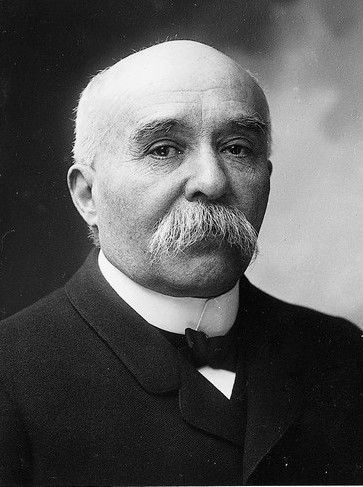 Georges Clemenceau’s arguments against colonialism are a fundamental part of his political legacy and his vision of France on the international stage. Clemenceau, who played a prominent role in French politics during an era marked by colonial expansion, based his arguments on a series of fundamental principles and concerns.
In the context of his time, France was immersed in fierce competition with other European colonial powers for the acquisition and control of territories in Africa and Asia. Clemenceau emerged as a critical voice against this imperialistic policy and defended moral principles that questioned the ethics of colonialism.
One of Clemenceau’s central arguments against colonialism was his concern for justice and the rights of colonized populations. He argued that colonial policies were inherently unjust and exploitative because they imposed the control and authority of colonial powers over indigenous populations. He contended that the colonies were victims of oppression and exploitation, with their rights and dignity being violated in the pursuit of imperialistic interests.
Clemenceau also advocated for equality and justice in a broader sense. He argued that colonial expansion, by imposing one nation’s dominion over another, undermined the principles of equality and fraternity on which the French Republic was based. For him, colonialism was incompatible with the republican values that promoted the equality of all citizens, regardless of their origin or nationality.
Another important argument of Clemenceau centered on the political implications of colonialism. He argued that colonial policies eroded France’s moral standing on the international stage. He contended that colonialism tarnished France’s image as a defender of freedom and justice and undermined its credibility on issues of human rights and democracy.
Clemenceau was also concerned about the economic and financial consequences of colonialism. He argued that colonial expansion generated significant costs for the French state, both in terms of human resources and finances. Furthermore, he maintained that colonialism often benefited only a small group of economic interests and did not significantly contribute to the overall well-being of French society.
His opposition to colonialism was part of his broader approach to international politics. Clemenceau advocated diplomacy based on justice and the peaceful resolution of conflicts. He argued that colonialism, relying on force and conquest, ran counter to the principles of diplomacy and international cooperation.
In the context of his time, Clemenceau’s arguments against colonialism were notable and courageous. Despite political and economic pressures in favor of colonial expansion, he maintained his position in defense of moral and ethical principles. His legacy as a critic of colonialism continues to be a subject of study and reflection in contemporary France and provides a valuable perspective on the complexity of ethical and political issues related to colonialism in the 19th century.