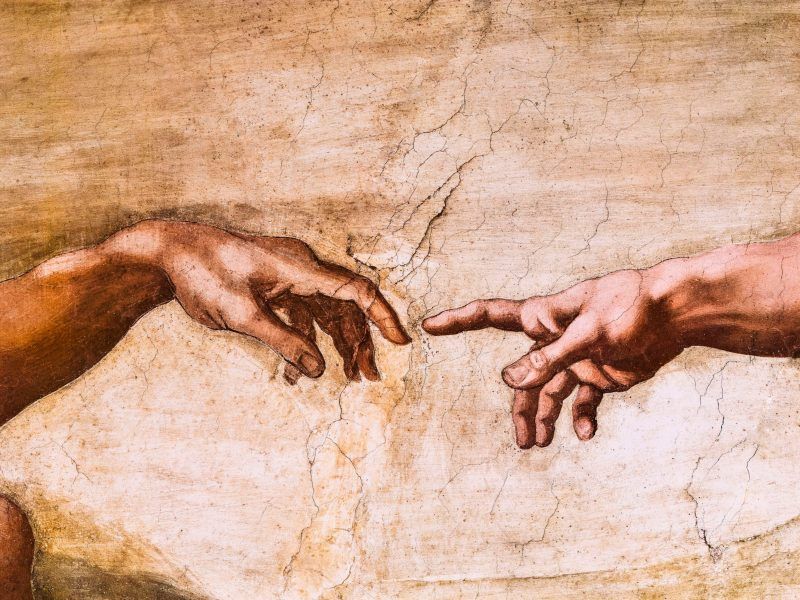
Some say the Middle Ages ended with the European discovery of America in 1492. Others point 1453 as the precise date, with the Fall of Constantinople. Anyway, the social, cultural and economic beliefs and realities that characterized medieval times were replaced during the 15th century by humanism, a new way of thinking that changed Western world.
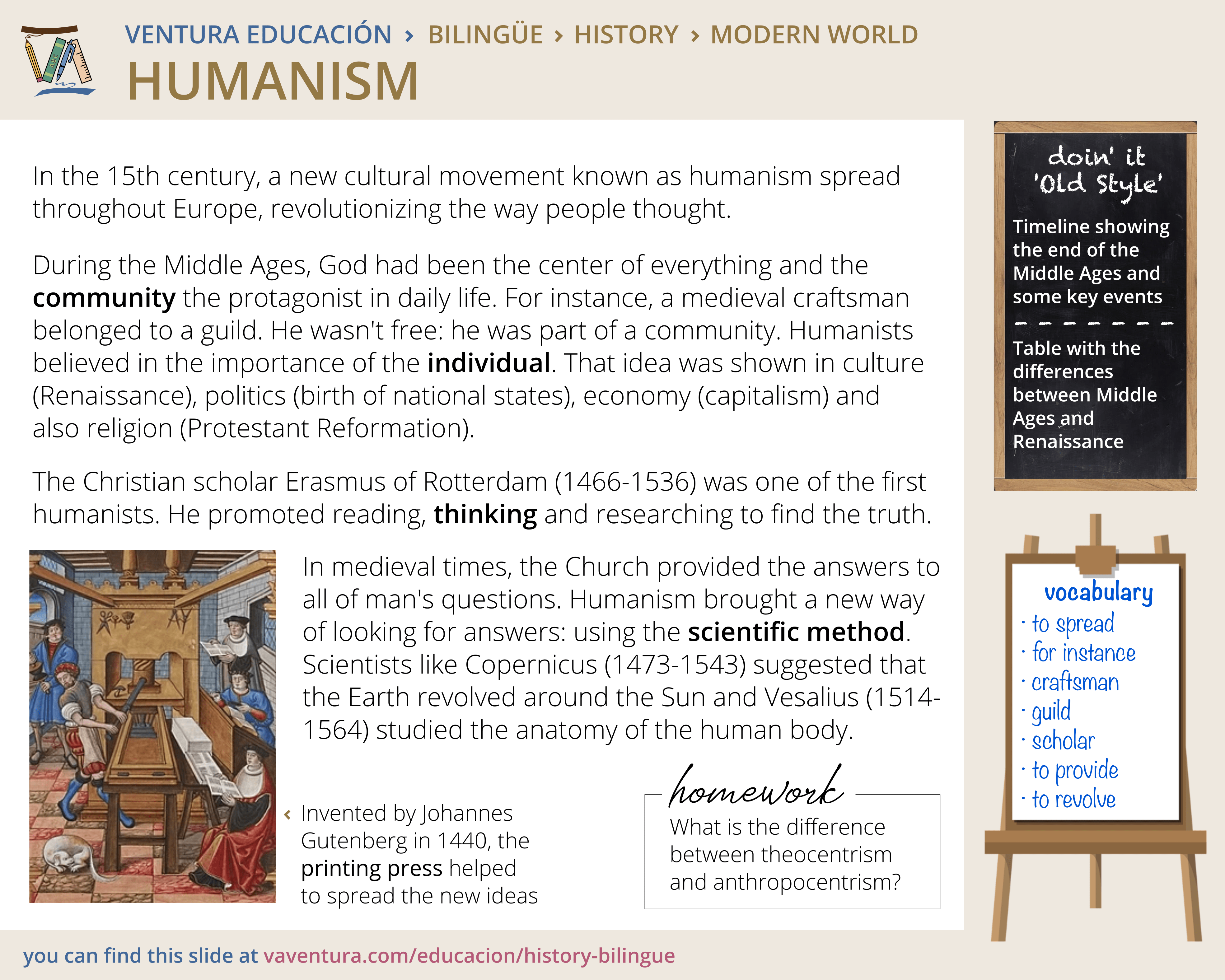
Humanists continued with the belief in a supreme being, a creator deity called God, but they also embrace science and classical heritage to complete new ways of understanding the world. The Church lost power as scientist published their works and investigations. The invention of the printing press in 1440 helped spreading ideas and more people could access knowledge. In medieval times books were handmade, and so there were few of them. The printing press allowed to print thousands of books. That was not the only difference we can point between Middle Ages and Renaissance. Check out the next table:
[wp_table id=8824/]Renaissance art
Humanism also influenced the arts. Sculptors, architects and painters combined their artistry with the study of science and the admiration for the Classical period. They were fans of Greek and Roman cultures, and enjoyed learning about the human being, nature and history. They were also not afraid of signing their works, under the new mentality of humanism and anthropocentrism. Fame and money were no longer a sin!
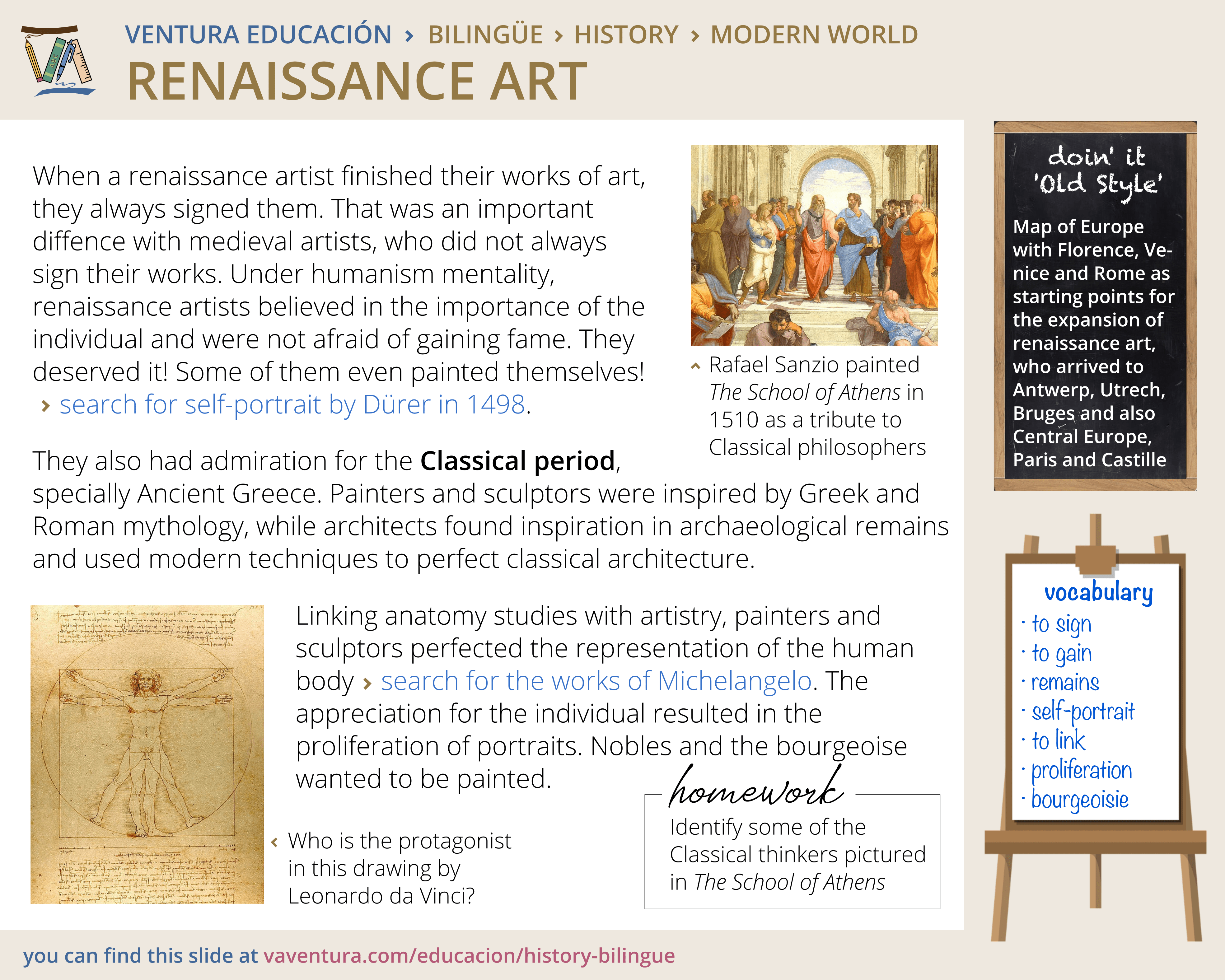
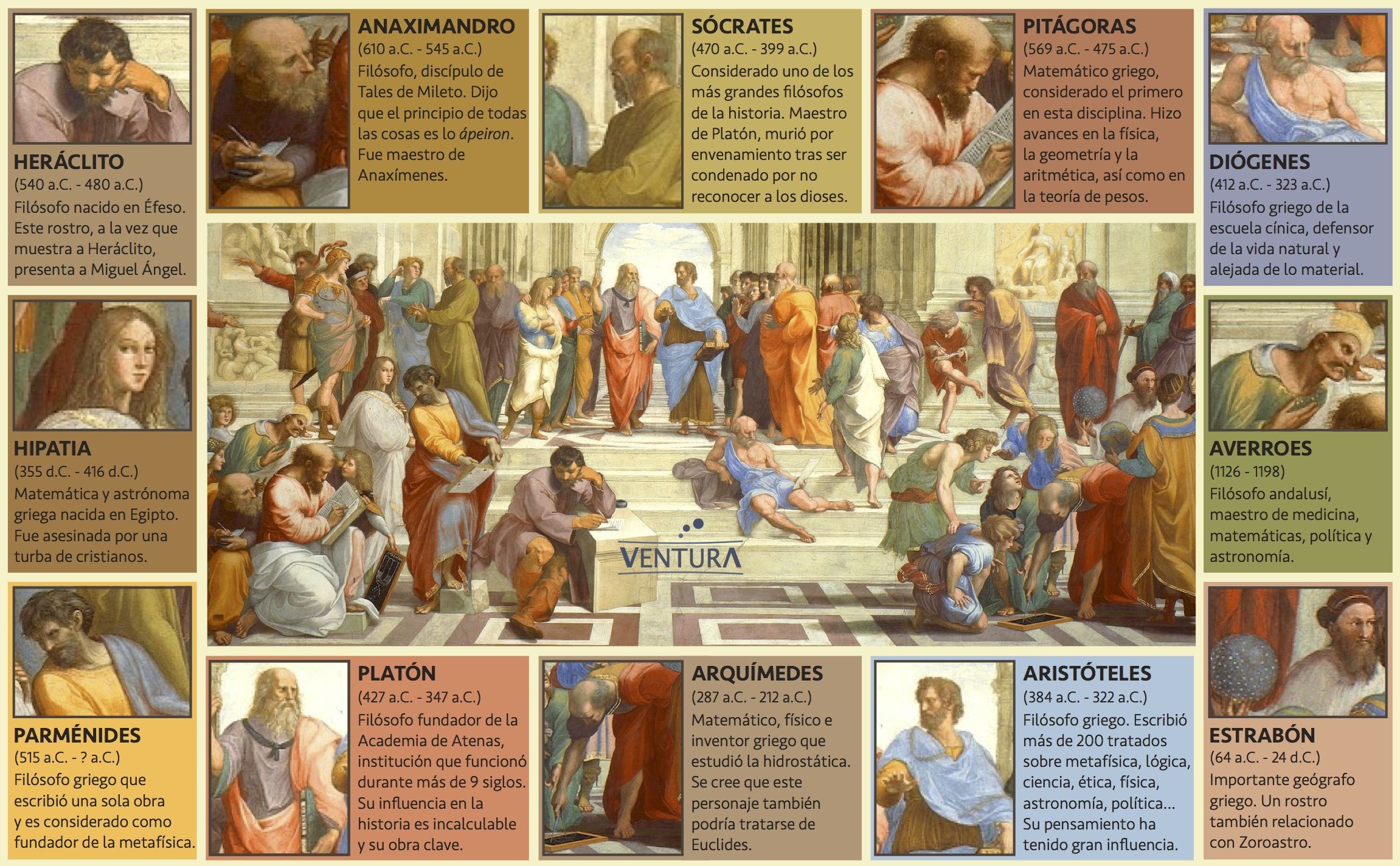
Humanism motivated rational thinking, and while that had been something missing during the Middle Ages, renaissance men found it diving deeper into History: all the way back to greek philosophers. The admiration for classical thinkers is clearly shown in The School of Athens, a fresco by Rafael Sanzio.