By the end of the 15th century Europe had a population of around 70 million. The advances in agriculture techniques and the disappearing of epidemics resulted in a demographic growth. The agricultural surplus needed to be sold, and so merchants began to look for new markets abroad. The navigation technology also improved and European ships managed to reach farther shores.
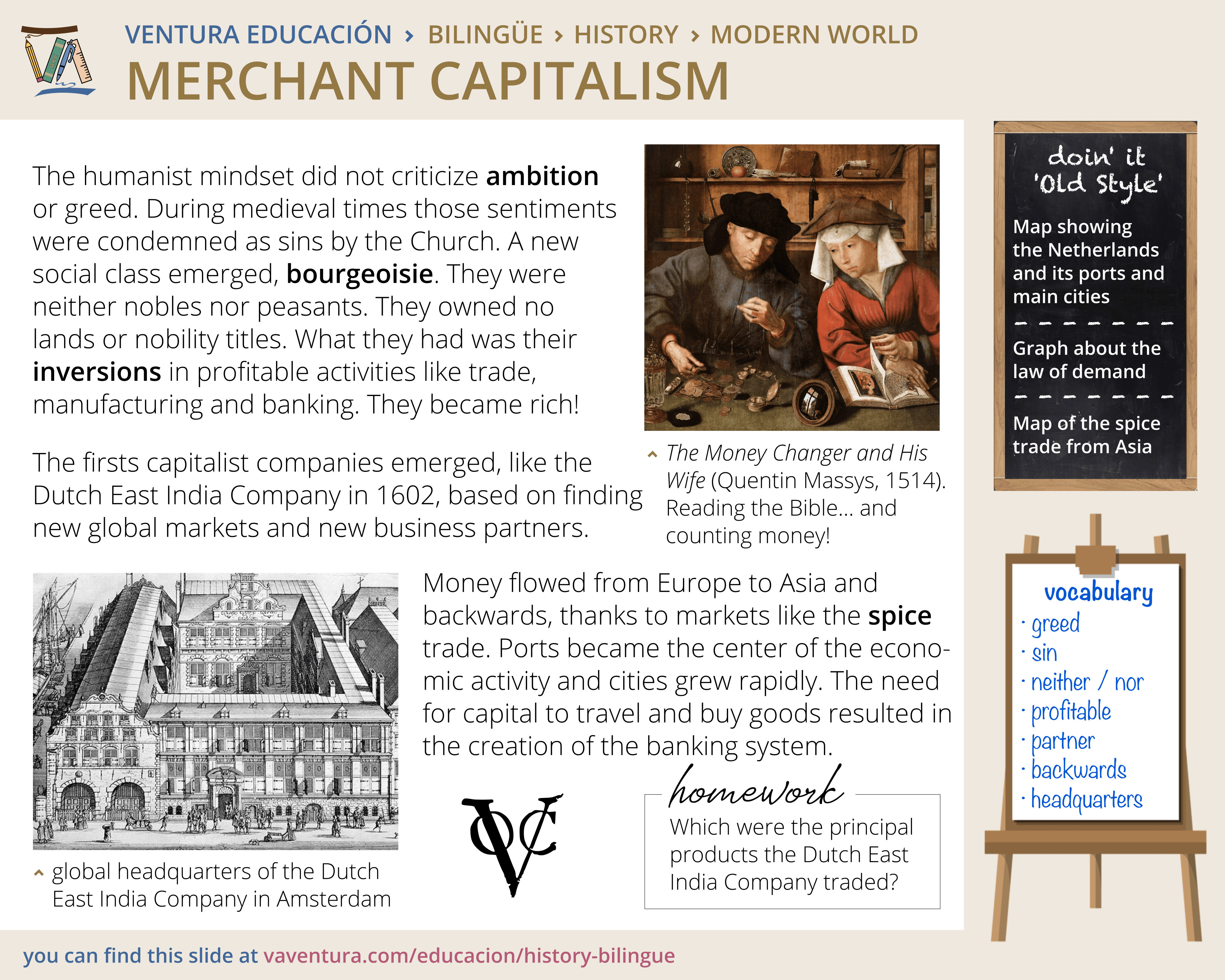
Dutch East India Company, the first big company
A big fleet of ships leaves the port of Amsterdam each week heading to the Far East. In the asian markets the Dutch merchants will acquire silk, cotton, porcelain, spices and textiles. The trade enriches European bourgeoisie and bankers, and everyone is happy. ?
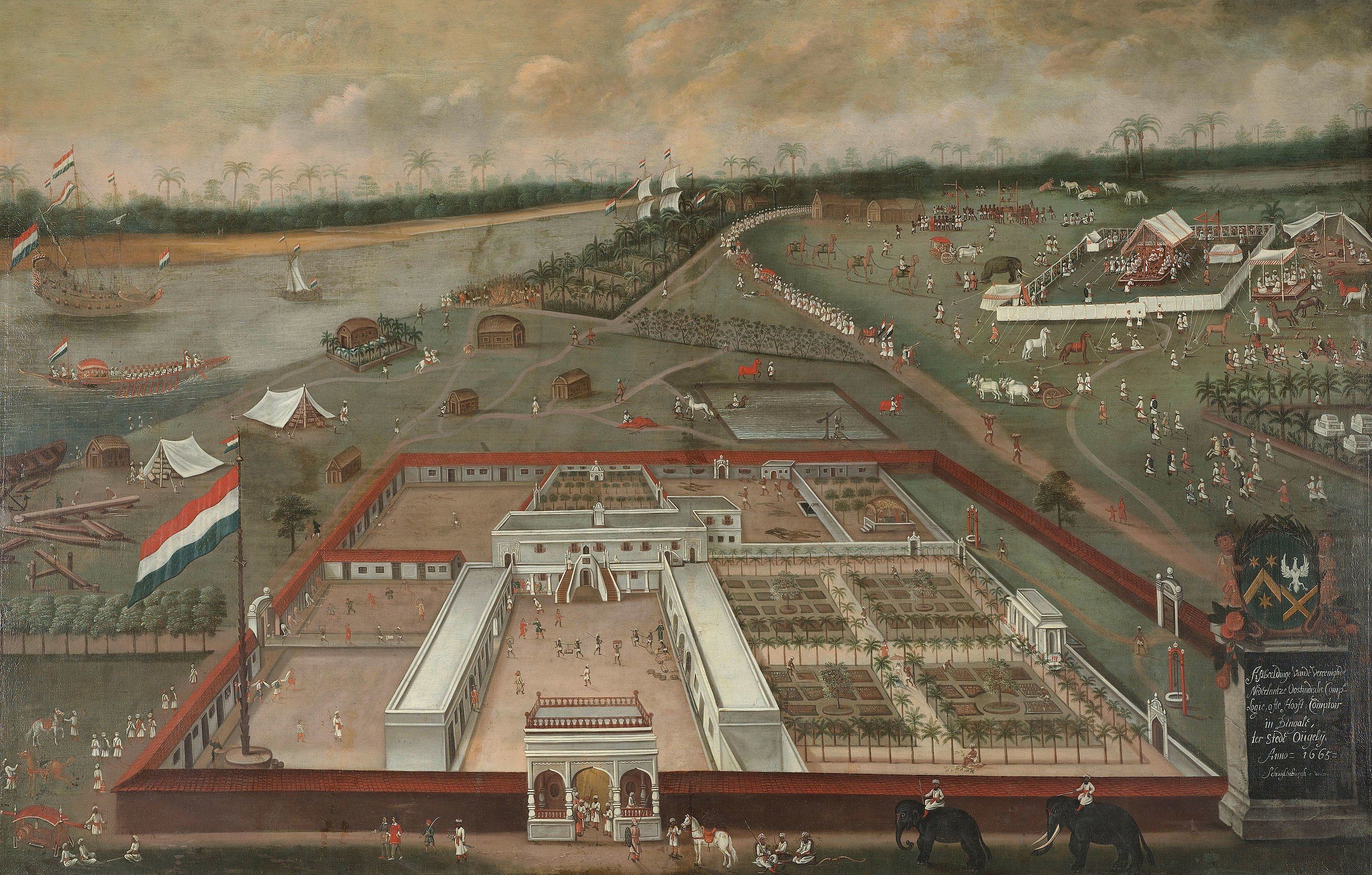
When the powerful Dutch East India Company found troubles to expand its business, they did not mind to use military force. It happened with the Ming dynasty in China, who in 1623 refused to trade with the Dutch. Many times Europeans tried to force China to open up to the trade, but they always lost. India was a much better business partner. The Dutch East India Company opened several factories and ports to establish in its coasts.
European traders did not only bring money into asian markets, but also new ideas and technology. That also worked backwards: Chinese technology and artifacts were discovered by Europeans. An international exchange started. An exchange that would never ever stop and would make our world a globalized one.