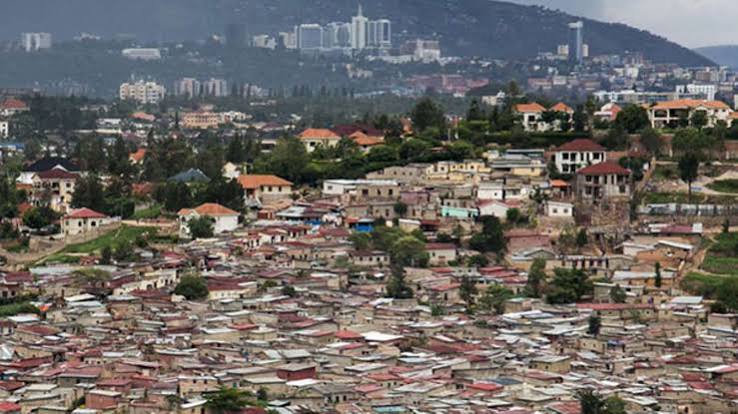
In Kigali, there is a neighbourhood that has changed almost beyond recognition. A few years ago, it was covered with modest houses, small shops, narrow streets and corrugated metal roofs. Today, the same area is being redeveloped for a residential project featuring modern villas, landscaped gardens, apartments and commercial facilities. The location has not changed. It is still Kangondo–Kibiraro, in the Nyarutarama area of Rwanda’s capital. But the kind of neighbourhood that can exist there has changed dramatically.
To understand this transformation, we need to look at two different stories. One concerns the people who lived in Kangondo and were relocated to Busanza, approximately ten kilometres away. The other concerns the land they left behind, which has become the site of a high-end residential development called Savannah Creek. In our previous article on Bannyahe and Busanza, we followed the first story. Now we return to the original neighbourhood to examine the second.
A poor neighbourhood in a valuable location
Kangondo I, Kangondo II and Kibiraro I were three settlements in Kigali’s Gasabo District, commonly known as Bannyahe. They stood beside Nyarutarama, one of the capital’s most affluent residential areas, where modern villas, apartments and expensive properties have become part of the urban landscape. According to research by Shakirah Esmail and Jason Corburn, published in 2020, Bannyahe accommodated more than 1,600 households, although some estimates were higher. It was considered an unplanned settlement, a classification that reflected its irregular urban form and its incompatibility with the Kigali Master Plan.
But the neighbourhood was neither empty nor economically inactive. Its residents had built houses, rented rooms, opened shops and established businesses. Some properties had been enlarged over time, gradually incorporating courtyards, additional rooms and small commercial activities. There was another important detail: many property owners possessed legally recognised titles. Rwanda had undertaken an extensive land registration programme, and the settlement was not simply a place where everybody occupied land without any formal recognition.
The problem was that the authorities had a different vision for the area. Kigali’s urban planning strategy envisaged the transformation of Kangondo into a modern residential neighbourhood. Its location was considered particularly attractive for investment, and the existing buildings did not correspond to the development standards established by the Master Plan.
This created an unusual situation. Residents owned or occupied properties in a valuable location, but the future envisaged for that location did not include their existing neighbourhood. The land was valuable. The settlement was considered unsuitable.
The decision to transform Kangondo
By 2017, the redevelopment process had become a concrete plan involving public authorities and private investors. The proposal was to remove the existing settlement, relocate eligible households to apartments in Busanza and make the land available for new residential development.
The project had a substantial financial dimension. Esmail and Corburn described plans for a US$56 million high-end residential development associated with a Rwandan–Finnish investment consortium. The real-estate company Savannah Creek Development Company was already linked to the redevelopment proposals during this early period, as contemporary reporting from Kigali shows. For residents, however, the central question was not the design of the future estate. It was what would happen to the property and livelihoods they already possessed.
The authorities offered replacement housing at Busanza, but many owners preferred financial compensation. The difference was important. A family that owned a house with several rental rooms might receive a modern apartment, but that apartment would not necessarily reproduce the income generated by the original property.
The conflict reached the courts. In 2018, 728 property owners challenged Gasabo District over expropriation procedures and compensation. Their collective case was dismissed in February 2019 on procedural grounds, requiring residents to pursue their claims individually.
The academic investigation by Esmail and Corburn documents an especially revealing distinction: residents could challenge valuations, compensation arrangements and legal procedures, but they had much less influence over the Master Plan itself. In other words, they could argue about how they would leave, but had little power to decide whether their neighbourhood should disappear.
The relocation process continued for several years. Some families accepted the proposed arrangements; others resisted or continued their legal claims. By September and October 2022, the remaining residents were being moved from Kangondo–Kibiraro. The original neighbourhood was gradually dismantled… and the land became available for a different urban future.
The arrival of Savannah Creek
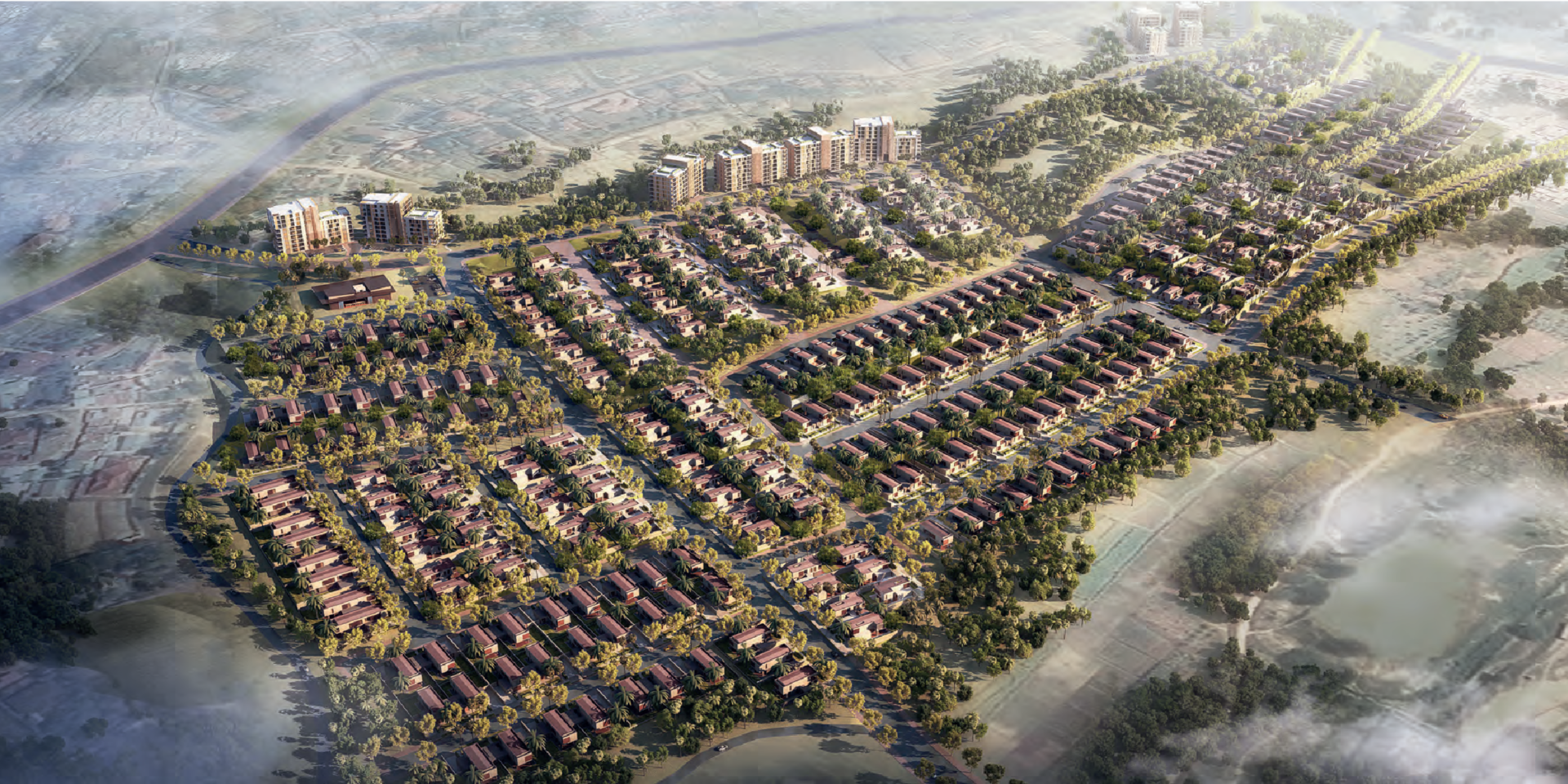
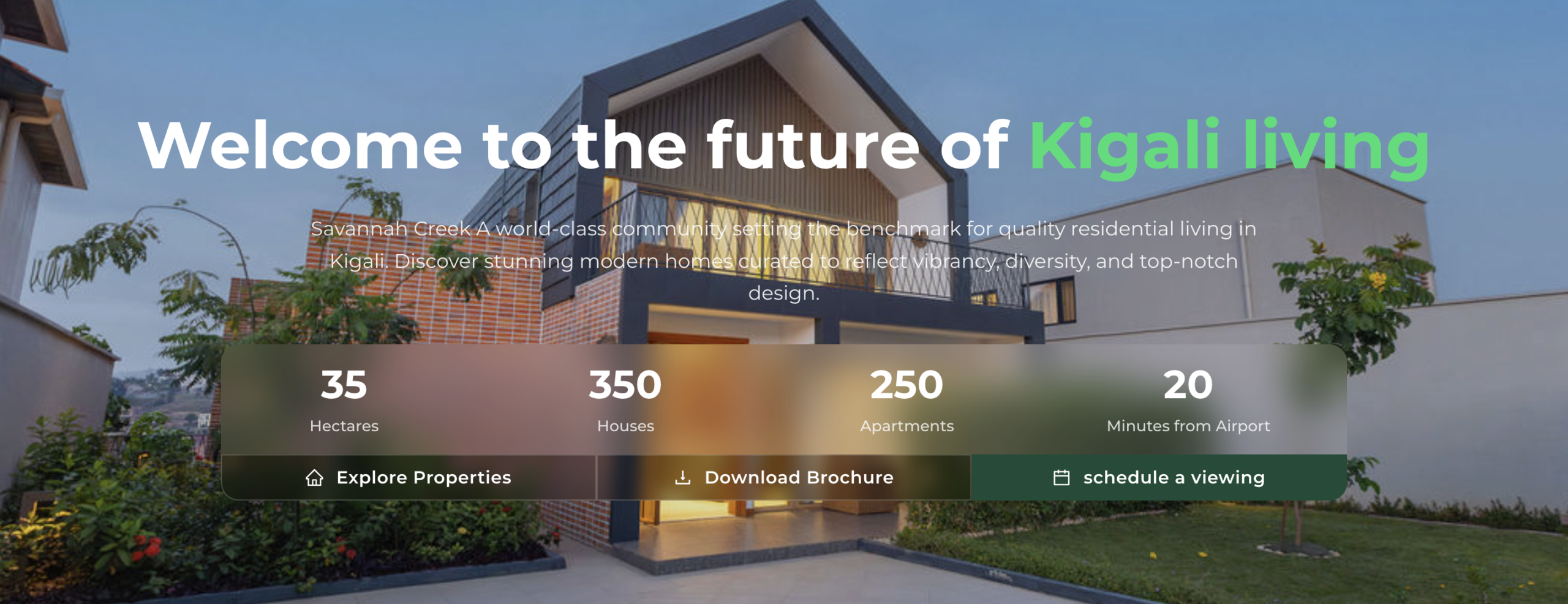
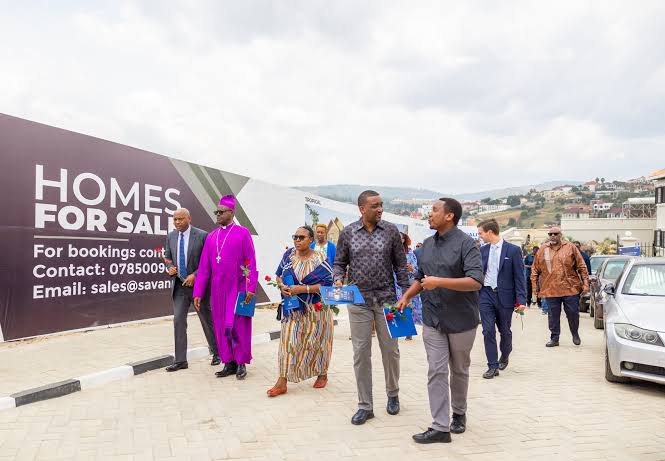
On 14 February 2025, Savannah Creek Development Company and Bank of Kigali publicly launched a major residential development in Kangondo, within Nyarutarama Cell. The figures were striking. According to The New Times, the project was designed to include 590 residential units, combining villas and apartments. Its first phase, announced at approximately US$40 million, initially envisaged 100 units. The complete development was planned across approximately 35 hectares, with different architectural styles and additional facilities.
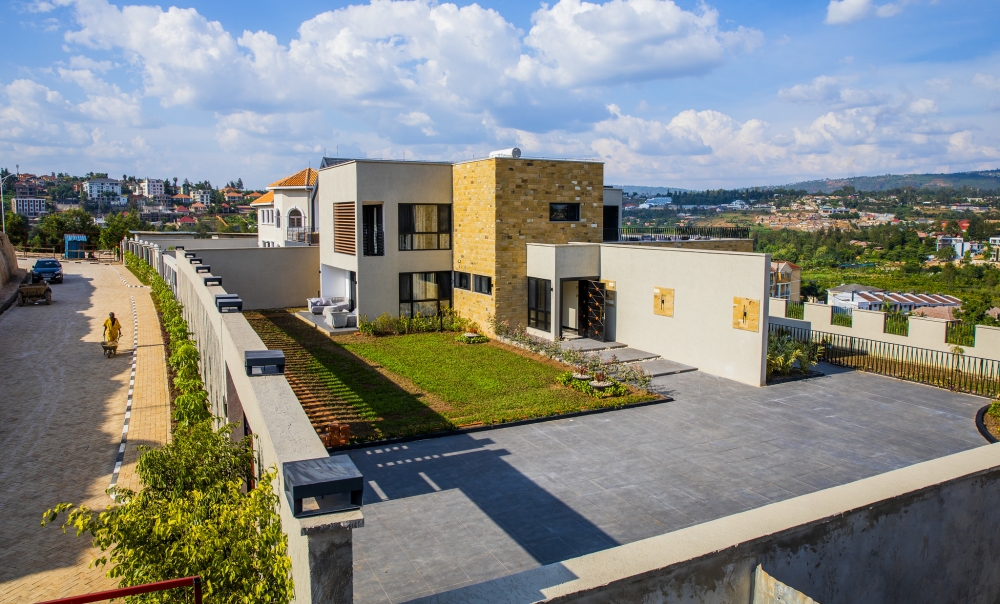
The official Savannah Creek website presents the development as a modern residential community with different types of villas, apartments, green spaces, shops, recreational facilities and education services. Its promotional materials describe approximately five hectares of parks and recreation areas, along with a retail centre and other amenities.
The project is designed for a very different housing market from the one that existed in Kangondo before redevelopment. During the February 2025 launch, Bank of Kigali announced mortgage services for prospective buyers. The bank presented Savannah Creek as a development aimed at high-income households and reported advertised prices of between US$300,000 and US$800,000 for the different homes. These are promotional prices from 2025, not independently verified final transaction prices. Nevertheless, they illustrate the market segment the project intended to attract.
The architectural language is also revealing. Savannah Creek promotes several residential styles, including Contemporary, Tuscan, Tropical, Mediterranean and Classical designs. The project is not merely intended to provide additional homes in Kigali. It is designed to offer a particular residential environment, with modern construction, landscaped surroundings and services targeted at households with substantial purchasing power.
When land changes value without changing location
Why was Kangondo considered unsuitable for its former residents but suitable for a new residential estate? To understand this, we need to distinguish between the value of land and the value of the buildings standing on it. Kangondo was already located in a privileged part of Kigali. Its proximity to Nyarutarama, existing infrastructure, employment opportunities and other urban facilities made the location attractive long before Savannah Creek was announced. What changed was the way that land could be used and developed.
Under the Master Plan, the existing settlement was classified as incompatible with the future urban form envisaged for the area. Expropriation and relocation then made it possible to reorganise that land for a different residential market. The process created a new relationship between location, planning and investment.
 This is an important distinction. Land does not necessarily become valuable because luxurious houses are constructed upon it. Sometimes the land is already valuable, and the development process changes who can benefit from that value. In Kangondo, some residents had accumulated property and economic assets over decades. Their houses generated rental income, supported businesses and provided access to a desirable part of the city. The redevelopment process converted their existing territorial relationships into questions of valuation, compensation and relocation.
The new project offers something different: formal residential products marketed to wealthier buyers, supported by mortgage financing and the wider infrastructure of a planned neighbourhood. The land did not need to move. Its intended uses, development rights and prospective occupants changed.
A modern city for whom?
Kigali faces genuine housing and infrastructure challenges. Improving sanitation, reducing unsafe housing and organising urban growth are legitimate and important planning objectives. Savannah Creek may contribute to housing construction, infrastructure investment and economic activity.
But recognising those potential benefits does not resolve the question raised by Bannyahe. The families who lived in Kangondo were not simply occupying an inconvenient piece of land. They had developed homes, businesses, rental arrangements and social relationships in a location that was also attractive to investors. Some residents obtained improved housing conditions through relocation to Busanza. Others continued to contest compensation. Their experiences cannot be reduced to a single outcome.
The future of Savannah Creek also needs to be described carefully. Its first phase was originally scheduled for October 2026, but the publicly available information reviewed for this article does not independently establish that the announced phase has been fully completed and occupied. Likewise, the earlier development plans and the project launched in 2025 should not automatically be treated as identical in every financial or contractual detail.
What is documented is already significant: an established popular neighbourhood was progressively cleared, its residents were relocated, and a premium residential development was launched on the former settlement area.
This sequence helps us understand one of the central processes of contemporary urban transformation. Urban development does not only change buildings, streets or infrastructure. It can also reorganise the relationship between people and valuable urban land.
In our previous article, we followed the residents who moved from Bannyahe to Busanza. The story of Savannah Creek shows us the other side of that relocation. The former residents received different forms of compensation and replacement housing. The original site entered a new real-estate market. The neighbourhood changed. The location remained valuable. What changed most was who would be able to live there.