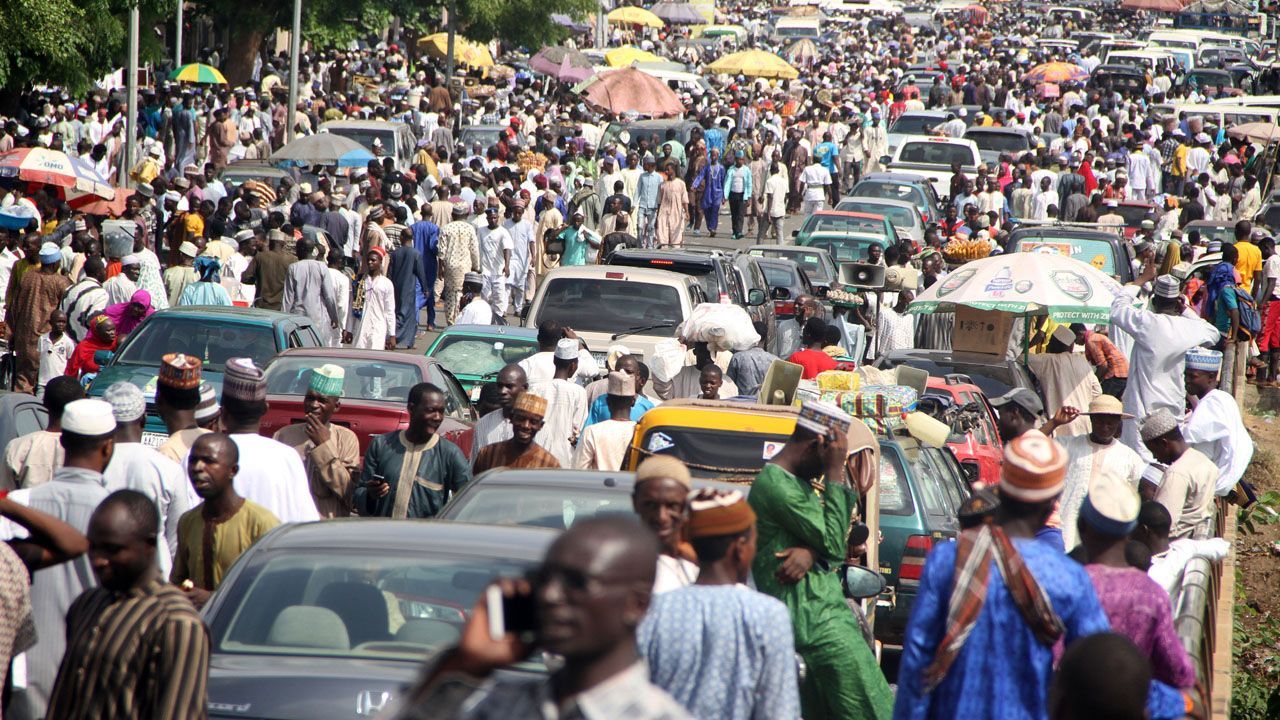
Nigeria is the most populated country in Africa, with over 220 million people. It is located in West Africa and has a large variety of landscapes, climates, and cultures. Nigeria is known for its diverse ethnic groups and languages, with more than 500 spoken across the country.
The country is divided into different regions: the north, the central area, and the south. Each region has different climate conditions, vegetation, and economic activities. These differences create important contrasts in how people live, work, and move across the country.
Nigeria is also an important country in Africa because it has large oil reserves, a growing economy, and big cities like Lagos, which is one of the largest cities in the world. However, Nigeria also faces many challenges, such as poverty, terrorism, and environmental problems.
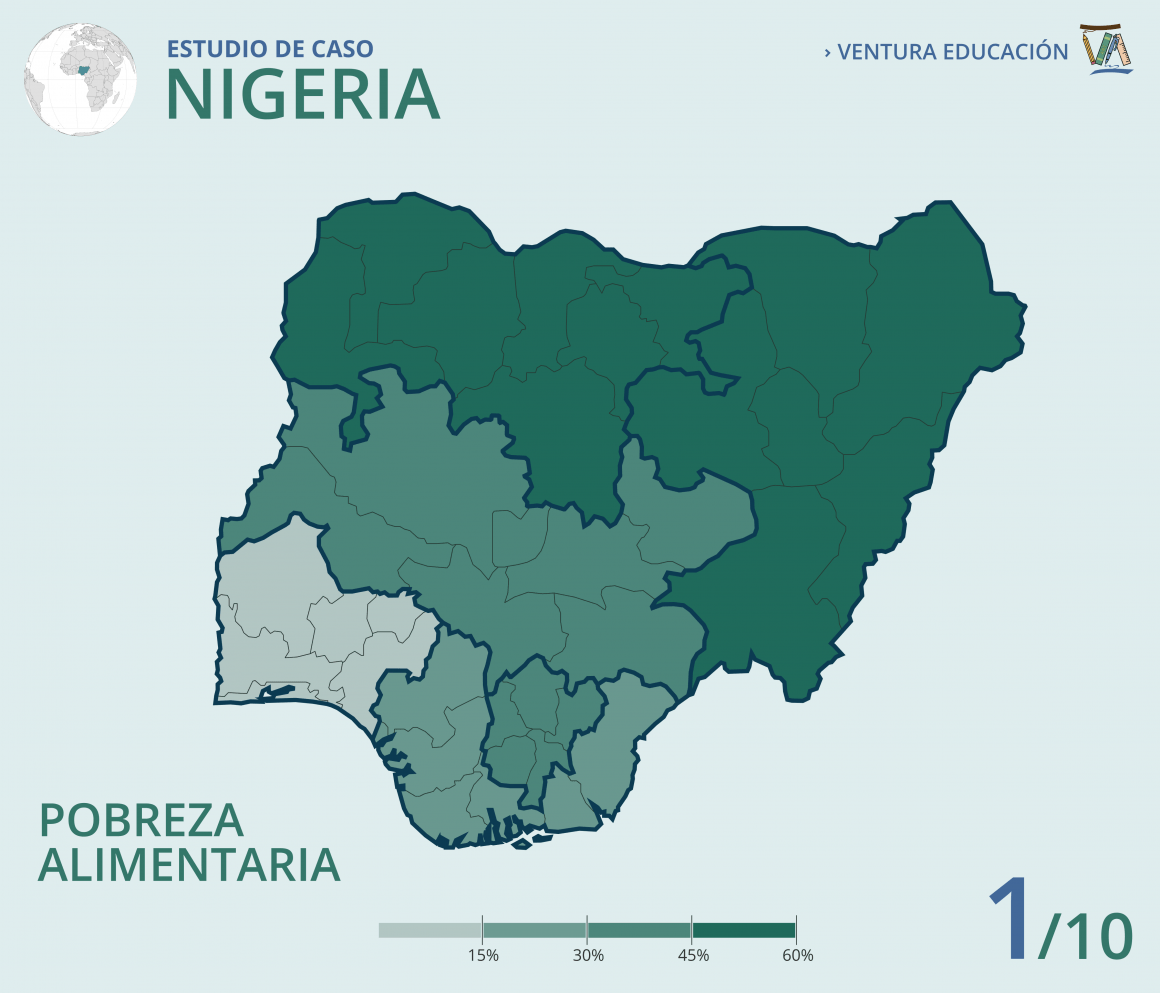
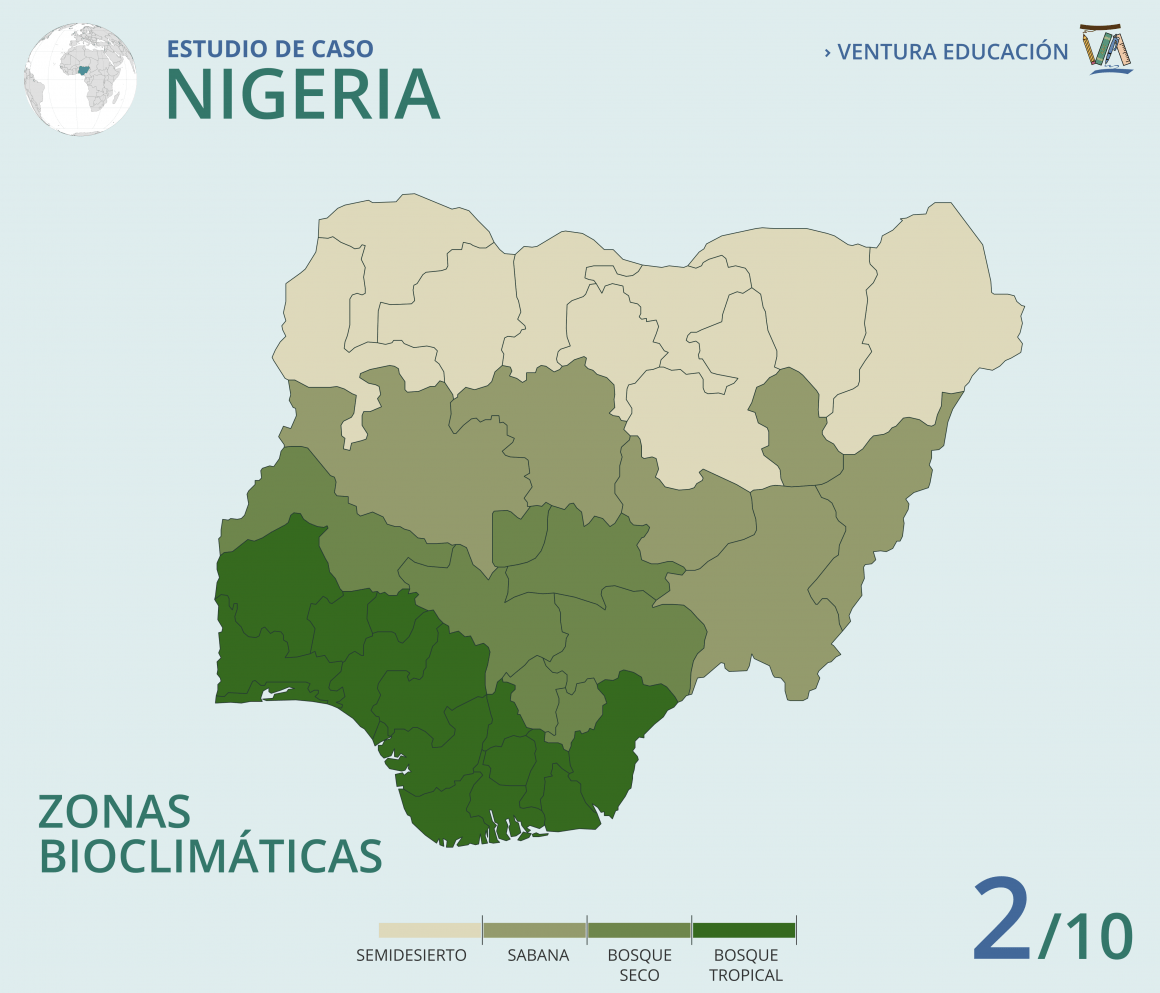
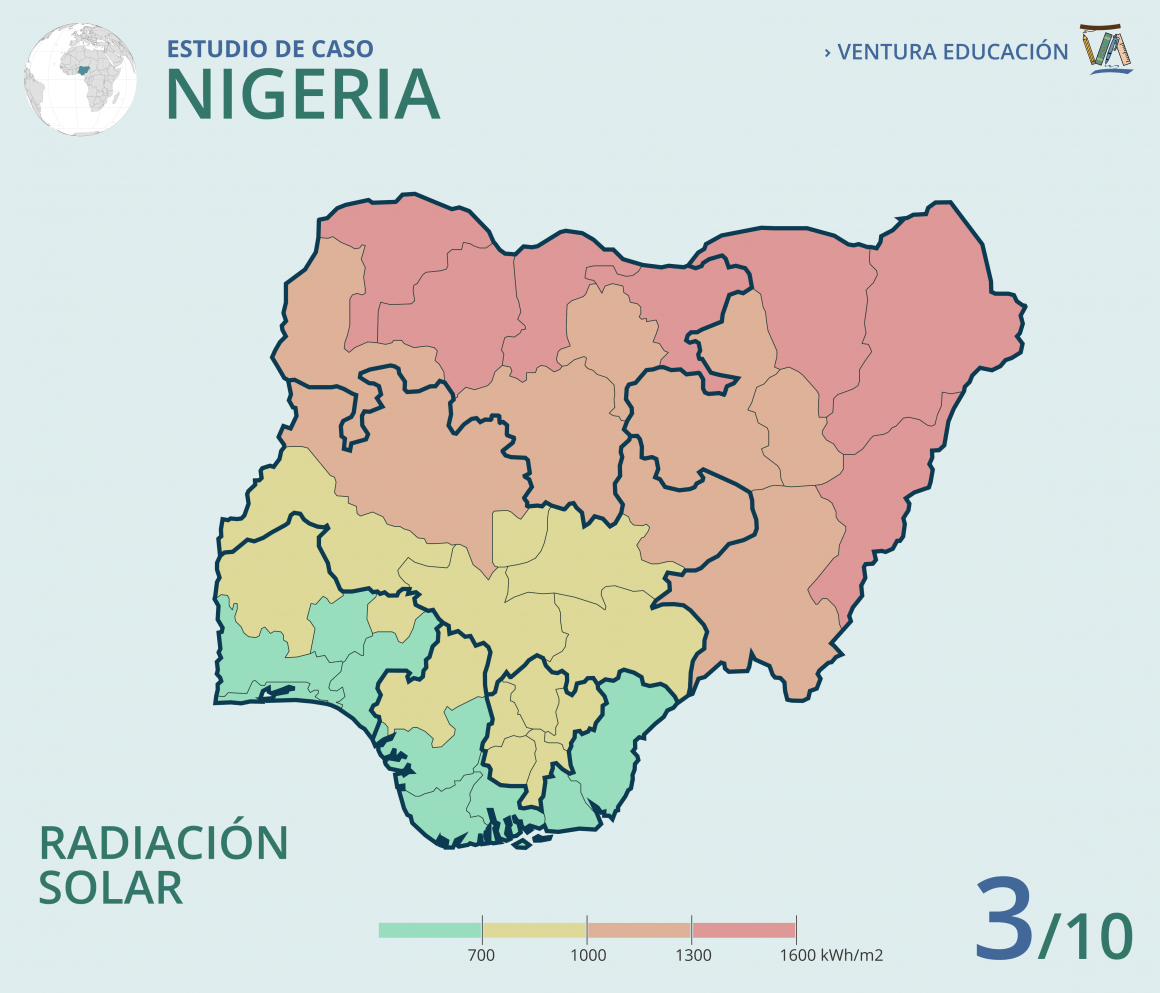
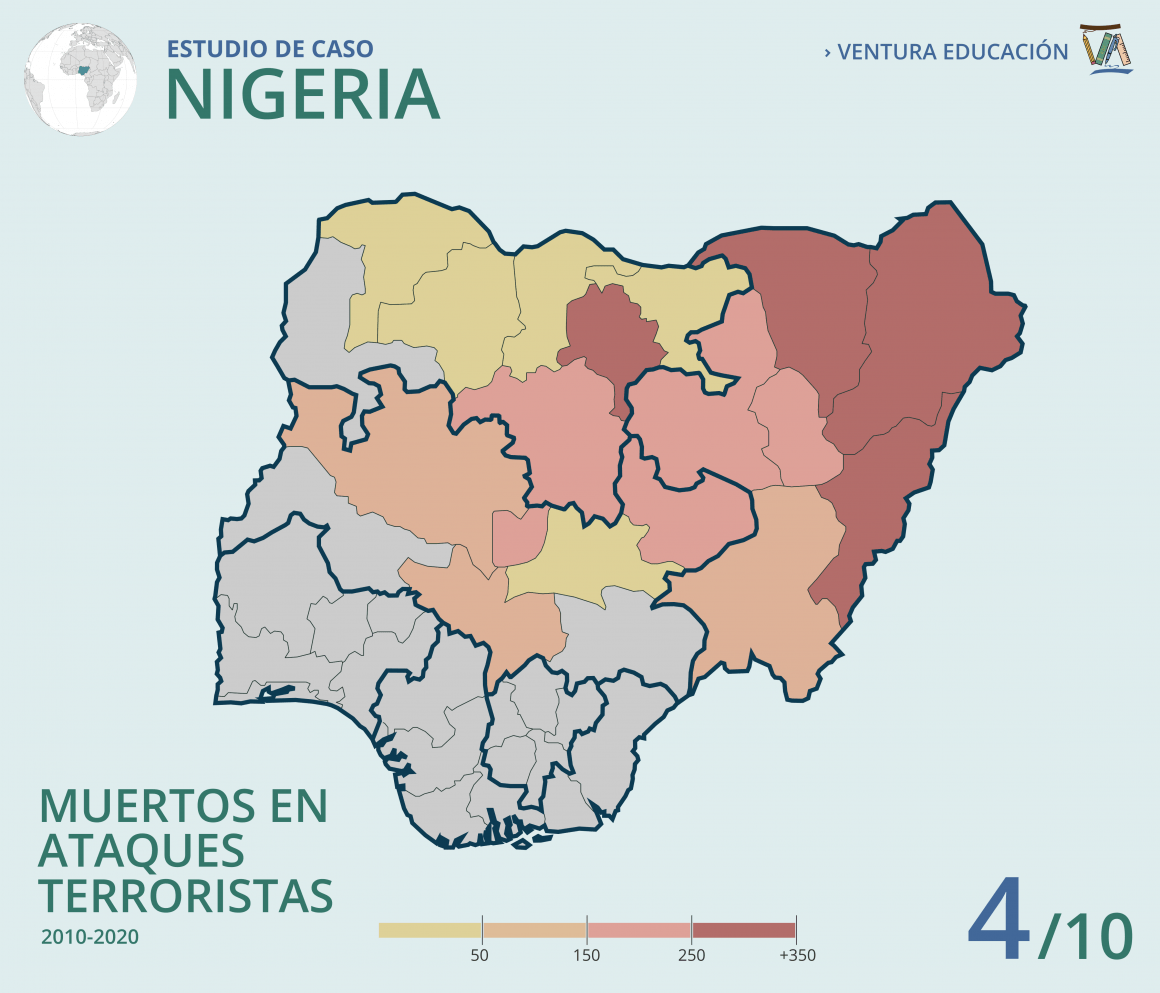
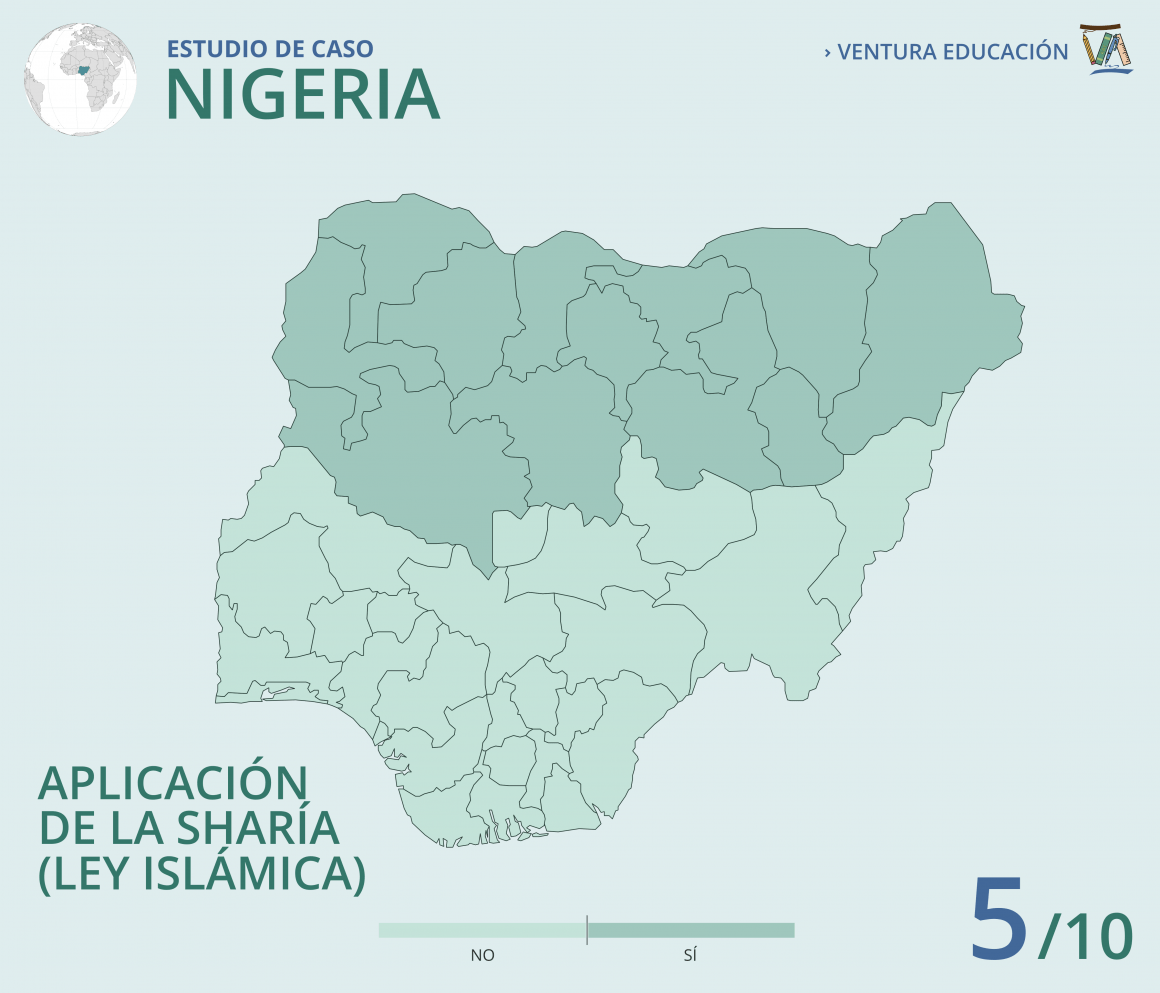
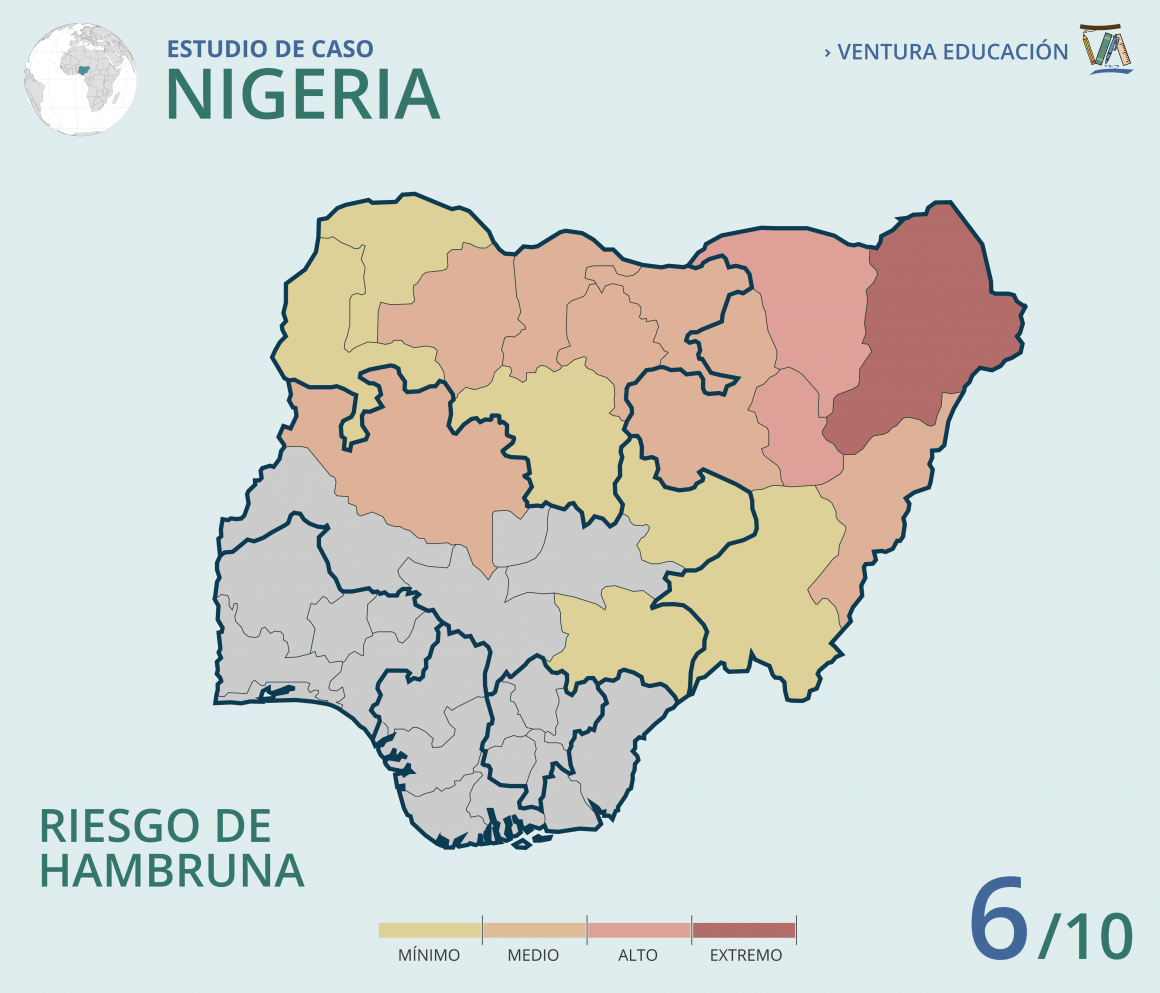
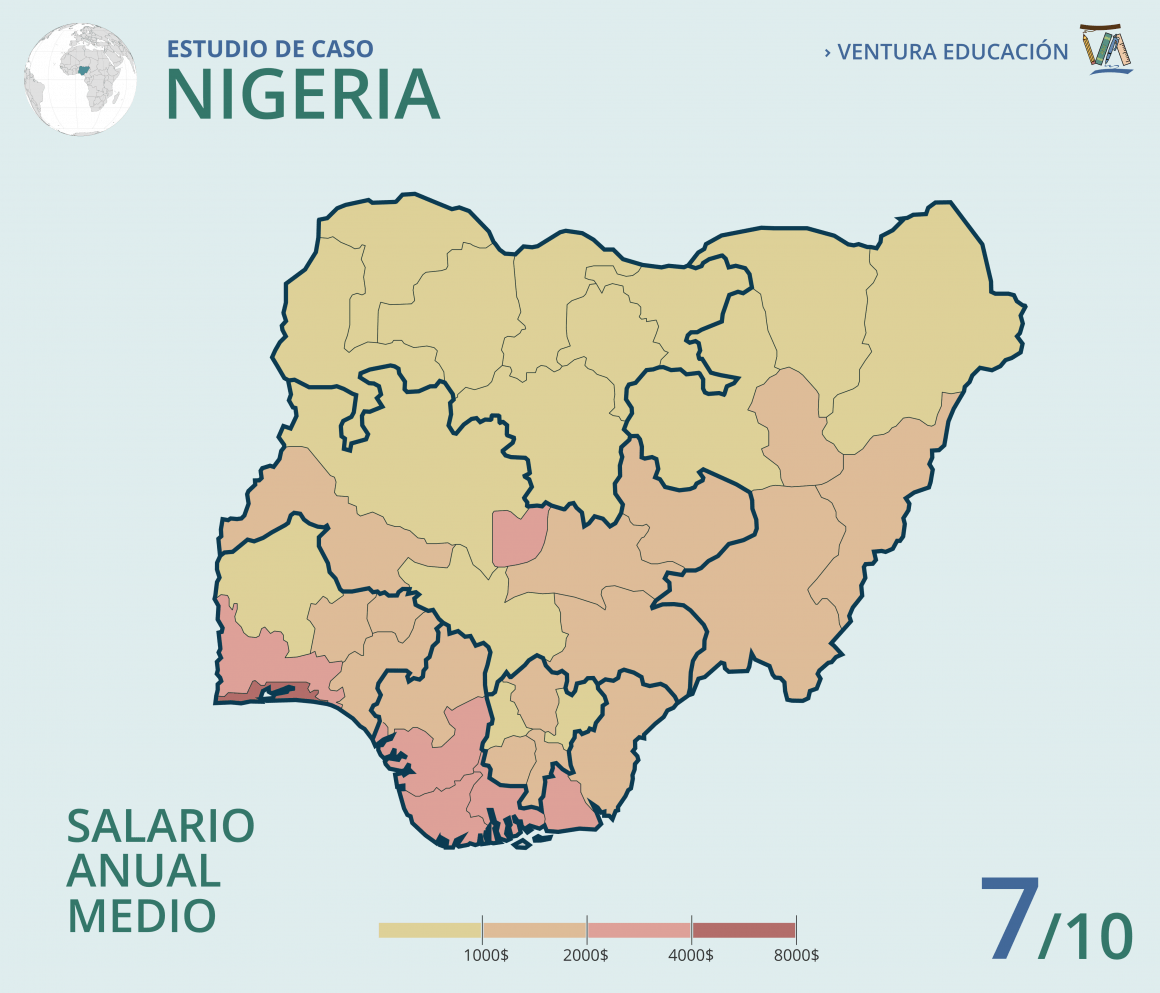
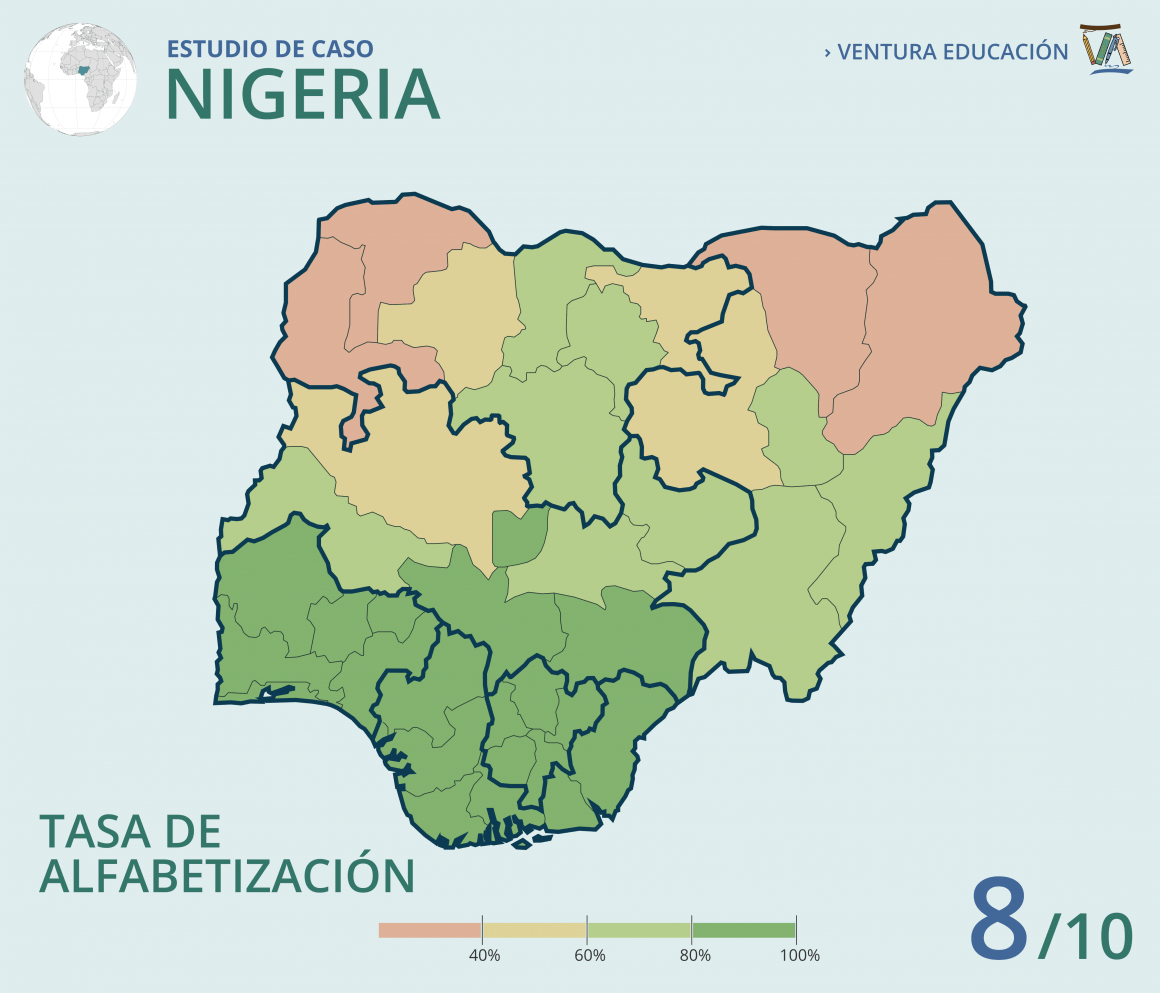
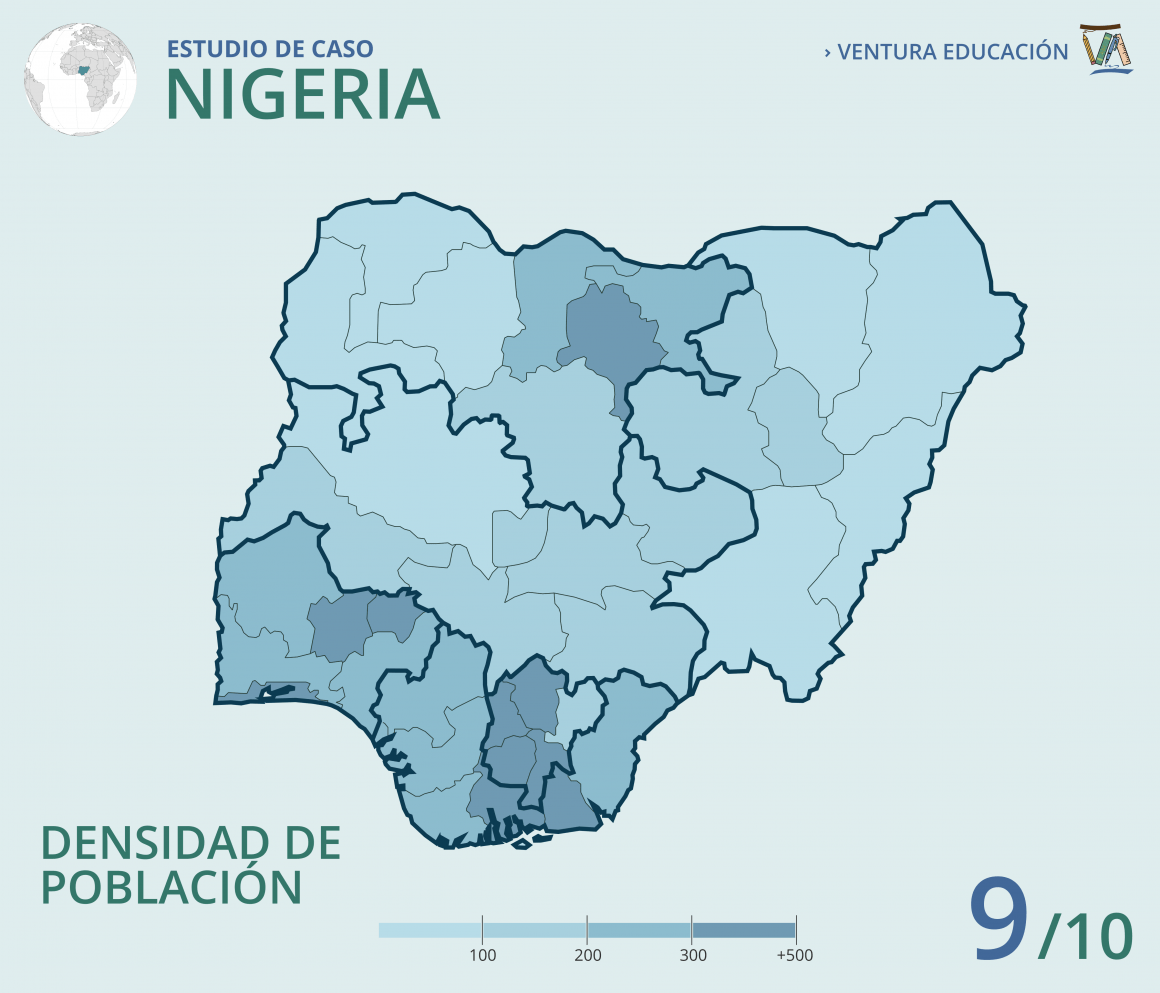
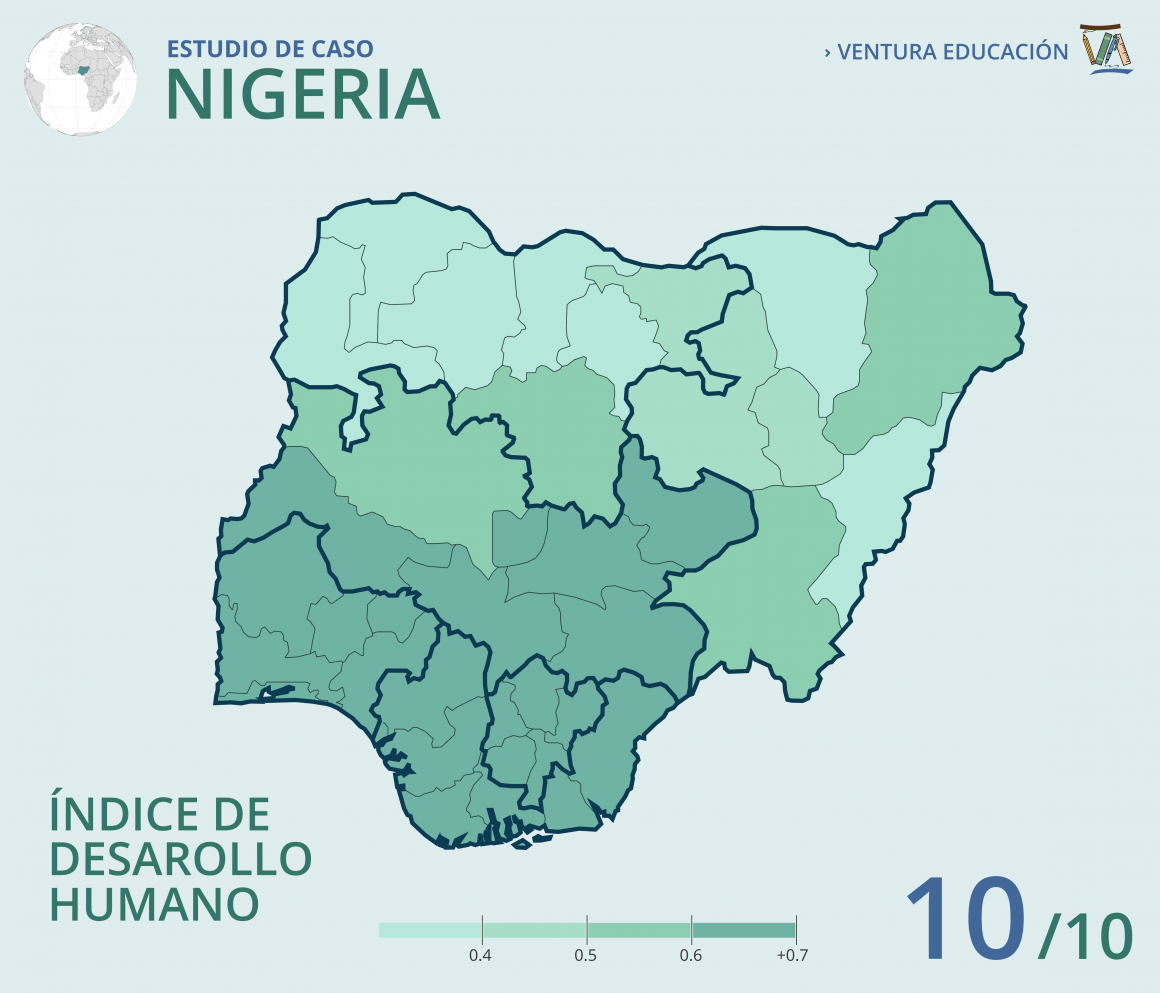
In this study case, we will learn why many people are moving from the north of Nigeria to the south. We will see how climate, security, and economic opportunities influence these population movements and how geography plays a key role in shaping people’s lives.
The North of Nigeria
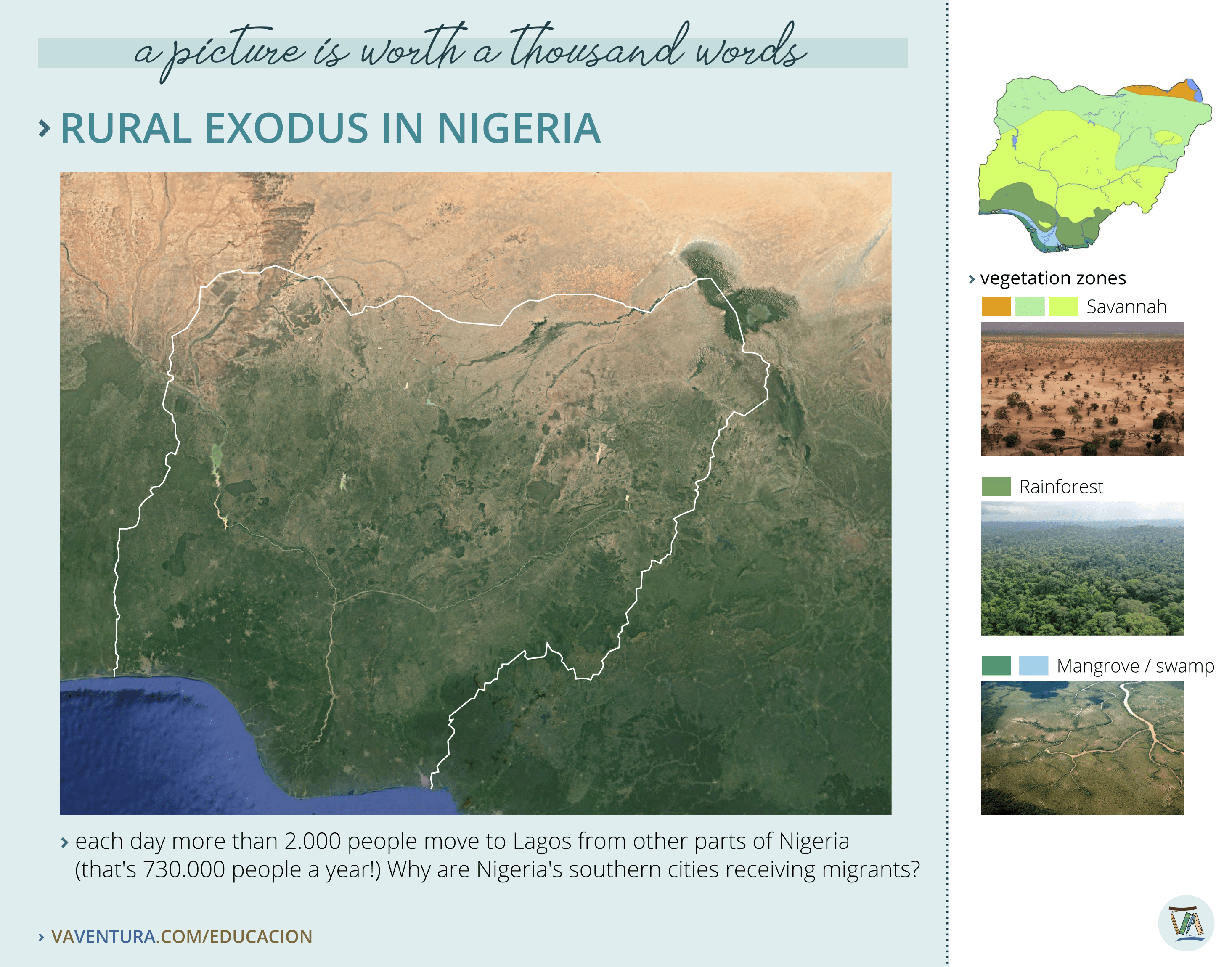
The north of Nigeria is part of the Sahel region, close to the Sahara Desert. The climate is hot and dry, with high temperatures and very little rain. The soil is often poor and dry, which makes farming difficult. Farmers use traditional methods, and many people practice subsistence farming, growing millet, sorghum, and raising animals like goats and cows.
The vegetation in the north is mostly savanna, with grass and few trees. In some areas, there is desertification, where land becomes desert because of overgrazing and climate change.
The north also has serious security problems. Terrorist groups like Boko Haram and ISWAP (Islamic State West Africa Province) attack villages and kidnap people, creating fear and insecurity. Many schools and farms are abandoned because of the violence.
The South of Nigeria
The south of Nigeria has a tropical climate. It is hot and wet, with a lot of rainfall, especially in the Niger Delta. The soil is more fertile, and there are many forests, rivers, and swamps. This makes it easier to grow crops like yams, cassava, and vegetables.
The south also has more economic development. Cities like Lagos, Port Harcourt, and Ibadan have many industries, services, and ports for trade. The oil industry in the Niger Delta brings money and jobs, although it also causes pollution.
IMAGES: Land reclamation in Lagos, Nigeria
Case Study Nigeria.
Why do Nigerians migrate within their own country?
Many people move from the north to the south of Nigeria. This is called internal migration. There are several reasons:
-
Push factors in the north:
-
Violence and insecurity from terrorism.
-
Poor climate and drought.
-
Difficult farming conditions.
-
Lack of jobs and opportunities.
-
-
Pull factors in the south:
-
More jobs in industries, trade, and services.
-
Better education and health services.
-
More fertile land and better farming conditions.
-
Better infrastructure (roads, electricity, ports).
-
This movement creates challenges:
-
Urban overcrowding in cities like Lagos, leading to traffic, pollution, and lack of housing.
-
Pressure on services like schools, hospitals, and water supply.
-
Conflicts can appear between migrants and local communities over land and jobs.
-
Environmental problems in the south due to rapid urbanization and pollution from the oil industry.